
Olympic vs Standard Plates: Setup & 40 lbs Dumbbell Set Guide
Master your home gym setup with our Olympic vs standard plates walkthrough, including storage installation and 40 lbs dumbbell set integration.

Designing the Hybrid Free-Weight Zone: Olympic vs. Standard Ecosystems
When building a comprehensive home gym in 2026, lifters inevitably face a bifurcated equipment market: the 2-inch Olympic ecosystem and the 1-inch Standard ecosystem. While beginners often assume one system is universally superior, experienced strength coaches know that a hybrid approach yields the best biomechanical and spatial results. Olympic plates dominate heavy barbell compound movements, while Standard plates offer unparalleled versatility for isolation work and adjustable setups—specifically when constructing a functional 40 lbs dumbbell set for hypertrophy.
This complete setup and installation walkthrough will guide you through the physical installation of your weight storage, the biomechanical reasoning behind plate selection, and the exact mathematical calibration required to build a perfectly balanced adjustable dumbbell set using Standard plates.
The Core Differences: 1-Inch Standard vs. 2-Inch Olympic
Before unboxing your equipment, it is critical to understand the metallurgical and dimensional differences between these two plate types. According to Rogue Fitness's Echo Bumper lineup and general IWF standards, Olympic sleeves measure exactly 50mm (1.97 inches), designed to handle extreme loads and rotational torque. Standard plates feature a 25mm (approx. 1 inch) aperture, primarily used for lighter, fixed-arc machines and adjustable dumbbell handles.
| Feature | Standard (1-Inch) | Olympic (2-Inch) |
|---|---|---|
| Hole Diameter | 25mm (1 inch) | 50mm (1.97 inches) |
| Max Safe Load (Barbell) | 150 - 200 lbs (Sleeve bend risk) | 500 - 1,000+ lbs |
| Dumbbell Handle Ergonomics | Compact, ideal for sets under 60 lbs | Bulky, limits range of motion on lighter sets |
| 2026 Avg. Cost per lb (Cast Iron) | $1.10 - $1.40 | $1.80 - $2.50 |
Phase 1: Installing Your Weight Plate Storage System
Proper storage is not just about aesthetics; it is a critical safety protocol. Dropping 45-lb plates on hardwood or improperly racking them on a flimsy tree can lead to catastrophic equipment failure or floor joist damage. For a hybrid gym, we recommend a dual-zone storage approach.
Step-by-Step Wall-Mounted Rack Installation
Wall-mounted plate pegs save floor space and keep heavy iron at waist height, reducing lower back shear forces during loading. As outlined in the NSCA Facility Setup Guidelines, maintaining clear pathways is essential for safety.
- Locate the Studs: Use a magnetic stud finder to locate the wooden wall studs (typically spaced 16 inches on center). Never mount plate pegs into drywall alone, even with toggle bolts.
- Drill Pilot Holes: Use a 3/16-inch drill bit to create pilot holes directly into the center of the studs.
- Secure the Mounts: Drive 3/8-inch x 3-inch structural lag screws through the peg brackets into the studs. Use a socket wrench to ensure they are flush and immovable.
- Load Distribution: Always store the heaviest plates (45s and 35s) on the bottom pegs to lower the center of gravity and prevent the wall bracket from levering outward over time.
Many lifters purchase 2-inch to 1-inch sleeve adapters to use Olympic plates on Standard bars. Avoid this for dumbbell work. The added 3-inch sleeve extension shifts the center of mass outward, creating severe torque on the wrist during curls and presses, and dramatically increases the risk of the adapter snapping under lateral stress.
Phase 2: Building and Calibrating Your 40 lbs Dumbbell Set
Why build an adjustable set instead of buying fixed hex dumbbells? A fixed rubber-coated 40 lbs dumbbell set (a pair of 40s) can cost upwards of $160 and consumes significant rack space. By utilizing Standard 1-inch cast iron plates, you can create a highly ergonomic, space-efficient adjustable set that perfectly mimics the dimensions of a fixed 40 lb dumbbell.
According to Rep Fitness Olympic plate specifications and general biomechanics, Olympic dumbbell handles are simply too wide and the plates too bulky to comfortably execute lateral raises or tight-grip curls at 40 lbs. Standard plates solve this spatial issue.
The Exact Weight Math for a 40 lbs Set
To achieve exactly 40 lbs per hand using a Standard 14-inch threaded dumbbell handle, you must account for the hardware weight, which many beginners overlook.
- 14' Standard Threaded Handle: 2.5 lbs
- Pair of Standard Star-Lock Collars: 1.2 lbs
- Target Plate Weight Needed: 36.3 lbs
Optimal Plate Configuration per Dumbbell:
- Two 10 lb plates (20 lbs)
- Two 5 lb plates (10 lbs)
- Two 2.5 lb plates (5 lbs)
- One 1.25 lb plate on each side (2.5 lbs)
Total Plate Weight: 37.5 lbs + 3.7 lbs (Hardware) = 41.2 lbs. This functional 40 lbs dumbbell set provides the exact resistance required for intermediate hypertrophy blocks without the cumbersome width of Olympic hardware.
Phase 3: The Loading Zone Walkthrough & Safety Protocols
The physical act of loading and unloading your equipment dictates the longevity of your gear and the safety of your joints.
Floor Protection and Drop Zones
Standard cast iron plates are brittle. Unlike urethane or rubber bumper plates, dropping a Standard 10-lb plate from waist height onto concrete will likely fracture the plate or chip your floor. Install 3/4-inch thick vulcanized rubber horse stall mats in your designated loading zone. Ensure the mats are laid over a moisture barrier if installed in a basement to prevent trapped condensation from rusting your Standard plates.
Loading Sequence for Adjustable Dumbbells
When assembling your 40 lbs dumbbell set, always load the largest diameter plates first (closest to the handle grip), followed by progressively smaller plates. This ensures the star-lock collar sits flush against a flat surface. If you place a 2.5 lb plate against the handle first and a 10 lb plate on the outside, the collar will tighten against the smaller plate's lip, leaving the heavier plate loose to rattle and shift during the eccentric phase of your lift.
Maintenance and Edge Cases: Preventing Hardware Failure
Equipment maintenance is where the Olympic vs. Standard divide becomes most apparent. The failure modes for each system require different interventions.
Standard Plate Edge Case: Cross-Threading
The most common failure mode with Standard adjustable dumbbell handles is cross-threading the star nut. If forced, the threads strip, rendering the collar useless and creating a massive safety hazard where plates can slide off mid-rep. Solution: Apply a single drop of 3-in-One oil to the handle threads monthly, and always spin the collar on using only your fingertips until it makes contact with the plate. Never use a wrench or pliers to tighten a star collar.
Olympic Plate Edge Case: Sleeve Seizing
Olympic bars rely on internal bushings or bearings to allow the sleeve to spin independently of the shaft during Olympic lifts. If you live in a high-humidity environment and leave Olympic plates loaded on the bar for months, micro-rust forms between the plate collar and the bar sleeve, seizing the rotation. Solution: Unload your barbell after every session and wipe the sleeves with a nylon brush and white lithium grease quarterly.
Frequently Asked Questions
Can I mix Standard and Olympic plates in the same workout?
Yes, but they must remain on their respective bars. You cannot physically load a 1-inch Standard plate onto a 2-inch Olympic barbell without an adapter, and doing so for heavy lifts is highly discouraged due to the shifting center of gravity and adapter shear-risk.
Is a 40 lbs dumbbell set sufficient for muscle growth?
Absolutely. For isolation movements like lateral raises, bicep curls, and tricep extensions, a 40 lbs dumbbell set provides more than enough resistance for advanced lifters. For compound movements like goblet squats or dumbbell bench presses, you may eventually need to transition to heavier Olympic-loaded implements or fixed hex dumbbells exceeding 60 lbs.
The FitGearPulse Verdict: Do not force your home gym into a single ecosystem. Utilize Olympic plates for your heavy barbell rack and squat station, but leverage the compact, cost-effective nature of Standard plates to build a highly ergonomic, adjustable 40 lbs dumbbell set for your accessory and hypertrophy work.
More gear to consider
All reviews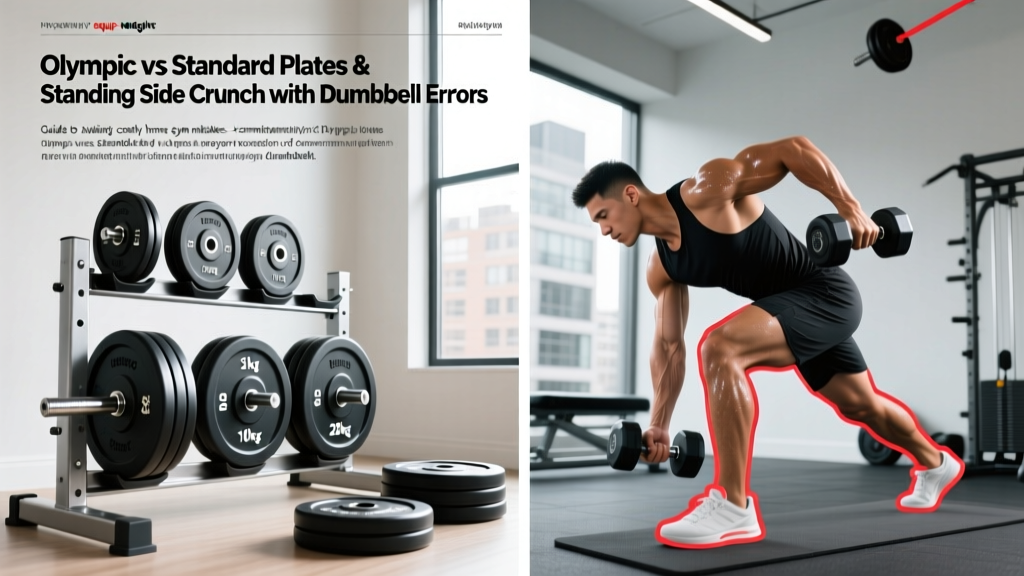
Olympic vs Standard Plates & Standing Side Crunch with Dumbbell Errors

Chest and Back Exercises with Dumbbells: Loadable Set Value Analysis

Bowflex 1090 Dumbbells vs PowerBlock: 2026 Heavy-Duty Comparison

Dumbbell Floor Press Alternative & Barbell Collar Clamp Comparison

Loadable Dumbbells: The 2026 Women's Dumbbell Workout Routine Trend
