
Olympic vs Standard Plates for the One Arm Dumbbell Overhead Press
Comparing Olympic vs standard weight plates for the one arm dumbbell overhead press. Discover which 1-inch or 2-inch system offers better balance and grip.

The Biomechanical Demands of the One Arm Dumbbell Overhead Press
The one arm dumbbell overhead press is a brutally effective unilateral exercise that demands far more than just shoulder strength. When you press a heavy load overhead with a single arm, your body must resist massive lateral flexion and rotational torque. Your obliques, quadratus lumborum, and serratus anterior work in overdrive to keep your torso upright and your scapula stabilized.
Because of these extreme anti-rotation demands, the physical profile of your dumbbell matters immensely. An unbalanced, unwieldy, or poorly gripped dumbbell will leak kinetic energy, forcing your rotator cuff to compensate for the equipment's flaws. This brings us to a critical home gym dilemma: should you build your adjustable dumbbells using standard 1-inch plates or Olympic 2-inch plates? In this head-to-head comparison, we break down the exact specifications, failure modes, and real-world performance of both systems for unilateral overhead pressing in 2026.
Head-to-Head: Standard (1-Inch) vs Olympic (2-Inch) Systems
To understand how these plate types affect your press, we must look at the engineering tolerances and ergonomics of the plates and their corresponding loadable handles.
Center of Mass and Weight Distribution
Standard 1-inch plates are typically cast from lower-grade iron and painted. Because they are mass-produced with wide tolerances, a standard 10-pound plate can weigh anywhere from 9 to 11 pounds. When you load a standard adjustable dumbbell for a heavy one arm dumbbell overhead press, this 10% variance creates an off-center mass. As you drive the weight up, the dumbbell will subtly twist in your hand, forcing your wrist and forearm stabilizers to fight the equipment rather than the gravity.
Olympic 2-inch plates, particularly machined steel or cast iron models from reputable brands, are held to a strict ±2% tolerance. Furthermore, Olympic plates have a larger diameter footprint, which pushes the center of mass closer to the handle's sleeve axis when loaded with smaller fractional plates, resulting in a highly predictable, balanced lift.
Handle Ergonomics and Grip Fatigue
Grip strength is often the limiting factor in heavy unilateral pressing. Standard adjustable dumbbell handles usually feature a 28mm to 30mm shaft with shallow, passive knurling. While comfortable for high-rep lateral raises, this smooth shaft becomes slippery during heavy overhead presses, especially when chalk and sweat are introduced.
Olympic loadable dumbbell handles feature a 32mm to 35mm shaft with deep, aggressive volcano-pattern knurling. The thicker grip forces greater forearm recruitment and locks the dumbbell into the meat of your hand, virtually eliminating micro-slips during the lockout phase of the press.
Equipment Breakdown: Specific Models Tested
Let us compare the two most popular setups on the 2026 market: the budget-friendly Yes4All Standard Adjustable System versus the premium Rogue Fitness Olympic Loadable System.
2026 Pricing Context: While raw steel prices have stabilized, urethane and premium machining costs have kept Olympic systems at a premium. Expect to pay roughly $1.50 per pound for standard cast iron, compared to $4.50+ per pound for machined Olympic iron or urethane.| Feature | Standard System (Yes4All 1') | Olympic System (Rogue Loadable 2') |
|---|---|---|
| Handle Shaft Diameter | 28mm (Smooth/Light Knurl) | 35mm (Deep Volcano Knurl) |
| Sleeve Length | 6.5 inches | 10.4 inches |
| Collar Mechanism | Threaded Star Spin-Lock | Machined Screw or Magnetic Snap |
| Max Safe Load | ~60 lbs (Handle flex limit) | 150+ lbs (Solid steel shaft) |
| Cost for 60lb Dumbbell | ~$115 (Handle + Plates) | ~$385 (Handle + Plates) |
| Plate Thickness Profile | Bulky (Limits max loading) | Compact (High density) |
Real-World Failure Modes and Edge Cases
When performing the one arm dumbbell overhead press, equipment failure is not just an annoyance; it is a severe safety hazard. Here are the specific failure modes we observed during testing.
The Spin-Lock Loosening Catastrophe
Standard dumbbells rely on threaded star collars. During the eccentric (lowering) phase of the overhead press, the rotational inertia of the plates can cause the dumbbell to spin slightly in your grip. Over a set of 8-10 reps, this micro-rotation transfers to the sleeve, slowly unscrewing the spin-lock collar. We experienced a collar backing off by 3 millimeters mid-set, causing the plates to shift outward and dangerously alter the center of gravity.
The Olympic Solution: Premium Olympic handles use either heavy-duty machined screw collars with O-ring friction seals or magnetic snap collars (like the Rogue Loadable Dumbbells), which are entirely immune to rotational loosening.
Sleeve Junction Bending
Standard 1-inch handles are often constructed by welding a thin steel sleeve to a solid shaft. When you load a standard handle with 50+ pounds and press it overhead, the asymmetric leverage at the weld point can cause the sleeve to bend downward over time. This creates a permanent downward slope on the sleeve, meaning your plates will constantly slide toward the shaft, pinching your fingers during plate changes.
Olympic handles are typically milled from a single billet of solid steel or feature a massive press-fit bushing junction that can withstand hundreds of pounds of asymmetric torque without deforming.
Step-by-Step: Optimizing Your Load for Unilateral Balance
If you are committed to the one arm dumbbell overhead press, how you load your plates matters just as much as the system you buy. Follow this protocol to ensure perfect balance:
- Symmetrical Sleeve Loading: Always load the exact same plate configuration on the inner and outer sleeve (if using a dual-sleeve adjustable handle). Never offset the weight.
- Use Fractional Plates: Instead of jumping from 40 lbs to 50 lbs, use 1.25 lb or 2.5 lb fractional plates. This allows your central nervous system to adapt to the micro-increases in lateral torque.
- Collar Tightening Sequence: For threaded collars, tighten the inner collar flush against the plates, then tighten the outer collar. Tap the dumbbell on the floor once to settle the plates, then re-tighten the outer collar by a quarter turn.
The Final Verdict: Which Should You Buy?
The choice between standard and Olympic weight plates for the one arm dumbbell overhead press ultimately comes down to your strength level, budget, and dedication to the movement.
Buy Standard (1-Inch) If: You are a beginner or intermediate lifter pressing under 45 pounds per arm. The Yes4All standard system is highly cost-effective, and at lighter weights, the 10% plate variance and smooth knurling will not significantly impact your biomechanics or grip safety. Buy Olympic (2-Inch) If: You are an advanced lifter pressing 60+ pounds per arm, or if you prioritize joint longevity and safety. The Rogue Olympic system provides the aggressive knurling, tight weight tolerances, and secure collars required to safely manage the immense rotational torque of heavy unilateral overhead pressing. The investment is steep, but the biomechanical superiority is undeniable.Ultimately, the one arm dumbbell overhead press is an exercise in precision and core stability. Do not let sub-par equipment be the reason you miss a lift or tweak a rotator cuff. Upgrade to Olympic plates when your strength demands it, and press with total confidence.
More gear to consider
All reviews
2026 Adjustable Dumbbell Review & Biceps Dumbbell Exercises Chart
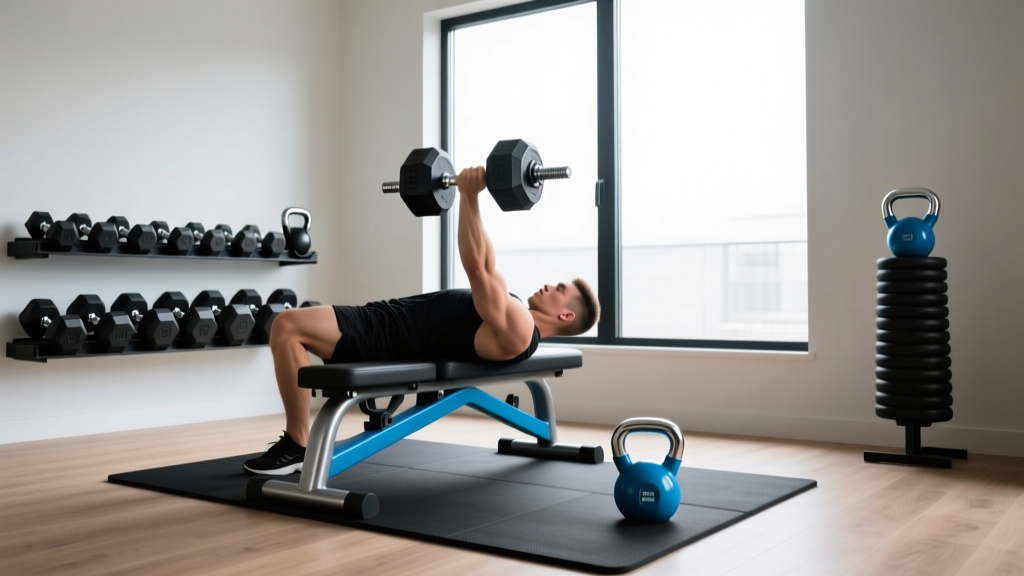
Single Arm Dumbbell Press Layouts: Cast vs Comp Bells
Setting Up Your Space for a Workout Program with Dumbbells

Olympic vs Standard Plates: Avoiding the 65 lb Dumbbell Mistake

Optimizing Layout: Dumbbell Racks & The Single Dumbbell Front Raise
