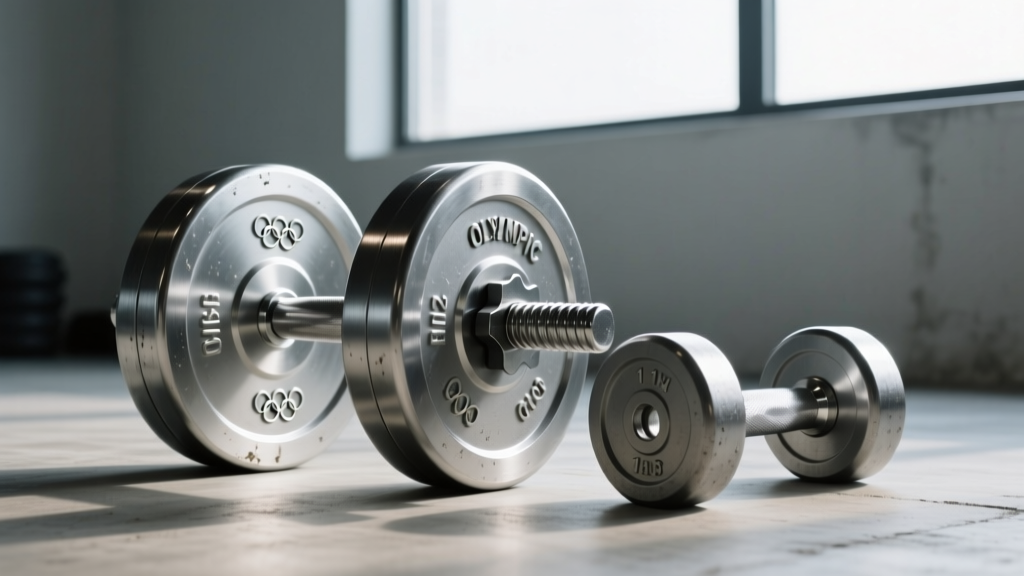
Olympic vs Standard Plates for High Pulls with Dumbbells
Compare Olympic vs standard weight plates for your home gym. Learn how plate dimensions affect pulling mechanics and high pulls with dumbbells.

When outfitting a home gym in 2026, the choice between Olympic and standard weight plates is one of the most critical infrastructure decisions you will make. While beginners often gravitate toward standard plates due to their lower upfront cost and widespread availability in big-box sporting goods stores, serious lifters quickly discover the biomechanical and structural limitations of 1-inch equipment. This in-depth buying guide breaks down the exact specifications, material differences, and real-world applications of both plate types. Furthermore, we will explore how your plate selection directly impacts your ability to perform accessory movements safely, including setting up deficit platforms for high pulls with dumbbells.
The Dimensional Divide: 1-Inch vs. 2-Inch Hubs
The most obvious difference between the two plate types lies in the center hole diameter, which dictates the barbells and storage racks you can use.
- Standard Plates: Feature a 1-inch (25.4mm) center hole. They are designed for lightweight, solid-steel or hollow-tube barbells that typically max out at 200 to 300 pounds before permanent bending occurs.
- Olympic Plates: Feature a 2-inch (50.4mm) center hole. They pair with Olympic barbells equipped with rotating sleeves (using bushings or needle bearings), which can safely withstand 500 to 1,500+ pounds of static and dynamic loading.
Comparison Matrix: Olympic vs. Standard Weight Plates
Use the table below to evaluate the core specifications and 2026 market pricing for both plate categories.
| Feature | Standard Plates | Olympic Plates |
|---|---|---|
| Center Hole Diameter | 1 inch (25.4mm) | 2 inches (50.4mm) |
| 45lb Plate Diameter | Varies (12" to 15") | Standardized 17.7" (450mm) |
| Barbell Compatibility | Lightweight solid bars | Heavy-duty sleeved bars |
| Average Cost (per lb) | $1.00 - $1.50 | $1.50 - $4.50+ |
| Durability / Drop Rating | Low (Cracking risk) | High (Especially bumpers) |
The Biomechanics of Floor Pulls and Plate Diameter
One of the most overlooked aspects of weight plate selection is how the physical diameter of a 45-pound plate affects your starting position from the floor. According to the International Weightlifting Federation (IWF) technical rules, a standard 20kg (44lb) Olympic plate must have a diameter of exactly 450mm (17.7 inches). When placed on an Olympic bar, this elevates the barbell shaft to precisely 8.75 inches off the floor. This standardized height is the foundation of all pulling mechanics, from conventional deadlifts to power cleans.
Standard plates, however, have no governing body regulating their dimensions. A 45-pound standard plate filled with cement and encased in vinyl can measure up to 15 inches in diameter, forcing you to pull from an artificially deep deficit. Conversely, a cheap 45-pound cast-iron standard plate might only measure 12 inches across, requiring you to squat significantly deeper to reach the bar, completely altering the hip and knee angles required for proper force production.
Accessory Work: Deficit High Pulls with Dumbbells
While barbell variations are the gold standard for heavy posterior chain development, many strength coaches and physical therapists transition athletes to high pulls with dumbbells to alleviate wrist impingement and address unilateral power imbalances. Dumbbells allow for a more natural, neutral grip and a slightly wider pulling path that accommodates individual shoulder anatomy.
The Role of Plates in Deficit Setups
To increase the range of motion (ROM) and time-under-tension during explosive triple extension, lifters often perform deficit pulls. This involves standing on a raised platform—frequently a stack of weight plates—while executing the movement. If you are performing deficit high pulls with dumbbells, the structural integrity of the plates beneath your feet is paramount.
- The Standard Plate Hazard: Standard cement-filled plates are highly unstable for standing. The vinyl casing becomes slick with sweat, and the internal cement can shift or crack under the dynamic, lateral force of an explosive dumbbell pull. Stepping off a crumbling 1-inch plate mid-rep is a severe ankle sprain waiting to happen.
- The Olympic Advantage: Olympic bumper plates (like the Rogue Echo Bumpers) feature a dead-bounce rubber exterior and a steel-encased hub. When stacked or placed flat on the floor, they provide a dense, non-slip, and impact-absorbent platform perfect for anchoring your feet during heavy dumbbell high pulls or lateral bounds.
Material Breakdown: Cast Iron, Urethane, and Cement
Beyond the hub size, the material composition of your plates dictates their lifespan, noise level, and footprint in your gym.
1. Cement / Vinyl-Encased (Standard)
These are the bulky, oversized plates often sold in beginner kits. They are incredibly voluminous; a 45lb cement plate can be 3.5 inches thick, meaning you will run out of barbell sleeve space before you can load 300 pounds. They are strictly recommended for light rehabilitation work or budget-constrained beginners who only plan to lift under 150 pounds.
2. Machined Cast Iron (Olympic & Standard)
Classic 'pancake' or 'grip' iron plates offer the thinnest profile, allowing you to load massive amounts of weight onto a barbell. High-quality Olympic iron plates (such as the York Legacy series) are machined to tight tolerances, ensuring the weight is accurate to within 2%. However, they are loud, prone to rust if not coated, and will damage rubber flooring if dropped from shoulder height.
3. Urethane and Rubber Bumpers (Olympic)
For modern home gyms, urethane-coated Olympic plates are the premium standard. Urethane resists UV degradation, does not emit the strong 'tire' odor associated with cheap crumb-rubber bumpers, and protects both the plate and your flooring from impact damage. According to equipment longevity reports featured in the ExRx Exercise Directory and related kinesiology resources, maintaining proper equipment shock absorption is vital for preserving joint health during high-velocity drops.
2026 Buyer’s Decision Framework
Use this quick-reference framework to finalize your purchasing decision based on your training goals.
Buy Standard Plates If:
- You are on an extreme budget (under $150 total).
- You only own 1-inch dumbbell handles and a lightweight curl bar.
- Your training is strictly limited to slow-tempo isolation movements and light floor presses.
Buy Olympic Plates If:
- You plan to deadlift, squat, or perform explosive pulls over 225 lbs.
- You need standardized 17.7" diameters for proper pulling mechanics.
- You want a stable, durable platform for accessory work like deficit high pulls with dumbbells.
- You intend to resell the gear later (Olympic plates hold 80%+ of their value; standard plates are nearly impossible to resell).
Frequently Asked Questions
Can I use an Olympic-to-Standard adapter sleeve?
Yes, plastic and metal adapter sleeves exist that slip over a standard 1-inch barbell to allow the use of Olympic plates. However, we strongly advise against using adapters for heavy or explosive lifts. The adapter introduces a point of mechanical failure and lateral slop, which is highly dangerous when performing dynamic movements where plate security is critical.
Are standard weight plates completely obsolete?
For serious strength training, yes. The fitness industry has universally adopted the 2-inch Olympic standard for commercial and serious home gyms. Standard plates are now largely relegated to budget department store kits, light aerobic pump classes, and physical therapy clinics where loads rarely exceed 50 pounds.
How thick should my bumper plates be for home gym drops?
>If you are dropping weights from the shoulder or overhead, opt for full-diameter rubber bumper plates that are at least 2 inches thick for the 45lb pair. Thin 'technique' bumpers (often under 1.5 inches thick) are designed only for ground-level lifts and will warp or crack if repeatedly dropped from a standing height.Final Verdict: Do not let the initial savings of standard plates compromise your training mechanics or safety. Investing in a high-quality set of Olympic plates ensures biomechanical consistency, equipment longevity, and the structural stability required for advanced accessory movements.
More gear to consider
All reviews
Compact Gym: EZ vs Straight Bar & Workout Pecs with Dumbbells

Bumper vs Iron Plates: Full Body Dumbbell Compound Workout Trends

Olympic Barbell Guide: Knurling vs. 15 Minute Dumbbell Arm Workout

Dumbbell to Barbell Conversion: Comparing Olympic Bar Knurl & Weight
Urethane vs Rubber Hex Dumbbell Care: Plus How to Use Wrist Straps