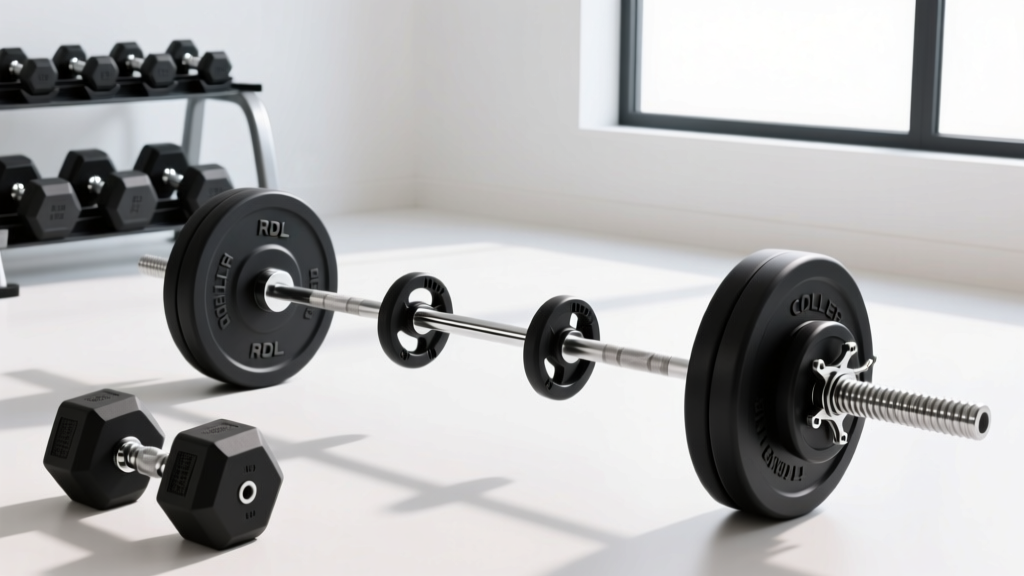
Barbell Collar Types: Secure Gear for Single Leg Dumbbell RDLs
Compare barbell and dumbbell collar types for 2026. Learn which clamps secure loadable handles during heavy single leg dumbbell RDLs and bilateral lifts.

The Hidden Danger of Unilateral Hinge Movements
As unilateral training continues to dominate strength and conditioning programming in 2026, the single leg dumbbell RDL (Romanian Deadlift) has cemented itself as a non-negotiable staple for hamstring development and pelvic stability. However, advanced lifters frequently hit a ceiling: commercial fixed dumbbells rarely exceed 120 pounds. To overload the posterior chain effectively, athletes turn to Olympic loadable dumbbell handles.
This introduces a critical equipment variable: barbell collars and clamps. When you are balancing on one leg, hinged at the hip with 160 pounds in one hand, a shifting weight plate is not just an annoyance—it is a severe biomechanical hazard. A plate sliding just two inches outward alters the moment arm, creating an unpredictable torque spike that can instantly overload the lumbar spine or cause a hamstring strain. Choosing the right collar type is paramount for securing your loadable implements during these demanding asymmetrical lifts.
⚠️ Safety Warning: Never perform heavy single leg dumbbell RDLs with loadable handles using only standard spring clips. The vibration from the eccentric loading phase frequently causes spring tension to fail, leading to catastrophic plate shifts mid-rep.Comprehensive Collar and Clamp Comparison Matrix
Not all collars are created equal. The market has evolved far beyond the traditional wire spring clip. Below is a data-driven comparison of the four primary collar mechanisms available on the market today, evaluated for lateral holding force, durability, and suitability for loadable dumbbell handles.
| Collar Type | Mechanism | Avg. Weight (Per Collar) | 2026 Price Range (Pair) | Best Application |
|---|---|---|---|---|
| Spring Clips | Tensioned Steel Wire | 0.2 lbs | $8 - $15 | Light isolation, warm-ups |
| Polymer Snap (e.g., Lockjaw) | Glass-filled Nylon Lock | 0.6 lbs | $40 - $55 | CrossFit, high-volume barbell work |
| Aluminum Clamp (e.g., Rogue HG) | Threaded Screw / T-Handle | 0.55 lbs | $45 - $65 | Heavy loadable dumbbell RDLs, powerlifting |
| Lever / Cam Action (e.g., Eleiko) | Eccentric Cam Lever | 0.5 lbs | $100 - $130 | Olympic weightlifting, elite competition |
Deep Dive: Collar Types and Real-World Failure Modes
To understand which collar will keep your plates locked during a heavy unilateral hinge, we must examine the mechanical failure points of each design.
1. Spring Clips: The Outdated Standard
Spring clips rely on the tensile strength of bent steel wire. While they are cheap and universally compatible, they offer virtually zero lateral clamping force. According to biomechanical analyses of asymmetrical loading published by the National Strength and Conditioning Association (NSCA), the sheer force generated during the deceleration phase of a Romanian Deadlift can easily overcome the friction of a spring clip. Verdict: Avoid entirely for loadable dumbbell handles.
2. Polymer Snap Collars: The Sleeve-Tolerance Trap
Brands like Lockjaw and Proloc utilize glass-filled nylon with a snap-ring mechanism. They are incredibly fast to apply and remove, making them ideal for barbell complexes. However, they suffer from a critical edge case: sleeve tolerance. Olympic sleeves are nominally 50mm (1.968 inches). If your loadable dumbbell handle is manufactured at 49.2mm (common in budget imports), polymer collars will not snap tightly, allowing plates to rattle and shift during single leg dumbbell RDLs. Furthermore, dropping a heavy loadable dumbbell from the hip onto a rubber floor can crack the polymer housing over time.
3. Aluminum Clamp Collars: The Heavy-Duty Workhorse
The Rogue HG 2.0 Collars represent the gold standard for heavy, non-impact lifting. Machined from aircraft-grade aluminum, these clamps use a threaded T-handle to press a urethane pad directly against the steel sleeve. Because the clamping force is manually applied via the screw thread, it is entirely independent of the sleeve's exact millimeter tolerance. You can crank the T-handle until the plates are compressed with hundreds of pounds of lateral pressure. This guarantees zero plate migration, even when balancing on one leg with 150+ pound dumbbells.
4. Lever and Cam Action Collars: The Elite Quick-Release
Premium collars from Eleiko and OSO Pro utilize an eccentric cam-lever system. When you flip the lever, an internal cam wedges against the sleeve, creating immense friction. These are phenomenal for Olympic lifters who need to drop the barbell from overhead repeatedly. However, for loadable dumbbell handles used in RDLs, the bulky lever mechanism can dig into the lifter's thigh or grip during the bottom position of the hinge, making them less ergonomic for unilateral dumbbell work despite their high holding power.
The Caliper Test: Ensuring a Perfect Fit
Before committing to a $50+ pair of collars for your loadable dumbbell handles, perform the caliper test. Purchase a cheap set of digital calipers and measure the diameter of your dumbbell sleeve at three different points.
- 50.0mm - 50.2mm: Ideal. Polymer snap collars and lever collars will lock perfectly.
- 49.5mm - 49.9mm: Acceptable. Polymer collars may require a shim; aluminum clamps will work perfectly.
- Below 49.5mm: Out of spec. You must use threaded aluminum clamp collars to generate sufficient friction.
Buying Framework: Matching Collars to Your Training Style
Selecting the right collar depends on your broader training ecosystem, not just the single leg dumbbell RDL. Use this decision matrix to finalize your purchase:
- The Powerlifter / Heavy Hinge Athlete: If your primary use for loadable dumbbells is heavy, slow-tempo unilateral work (RDLs, split squats), buy Aluminum Clamp Collars. The manual tensioning guarantees absolute rigidity, and the low profile won't interfere with your grip or stance.
- The CrossFit / Functional Fitness Athlete: If you transition rapidly between barbell snatches and dumbbell work, invest in Polymer Snap Collars. The speed of engagement outweighs the slight risk of lateral play, provided your barbell sleeves are machined to exact IWF specifications.
- The Olympic Weightlifter: If you are dropping loads from overhead and require competition-grade equipment, Lever/Cam Collars are mandatory. Just be mindful of the lever placement when adapting them to dumbbell handles.
Maintenance and Longevity in 2026
Collars are not 'buy once, ignore forever' tools. The urethane pads on aluminum clamps can compress and permanently deform over years of heavy use, reducing their clamping efficacy. Inspect the pads annually; if they have taken a permanent concave shape, contact the manufacturer for replacement pads (usually available for under $10). For polymer collars, UV exposure and extreme temperature fluctuations in garage gyms can cause the nylon to become brittle. Wipe down all collars with a mild degreaser monthly to remove chalk and zinc oxidation from the barbell sleeves, ensuring maximum friction for your next heavy single leg dumbbell RDL session.
More gear to consider
All reviews
Rubber Hex vs Urethane: Is the Round Dumbbell Set Obsolete?

Barbell Curl vs Dumbbell Curl: Dumbbell Rack Storage & Care

EZ vs Straight Bar: 2026 Dumbbell Training for Women Trends
EZ Curl Bar vs Straight Bar & Pec Deck Fly Dumbbell Layouts
Dumbbells Five Below vs Loadable Plates: 2026 Market Analysis
