Kettlebell Care: Cast Iron vs Competition & Dumbbells for Pecs
Expert guide on maintaining cast iron vs competition kettlebells, plus longevity tips for urethane dumbbells for pecs. Protect your gym gear investment.

The Metallurgy of Longevity: Cast Iron vs. Competition Steel
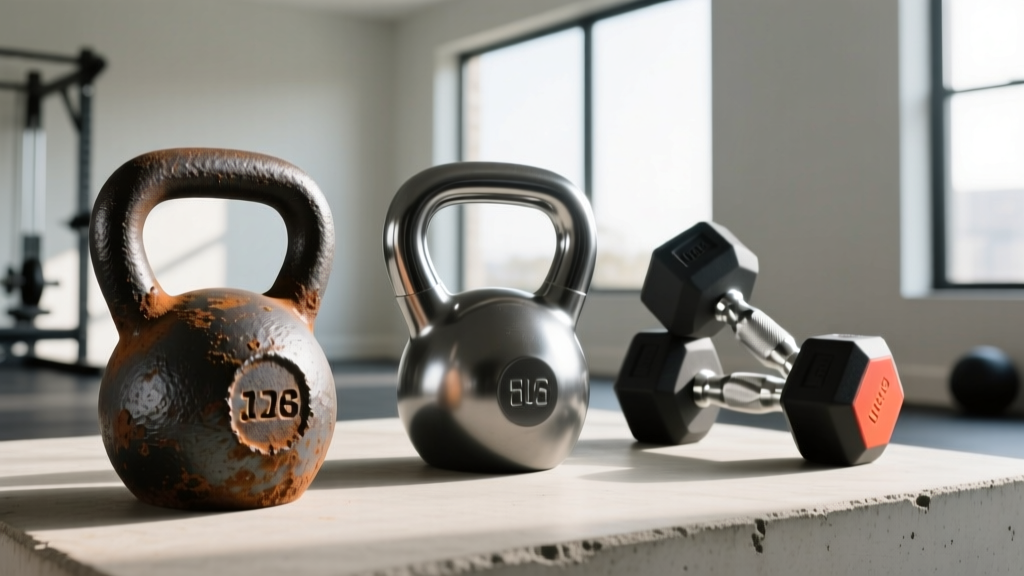
When building a resilient home or commercial gym, the longevity of your free weights is just as critical as their initial cost. As of 2026, the market is heavily segmented between traditional cast iron kettlebells and precision-machined competition steel bells. Understanding the metallurgical differences between the two is the first step in establishing a proper maintenance protocol. According to equipment manufacturing standards outlined by Rogue Fitness, cast iron bells are poured into sand molds, resulting in a micro-porous surface that is inherently susceptible to moisture retention and oxidation.
Competition kettlebells, on the other hand, are engineered to exact International Union of Kettlebell Lifting (IUKL) specifications. As detailed by Kettlebell Kings, these bells feature a hollow steel shell filled with steel shot or a machined solid core to maintain a uniform height of 280mm and width of 210mm across all weights. The exterior is typically finished with a high-grade powder coat (such as Prismatic Powders) that seals the steel entirely, shifting the maintenance focus from rust prevention to impact and chip management.
| Feature | Cast Iron Kettlebells | Competition Steel Kettlebells |
|---|---|---|
| Material Porosity | High (traps moisture) | Zero (sealed steel shell) |
| Primary Failure Mode | Surface rust, handle pitting | Powder coat chipping, base dents |
| Handle Diameter | Variable (typically 32-34mm) | Strict 35mm standard |
| Avg. Cost (2026) | $1.60 - $2.20 / lb | $3.80 - $5.50 / lb |
| Maintenance Frequency | Monthly oiling required | Bi-annual wax/clear coat touch-ups |
Step-by-Step Kettlebell Maintenance Protocols
Human sweat has a pH ranging from 4.5 to 7.0, making it highly corrosive to bare metal. If you are running high-volume kettlebell sport sessions or heavy hardstyle swings, a rigorous cleaning protocol is non-negotiable.
1. The Post-Workdown Wipe
Never store a kettlebell with sweat residue on the handle. Use a microfiber cloth lightly dampened with a 50/50 mix of distilled water and white vinegar to neutralize the acidic salts left behind by your grip. Avoid bleach-based or ammonia-based cleaners, as these will strip the protective oils from cast iron and degrade the powder coat on competition bells.
2. Cast Iron Hydration (Oiling)
Cast iron requires a hydrophobic barrier. Once a month, apply a thin layer of Boeshield T-9 or food-grade mineral oil to the bell and handle. Let it sit for 15 minutes, then buff it aggressively with a clean rag. If surface rust begins to form, use a brass wire brush (never steel, which will gouge the iron) to scrub the oxidation away before re-oiling.
Pro Tip: The 3M Scotch-Brite MethodFor competition bells with a 35mm handle, chalk buildup can create a slick, dangerous surface during snatches. Use a green 3M Scotch-Brite pad to gently scuff the handle every 30 days. This removes embedded magnesium carbonate without stripping the underlying powder coat.
Cross-Training Care: Maintaining Dumbbells for Pecs
While kettlebells dominate ballistic and unilateral lower-body work, a complete strength program requires targeted isolation tools. When outfitting a complete free-weight station, athletes eventually look beyond swings and start sourcing specific dumbbells for pecs—typically heavy urethane or rubber-coated hex bells used for floor presses, chest flyes, and deep stretch pullovers. The maintenance profile for these dumbbells differs vastly from bare metal kettlebells.
Urethane dumbbells (priced between $3.50 and $4.50 per pound in 2026) are highly resistant to rust and sweat corrosion. However, their primary enemy is UV degradation and edge splitting. When performing heavy pec flyes to failure, it is common practice to drop the dumbbells to the floor. If dropped on unsealed concrete or thin EVA foam, the urethane edges will micro-fracture and eventually peel away from the steel core.
- Matting: Always use 3/4-inch vulcanized horse stall mats when dropping heavy dumbbells for pecs to absorb the kinetic shock and prevent polymer delamination.
- UV Protection: If your home gym receives direct sunlight, apply a UV-protectant spray (like 303 Aerospace Protectant) to the urethane heads every six months to prevent 'chalking' and dry-rot.
- Knurling Care: The steel handles of urethane dumbbells still require brass brushing and light oiling to prevent rust, especially where the metal meets the rubber collar, a common trap for moisture.
Environmental Controls and Storage Matrices
The National Strength and Conditioning Association (NSCA) frequently highlights environmental controls as a cornerstone of facility equipment longevity. Free weights should be stored in climate-controlled environments where relative humidity (RH) is maintained below 45%.
For garage gym owners in humid climates, investing in a commercial-grade dehumidifier is often cheaper than replacing a rusted rack of cast iron kettlebells or oxidized dumbbell handles. Furthermore, storage racks should feature UHMW (Ultra-High Molecular Weight) polyethylene liners on the cradles. Dropping a competition kettlebell onto a bare steel rack will chip the paint on the bell's base, exposing the raw steel shell to moisture and compromising the uniform aesthetic of your set.
Edge Cases: When to Retire Your Free Weights
Not all damage is cosmetic. Knowing when a piece of equipment has transitioned from 'worn' to 'hazardous' is a critical safety skill.
Warning: Never attempt to weld a cracked kettlebell handle. The heat treatment of the steel will be compromised, creating a brittle failure point that can snap during high-tension movements like Turkish Get-Ups or heavy rack presses.
Failure Modes to Monitor:
- Cast Iron Micro-Fractures: Inspect the junction where the handle meets the bell body. If you see hairline cracks in the iron, retire the bell immediately. The structural integrity is compromised.
- Competition Bell Rattles: If a competition kettlebell begins to rattle, the internal steel shot has shifted or the core weld has failed. This alters the center of mass, making ballistic movements unpredictable and dangerous for the wrists and shoulders.
- Dumbbell Head Wobble: If the heads on your urethane dumbbells for pecs begin to spin or wobble on the steel shaft, the internal retaining pins have sheared. Do not use these for chest presses, as a spinning head mid-rep can cause severe rotator cuff injuries.
Ultimately, whether you are maintaining the porous surface of a traditional cast iron bell, preserving the pristine powder coat of a competition steel model, or protecting the polymer edges of your favorite dumbbells for pecs, longevity is a byproduct of intentionality. Treat your free weights as precision instruments, and they will easily outlast your fitness journey.
More gear to consider
All reviews
Power Rack vs Squat Rack: Best for Barbell or Dumbbell Bent Over Rows?

Urethane vs Rubber Hex: Space & the Dumbbell Shoulder Press Exercise

Weight Lifting at Home With Dumbbells & Plates: Olympic vs Standard
Adjustable Dumbbell Review: Fix Your Dumbbell Chest Workout Routine
Power Rack vs Squat Stand Mistakes & Dumbbell Exercises Names Guide
