
Dumbbell Y Raise Mistakes: Troubleshooting Neoprene Sets
Fix your dumbbell Y raise form. Troubleshoot common mistakes, grip slips, and weight selection errors when using neoprene coated dumbbells at home.

The Biomechanical Reality of the Dumbbell Y Raise
The dumbbell Y raise is an elite, non-negotiable movement for scapular health, posture correction, and lower trapezius development. By raising the arms at a 45-degree angle from the torso (mimicking the letter 'Y'), you directly target the lower traps and serratus anterior while minimizing upper trapezius involvement. According to kinesiology data from ExRx.net, this specific angle of shoulder flexion and scapular upward rotation is vital for counteracting the internal rotation caused by heavy bench pressing and modern desk-bound lifestyles.
For home gym enthusiasts, neoprene-coated hex dumbbells are the default choice. They protect hardwood floors, resist rust, and are budget-friendly. However, using neoprene dumbbells for high-rep, low-load isolation work like the Y raise introduces a unique set of troubleshooting challenges. This guide dissects the most common execution errors and equipment-specific friction points, ensuring your home workouts yield maximum structural benefit.
Top 3 Execution Mistakes (And How to Fix Them)
Before blaming your equipment, we must audit your biomechanics. The Y raise is highly unforgiving; a millimeter of deviation shifts the load from the lower traps to the upper traps and lumbar spine.
1. Upper Trap Dominance (The 'Shrug' Error)
The Mistake: Initiating the lift by elevating the scapula (shrugging) rather than rotating and depressing it. This turns a lower-trap builder into an upper-trap burner, exacerbating neck tension.
The Fix: Before lifting the dumbbells, actively pull your shoulder blades down into your 'back pockets.' Maintain this scapular depression throughout the concentric phase. Imagine pulling your elbows toward the ceiling, not your hands.
2. Lumbar Hyperextension (The 'Banana Back')
The Mistake: As the arms approach the top of the movement, the lifter arches their lower back to artificially increase the range of motion.
The Fix: Ditch the standing bent-over position. Use a chest-supported setup on an incline bench set to exactly 30 to 45 degrees. This removes the lumbar spine from the equation entirely and isolates the scapular stabilizers.
3. Internal Rotation at the Apex
The Mistake: Allowing the thumbs to drop downward at the top of the movement, which internally rotates the humerus and risks shoulder impingement.
The Fix: Maintain a neutral or slightly externally rotated grip. Your thumbs should be pointing slightly upward or parallel to the floor at the peak contraction.
Troubleshooting Neoprene-Specific Challenges
Neoprene (a synthetic rubber) is fantastic for dropping weights without cracking your garage floor, but it behaves very differently than bare steel or knurled iron when subjected to the physiological realities of a workout.
WARNING: The Chalk TrapNever use liquid or powder chalk on neoprene dumbbells. Chalk particles embed into the microscopic pores of the synthetic rubber, drying it out and creating a slick, permanent residue that ruins the grip.
The Sweat-Slip Factor on Synthetic Rubber
Neoprene becomes incredibly slippery when exposed to sweat. During a high-rep set of 15-20 Y raises, palmar sweat will compromise your grip long before your lower traps reach muscular failure.
The Troubleshooting Protocol: Wipe the handles with a microfiber towel between sets. If your neoprene dumbbells have lost their factory 'tackiness' over time, wash the handles with a damp cloth and a drop of mild dish soap (like Dawn), then air dry. Avoid alcohol-based cleaners, which degrade the rubber polymers and cause peeling.
Handle Diameter and Wrist Supination
Most budget-friendly neoprene hex dumbbells (such as those from Yes4All or Amazon Basics) feature a handle diameter between 32mm and 35mm. For comparison, a standard Olympic barbell is 28mm. This thicker grip forces the flexor muscles in the forearm to work overtime. When performing the Y raise, this thick grip can cause premature grip fatigue or force the wrist into an awkward extension.
The Fix: If you have smaller hands, utilize a false (thumbless) grip on the smooth neoprene handle. This aligns the center of mass of the dumbbell directly over the radius and ulna, reducing wrist torque and allowing you to focus entirely on the scapular movement.
The 5-Pound Increment Trap
The National Strength and Conditioning Association (NSCA) emphasizes progressive overload, but standard neoprene dumbbell sets usually jump in 5-pound increments (e.g., 5 lbs to 10 lbs). For a highly isolated, mechanically disadvantaged movement like the Y raise, jumping from 5 lbs to 10 lbs per hand is a 100% increase in load. This almost always results in form breakdown and upper-trap compensation.
Neoprene Dumbbell Weight Selection Matrix
Use the table below to select the correct starting weight for the chest-supported dumbbell Y raise based on your training age and strength level. Remember: the goal is scapular control, not ego lifting.
| Experience Level | Starting Weight (Per Hand) | Target Rep Range | Tempo (Eccentric-Pause-Concentric) | Progression Strategy |
|---|---|---|---|---|
| Beginner (Rehab/Prehab) | 2 lbs - 5 lbs | 15 - 20 | 3 - 1 - 2 | Add reps before adding weight |
| Intermediate | 5 lbs - 10 lbs | 12 - 15 | 2 - 1 - 2 | Master 3 sets of 15 before moving up |
| Advanced (Strength Athlete) | 10 lbs - 15 lbs | 8 - 12 | 2 - 2 - 2 | Utilize isometric holds at the apex |
Step-by-Step Setup for the Chest-Supported Y Raise
To eliminate momentum and protect the lower back, the incline bench setup is mandatory for home gyms. Follow this exact sequence:
- Bench Angle: Set an adjustable FID (Flat/Incline/Decline) bench to a 30-degree or 45-degree incline. Anything steeper shifts the vector too close to a standard front raise.
- Chest Placement: Lie prone (face down) with your upper chest resting on the top pad. Your chin should clear the top edge of the bench to keep your cervical spine neutral.
- Arm Positioning: Let your arms hang straight down with the neoprene dumbbells in a neutral grip (palms facing each other).
- Scapular Set: Depress the shoulder blades (pull them down toward your hips).
- The Lift: Raise the dumbbells up and out at a 45-degree angle. Stop when your arms are in line with your torso. Do not over-extend the shoulder joint.
- The Descent: Lower the weights slowly (3 seconds) back to the starting position, maintaining tension in the lower traps.
Because neoprene dumbbells feature hexagonal heads, they can sometimes rest awkwardly against your thighs or the bench when picking them up. Always pick them up by the handles with a neutral grip to ensure the flat edges of the hex heads don't dig into your wrists during the initial setup phase.
2026 Home Gym Buyer's Note: Neoprene Economics
If you are building a home gym in 2026 and need a dedicated set of light neoprene dumbbells strictly for prehab, Y raises, and lateral raises, you do not need to buy a full 5-to-50 lb rack. Purchasing individual pairs in the 3 lb, 5 lb, 8 lb, and 10 lb range is the most economical route. As of early 2026, the market average for high-quality neoprene-coated hex dumbbells sits between $1.60 and $2.20 per pound. Brands like Yes4All and Tone Fitness offer excellent hex-mold consistency, ensuring the dumbbells won't roll away when placed on the floor between sets of Y raises.
Summary: Precision Over Load
The dumbbell Y raise is a diagnostic tool for your shoulder health. If you are swinging, shrugging, or losing your grip on slick neoprene handles, you are missing the point of the exercise. By utilizing a chest-supported incline setup, managing the sweat-slip factor without harsh chemicals, and respecting the massive percentage jumps between light dumbbell increments, you will build bulletproof scapular stabilizers that translate to heavier, safer lifts across your entire training program.
More gear to consider
All reviews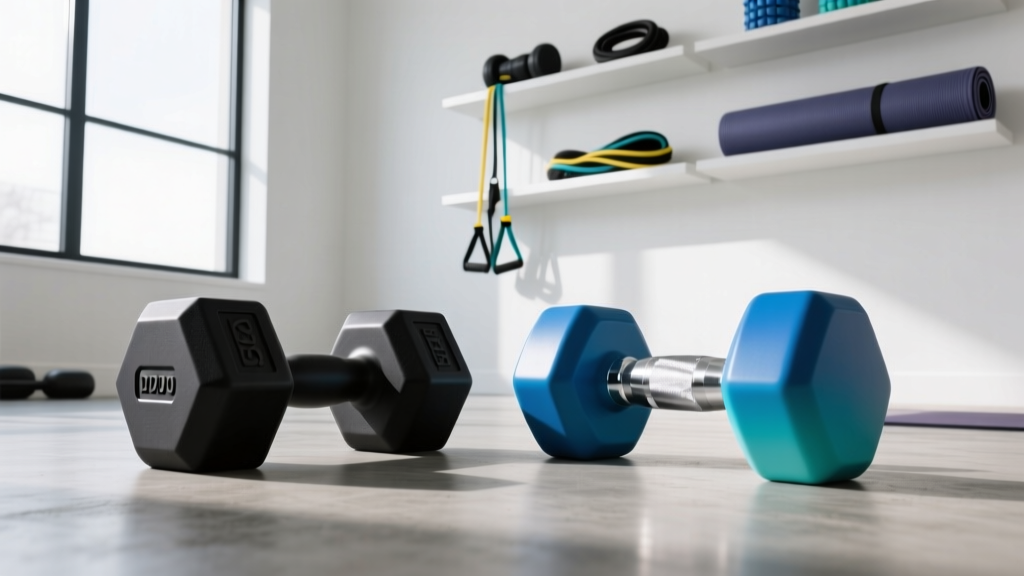
Rubber Hex vs Urethane: 2026 Gear for Lateral Pulls with Dumbbells
Cast Iron vs Competition Kettlebells & Strict Dumbbell Curls Care

Neoprene Dumbbells: Best Picks for Dumbbell Upper Body Routines

Rubber Hex vs Urethane Dumbbells for the Dumbbell Rear Delt Flye

Barbell Clamps Compared: Safety for Your Dumbbell Gym Workout
