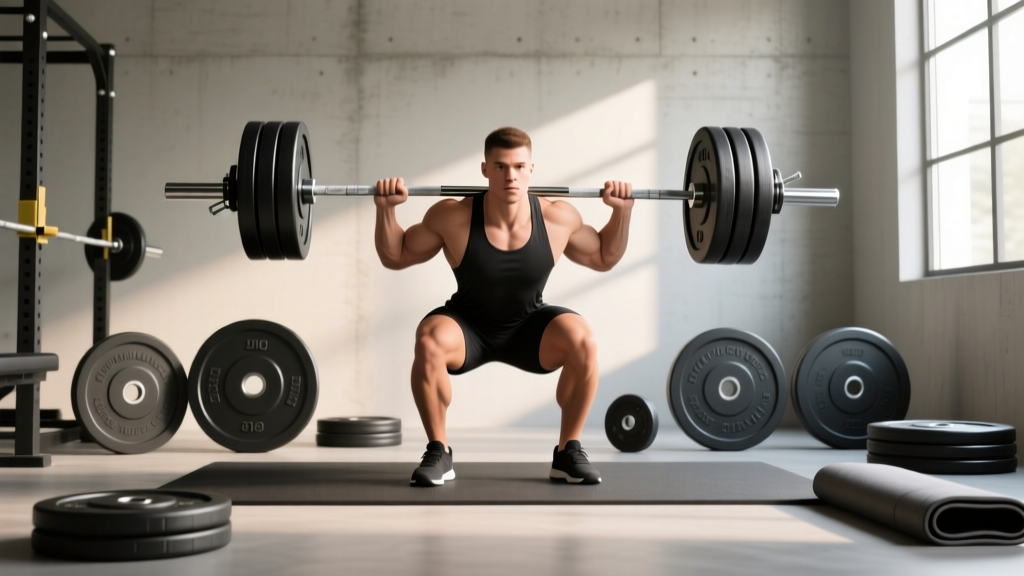
Olympic vs Standard Plates: 10 Pound Dumbbell Exercise Mistakes
Troubleshoot common Olympic vs standard weight plate mistakes. Learn why gear mismatches ruin 10 pound dumbbell exercises and heavy barbell lifts.

The Home Gym Progression Trap: Standard vs. Olympic
Building a home gym often starts with a simple goal: getting stronger without the commute to a commercial facility. Many beginners purchase entry-level standard weight sets, enticed by the lower upfront cost and compact footprint. However, as training evolves from basic movements to more complex routines, lifters inevitably hit an equipment wall. The most common and frustrating bottleneck occurs when transitioning from fixed-weight isolation work to adjustable plate-loaded setups. According to biomechanical safety guidelines outlined by the National Strength and Conditioning Association (NSCA), equipment instability is a leading cause of home gym joint and soft-tissue injuries.
This troubleshooting guide dissects the most critical mistakes lifters make when confusing Olympic and standard weight plates, specifically focusing on how these mismatches compromise everything from heavy compound barbell lifts to high-rep 10 pound dumbbell exercises.
The Dimensional Divide: 1-Inch vs. 2-Inch Receptacles
The most fundamental error in home gym equipment purchasing is misunderstanding the naming conventions of weight plate holes. The terminology is notoriously misleading, leading to catastrophic compatibility issues.
⚠️ Troubleshooting Alert: The Adapter Sleeve MistakeNever use a 1-inch to 2-inch adapter sleeve on a standard barbell to fit Olympic plates. Standard bars lack the tensile strength and sleeve length to support the leverage of 45-pound Olympic plates. This creates a severe tipping hazard and will permanently bend the barbell under loads as light as 135 lbs.
- Standard Plates (The Misnomer): Marketed as "1-inch," the actual center hole measures approximately 1.06 inches (27mm). These are designed for lightweight, entry-level cast-iron bars and adjustable dumbbell handles.
- Olympic Plates (The Industry Standard): Marketed as "2-inch," the center hole measures exactly 1.97 inches (50mm), conforming to the International Weightlifting Federation (IWF) technical specifications. These fit on high-tensile steel barbells and heavy-duty adjustable dumbbell handles.
The Adjustable Handle Trap: 10 Pound Dumbbell Exercises & Collar Slippage
Many lifters assume that because 10 pound dumbbell exercises involve relatively light isolation loads, cheap standard adjustable handles are perfectly sufficient. This is a dangerous misconception that ignores rotational physics.
When performing high-rep 10 pound dumbbell exercises like lateral raises, tricep kickbacks, or rear delt flyes, the wrist undergoes constant pronation and supination. Standard 1-inch adjustable dumbbell handles almost universally rely on threaded spin-lock collars. During the eccentric (lowering) phase of an isolation movement, the rotational torque transferred to the handle causes cheap spin-lock nuts to gradually unscrew.
"The failure point of standard adjustable dumbbells is rarely the weight capacity; it is the collar's inability to withstand repetitive rotational shear forces during isolation movements."
If your 10 pound dumbbell exercises are constantly interrupted by loose collars, or worse, if a plate shifts mid-rep and sprains your wrist, the issue is not your grip strength—it is your equipment ecosystem. The American Council on Exercise (ACE) Exercise Library emphasizes that joint stability during isolation work requires perfectly balanced, secure loads to prevent asymmetric tendon strain.
Standard vs. Olympic Adjustable Dumbbell Handles: A Comparison
| Feature | Standard 1-Inch Handle | Olympic 2-Inch Handle |
|---|---|---|
| Sleeve Length | 7.5 - 8 inches | 10 - 12 inches |
| Max Load Capacity | ~45 lbs (safely) | 150 - 200+ lbs |
| Collar Mechanism | Threaded Spin-Lock | Snap-Lock / Screw-Down |
| Torque Resistance | Low (Prone to loosening) | High (Secure under rotation) |
| Average Cost (Pair) | $25 - $40 | $80 - $150 |
Metallurgy and Load Limits: When Standard Bars Bend
The second major troubleshooting issue arises when lifters attempt to scale their standard plate collection to heavy compound lifts. Standard barbells are typically constructed from low-grade steel with a yield strength well below 40,000 PSI.
The Failure Mode: Once a standard barbell is loaded past 200 to 250 pounds, the bar experiences permanent plastic deformation. It will bend in the center and fail to return to its original straight state. This "banana bar" effect alters the biomechanics of squats and deadlifts, shifting the center of gravity and placing undue shear stress on the lumbar spine.
Olympic barbells, conversely, are engineered with high-tensile steel ranging from 165,000 PSI to over 215,000 PSI. They are designed to "whip" (flex elastically) during heavy cleans or squats and immediately return to true. If you are buying plates with the intention of eventually squatting or deadlifting over 225 lbs, standard plates and bars are a dead-end investment.
Cost vs. Longevity Matrix
A common mistake is evaluating plates solely on initial price per pound, ignoring the cost-per-year of usability. Here is the realistic 2026 market breakdown:
- Standard Cast Iron ($1.00 - $1.50 / lb): Cheapest option. Prone to rust, chipping, and inaccurate weight calibration (often off by 5-10%).
- Olympic Cast Iron ($1.60 - $2.20 / lb): The baseline for serious home gyms. Durable, but loud when dropped and requires maintenance to prevent oxidation.
- Olympic Urethane ($3.50 - $5.50 / lb): The premium standard. Virtually indestructible, odorless, and protects flooring. Highly accurate to within 1% of stated weight.
- Olympic Bumper Plates ($3.00 - $6.00 / lb): Made of dense rubber. Essential for Olympic weightlifting (cleans, snatches) and CrossFit-style dropping, but thicker than iron, limiting the amount of weight you can fit on a barbell sleeve.
Cheap standard plates are notoriously poorly calibrated. A "10 lb" standard plate might actually weigh 9.2 lbs. While this seems negligible for a 50 lb lift, it creates massive imbalances during unilateral 10 pound dumbbell exercises, where a 0.8 lb discrepancy between the left and right hand can alter muscle activation patterns and aggravate elbow tendinopathy over hundreds of reps.
Step-by-Step Troubleshooting Protocol: Fixing Your Gym
If you are currently dealing with a mismatched ecosystem of standard and Olympic gear, follow this audit protocol to restore safety and functionality to your training space.
Step 1: Isolate Your Isolation Work
Stop using standard 1-inch adjustable handles for rotational 10 pound dumbbell exercises. Either upgrade to Olympic adjustable dumbbell handles with secure snap-lock collars, or invest in a pair of fixed-weight 10 lb and 15 lb hex rubber dumbbells. Fixed dumbbells eliminate the collar variable entirely, ensuring perfect balance for lateral raises and tricep extensions.
Step 2: Audit Your Barbell Yield
Unload your standard barbell and roll it on a flat floor. If it wobbles or exhibits a visible curve, it has suffered plastic deformation. Retire it immediately. Do not attempt to lift heavy standard plates on a compromised bar.
Step 3: Consolidate Storage Solutions
Mixing 1-inch and 2-inch plates on the same weight tree is a recipe for damaged equipment. The 2-inch Olympic plates will stretch and deform the 1-inch pegs, while 1-inch plates will wobble dangerously on 2-inch pegs. Purchase a dual-tier weight tree with clearly separated 1-inch and 2-inch horns, or commit fully to the Olympic ecosystem and sell your standard plates to a beginner.
Step 4: Verify Plate Calibration
Take your most frequently used plates (especially the 5 lb, 10 lb, and 2.5 lb increment plates) to a local shipping store or use a high-capacity digital bathroom scale to verify their true weight. If your standard plates are off by more than 3%, replace them with calibrated Olympic fractions to ensure your progressive overload tracking is mathematically accurate.
Final Verdict: When to Make the Switch
Standard weight plates serve a very narrow purpose: light, static home workouts where budget is the absolute primary constraint and heavy loading is not on the horizon. However, the moment your training incorporates dynamic movement, heavy compound lifting, or high-rep rotational 10 pound dumbbell exercises, the standard 1-inch ecosystem becomes a liability. Upgrading to the 50mm Olympic standard is not just about lifting heavier; it is about securing the mechanical reliability required to train safely and consistently for years to come.
More gear to consider
All reviews
Beyond Burpees with Dumbbells: Olympic Barbell Guide

Racks Compared: Power, Squat, Stands & the Dumbbell Front Lunge

Dumbbell One Arm Upright Row: 2026 Loadable Plate Market Trends
Standard vs Olympic Plates for Good Tricep Exercises with Dumbbells

EZ Curl Bar vs Straight Bar: Which Builds Big Dumbbell Biceps?