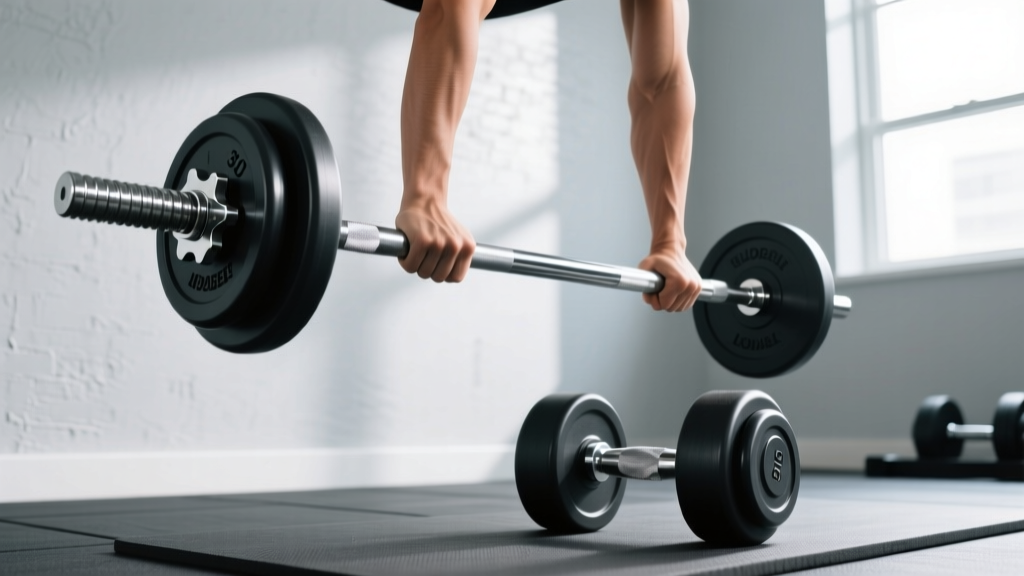
Budget Loadable Dumbbells for Dumbbell Shoulder Lateral Raises (2026)
Discover the true cost and value of loadable dumbbells with interchangeable plates for dumbbell shoulder lateral raises in our 2026 budget breakdown.

The Micro-Loading Dilemma in Dumbbell Shoulder Lateral Raises
When programming for medial deltoid hypertrophy, isolation movements like the dumbbell shoulder lateral raises are notoriously unforgiving when it comes to load progression. Unlike a barbell back squat where a 5-pound increase represents a marginal percentage jump, adding 5 pounds to a 15-pound lateral raise is a massive 33% increase in total resistance. This mathematical reality forces home gym owners into a difficult purchasing decision. Do you buy an entire rack of fixed hex dumbbells in 2.5-pound increments, or do you invest in a loadable dumbbell with interchangeable plates? In this 2026 budget breakdown and value analysis, we dissect the true financial cost, ergonomic limitations, and micro-loading requirements of plate-loaded systems specifically for lateral deltoid training.
Why Standard Plate Increments Fail Isolation Movements
The resistance curve of the lateral raise peaks when the arm is parallel to the floor. According to kinesiology data from ExRx, the moment arm is longest at 90 degrees of abduction, placing maximum mechanical tension on the supraspinatus and lateral deltoid. Because these are relatively small muscle groups, trainees frequently stall at 20 or 25 pounds per hand for months. Standard interchangeable plate sets jump in 2.5 lb or 5 lb increments per side. To achieve true progressive overload without compromising form—such as introducing excessive momentum or upper trapezius shrugging—you must invest in fractional plates. A comprehensive systematic review published in the Journal of Sports Science & Medicine highlights that low-load training taken to failure is highly effective for hypertrophy, but only if the load can be precisely managed to avoid premature central nervous system fatigue and joint strain.
2026 Cost Analysis: Loadable Systems vs. Fixed Dumbbell Sets
To understand the ROI of plate-loaded dumbbells for lateral raises, we must look beyond the base price of the handles and calculate the 'hidden costs' of micro-loading accessories. Below is a comparative breakdown of three popular loadable dumbbell systems on the market in 2026, factoring in the necessary fractional plates required for shoulder isolation work.
| System Model | Base Pair Price | Micro-Plate Add-On Cost | Total Cost (5-25lb Range) | Collar Mechanism |
|---|---|---|---|---|
| Ironmaster Quick-Lock V2 | $359.00 | $45.00 (1.25lb plates) | $554.00 | Threaded Screw |
| Titan Fitness Adjustable | $149.99 | $30.00 (Fractional pair) | $299.99 | Spinlock Nut |
| Yes4All Cast Iron Spinlock | $115.00 | $25.00 (0.5lb plates) | $210.00 | Star-Lock Nut |
| Fixed Hex Set (5-25lb, 5lb jumps) | $350.00 | N/A | $350.00 | N/A |
While the Yes4All and Titan models appear significantly cheaper upfront, they suffer from severe ergonomic and mechanical drawbacks during lateral raises, which we will explore in the next section. The Ironmaster V2 commands a premium, but its structural integrity mimics a fixed dumbbell, which is critical for strict isolation form.
Ergonomic Failure Modes: Spinlock vs. Quick-Lock Under Tension
Not all interchangeable plate systems are created equal, and the failure modes of cheaper spinlock collars are magnified during the dumbbell shoulder lateral raises. When executing a lateral raise, the wrist naturally undergoes subtle pronation and supination to keep the pinky slightly higher than the thumb (the 'pouring the pitcher' cue). This rotational torque transfers directly to the dumbbell handle.
Warning: The Spinlock Loosening EffectOn budget spinlock or star-lock systems (like Titan or Yes4All), the rotational torque of the lateral raise can gradually unscrew the collar nut mid-set. This causes the cast iron plates to rattle and shift outward. The resulting imbalance forces the lifter to recruit stabilizer muscles in the forearm and rotator cuff to control the shifting center of mass, entirely defeating the purpose of an isolation exercise.
Conversely, the Ironmaster Quick-Lock V2 utilizes a threaded drop-in screw that clamps the plates flush against the handle. There is zero rattle, zero shift, and perfect weight distribution. Furthermore, the handle diameter on most plate-loaded dumbbells ranges from 1.15 to 1.2 inches. This is notably thinner than the standard 1.35-inch handle found on commercial rubber hex dumbbells. For lateral raises, this thinner profile is actually a distinct advantage; it reduces grip fatigue, allowing the lifter to push the medial deltoid to absolute muscular failure without the forearm flexors giving out first.
The Time-Cost of Drop Sets and Rest-Pause Training
Value analysis must also account for the 'time cost' of your workouts. Lateral raises respond exceptionally well to drop sets and rest-pause clusters due to the high metabolic stress and blood pooling (the 'pump') they generate. If you are utilizing a plate-loaded system, changing a 5-pound plate on each side takes approximately 15 to 25 seconds per dumbbell with a spinlock, and about 8 to 12 seconds with a quick-lock screw mechanism. During a drop set, this 30-second delay allows the muscle to clear lactic acid and partially recover, blunting the metabolic stimulus. If your training philosophy relies heavily on advanced intensity techniques, the time-cost of loadable dumbbells is a tangible negative that fixed dumbbells or dial-adjustable systems solve instantly.
Material Durability and Long-Term Depreciation
When calculating the lifetime value of your equipment, consider the physical environment of your home gym. Standard cast iron interchangeable plates are prone to oxidation and rust if kept in a garage or basement with fluctuating humidity levels. Rust not only degrades the aesthetic but can stain your flooring and clothing. Upgrading to urethane-coated interchangeable plates adds roughly 30% to the initial budget but eliminates the need for wire-brush maintenance and prevents floor damage if a dumbbell is dropped during a failed rep. Budgeting for urethane fractional plates is a highly recommended long-term value play for home gym owners.
Step-by-Step Budget Build for the Home Gym Lateral Raise Station
If you are committed to the plate-loaded route to save space and money over a full fixed-dumbbell rack, follow this optimized purchasing framework to maximize your ROI for shoulder training:
- Phase 1: The Core Foundation ($150 - $360)
Purchase the base handles and standard 5lb and 10lb plates. This gives you a working weight range of 10lbs to 25lbs per hand, covering the intermediate stages of lateral raise progression. - Phase 2: The Micro-Loading Investment ($25 - $45)
Do not skip this step. Purchase aftermarket 0.5lb or 1.25lb fractional plates. Brands like MicroGainz or Rogue Fitness offer precision-machined fractional plates that fit standard 1-inch or Ironmaster-specific pegs. This allows you to increase your lateral raise load by just 1lb to 2.5lbs per hand, extending your progressive overload timeline by months or even years. - Phase 3: Ergonomic Upgrades ($30)
If you opted for a budget spinlock system, purchase silicone collar O-rings or upgrade to aftermarket snap-clip collars to minimize plate rattle and reduce the time spent twisting nuts on and off the threaded sleeves.
Expert Verdict: Is the ROI Worth It?
For the dedicated bodybuilder or hypertrophy-focused lifter, utilizing a loadable dumbbell with interchangeable plates for the dumbbell shoulder lateral raises is a highly cost-effective alternative to purchasing a $1,500+ commercial fixed dumbbell set. However, the value proposition hinges entirely on your willingness to purchase fractional micro-plates and tolerate the slight time penalty of manual weight changes. If you prioritize absolute mechanical stability and have the budget, the Ironmaster Quick-Lock system paired with 1.25lb micro-plates offers the closest experience to a fixed hex dumbbell, ensuring that every ounce of tension is directed squarely at the lateral deltoid. For those on a strict budget under $200, a Yes4All spinlock set with aftermarket silicone dampeners and 0.5lb fractional plates will get the job done, provided you strictly control the rotational torque of your wrists during the concentric phase of the lift.
More gear to consider
All reviews
Trulap Dumbbell Setup: Beginner Guide to Neoprene Home Weights
Best Neoprene Dumbbells for Dumbbell Thrusts: 2026 Comparison

Bumper Plate vs Iron Plate: EZ Bar Curl vs Dumbbell Curl Setups
Barbell Collar Types Compared: Setup for Squats & Dumbbell Snatch

EZ Curl Bar vs Straight Bar: Space Layout & Dumbbell Jumps
