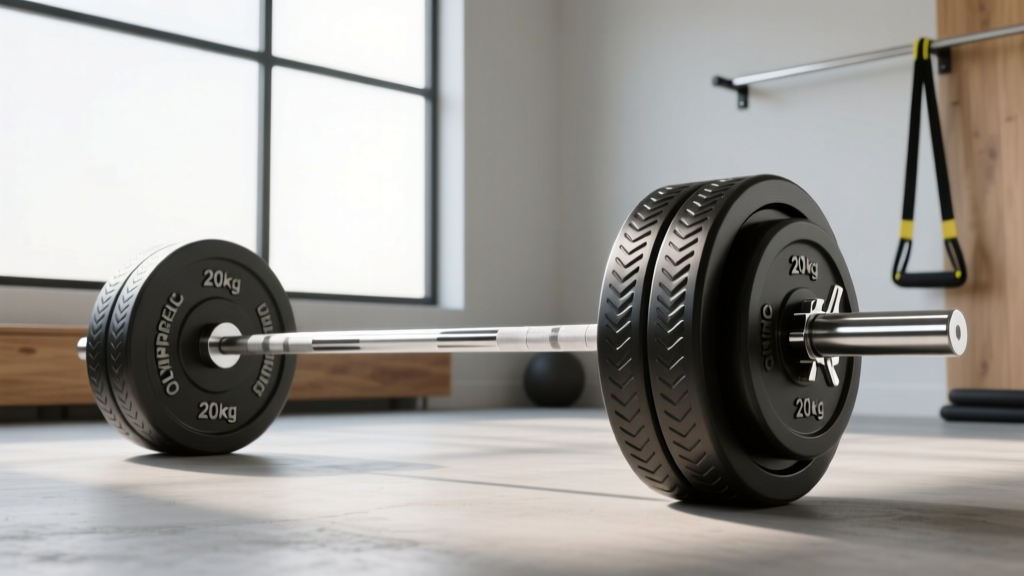
Olympic Barbell Buying Guide: Knurling, Weight & Dumbbell Molds
Master your Olympic barbell buying guide with our deep dive into weight tolerances, knurling patterns, and grip engineering vs standard dumbbell molds.

The Grip Paradigm: CNC Precision vs. Cast Dumbbell Molds
When building a elite-tier home gym or outfitting a commercial facility, the engineering behind your equipment dictates your performance ceiling. Nowhere is this more apparent than in the grip interface. Modern Olympic barbells utilize computer numerical control (CNC) lathes to cut knurling patterns into high-tensile steel shafts with micron-level precision. This stands in stark contrast to the manufacturing realities of traditional sand-cast dumbbell molds.
While dumbbell molds rely on two-part sand casting processes that inherently limit texture refinement—often resulting in aggressive parting lines and rudimentary stippling—an Olympic barbell's knurl is a masterclass in metallurgical grip engineering. Understanding this distinction is the foundational step in any serious Olympic barbell buying guide. You are not just buying a steel rod; you are investing in a precisely calibrated instrument where weight tolerance, whip, and knurl topography converge to optimize force transfer.
Decoding Knurling Topography: Hill, Mountain, and Volcano
The 'feel' of a barbell is entirely dictated by the geometry of its knurl. Manufacturers use specialized tungsten carbide knurling wheels to cut diamonds into the steel. The depth and peak structure of these diamonds fall into three primary categories:
| Knurl Type | Peak Geometry | Typical Depth | Best Application | Aggressiveness |
|---|---|---|---|---|
| Hill | Rounded, flattened peaks | 0.25mm - 0.50mm | High-rep WODs, Barefoot lifting | Low (Mild) |
| Volcano | Cratered center, sharp rim | 0.75mm - 1.00mm | Powerlifting, Heavy Olympic pulls | Medium-High (Optimal) |
| Mountain | Sharp, pointed peaks | 1.00mm+ | Deadlifts, Max effort singles | High (Aggressive) |
Volcano knurling is widely considered the gold standard for 2026 multi-purpose barbells. By shaving off the sharp point of the 'mountain' and leaving a cratered rim, volcano knurling provides maximum surface area contact without tearing the calluses on your hands during high-volume cleans or snatches.
Weight Calibration: Tolerances, Whip, and IWF Standards
A barbell's stated weight is only as good as its calibration. In the realm of cheap import bars, a 20kg barbell might actually weigh 18.5kg or 21.2kg. This variance is unacceptable for competitive lifters and skews progressive overload tracking.
Expert Insight: The IWF Calibration RuleAccording to the International Weightlifting Federation (IWF), competition-certified barbells must adhere to a strict weight tolerance of +10 grams / -0 grams. This means a 20kg bar can never be lighter than 20kg, and can be at most 10 grams over. Economy bars often operate on a +/- 2% tolerance (up to 400 grams of variance), which fundamentally alters the biomechanics of the bar's 'whip' (elastic deformation) during the second pull of a clean.
Weight distribution also affects the bar's center of gravity. High-end manufacturers machine the sleeves and shaft from a single continuous piece of high-alloy spring steel, ensuring the balance point remains dead-center. Conversely, budget bars often weld separate end-caps and sleeves, leading to microscopic imbalances that manifest as barbell oscillation during heavy overhead squats.
Head-to-Head 2026 Barbell Showdown
To illustrate how weight tolerances and knurling profiles translate to real-world performance, we have evaluated three of the most prominent Olympic and multi-purpose barbells on the market.
1. Rogue Fitness Ohio Bar (Cerakote) - The Benchmark
- Tensile Strength: 190,000 PSI
- Knurling: Volcano (Dual IPF/IWF marks)
- Weight Tolerance: +/- 1%
- Price Range: $395 - $425
The Rogue Ohio Bar remains the undisputed king of the mid-tier market. Its volcano knurling offers a phenomenal 'bite' without being a cheese grater. The 190k PSI shaft provides the perfect amount of whip for Olympic lifts while remaining rigid enough for heavy back squats. The Cerakote finish adds crucial corrosion resistance, a feature entirely absent in traditional cast-iron implements.
2. Rep Fitness EX Barbell - The Budget Conqueror
- Tensile Strength: 190,000 PSI
- Knurling: Mountain (IWF mark only)
- Weight Tolerance: +/- 1%
- Price Range: $329 - $349
The Rep EX Barbell punches far above its weight class. It features a slightly more aggressive mountain knurl that excels in deadlifts and heavy pulls. While it lacks the refined center knurl of premium power bars, its 190k PSI spring steel and bronze bushing system deliver a spin and whip profile that rivals bars costing twice as much.
3. Eleiko Sport Training Bar - The Elite Standard
- Tensile Strength: 215,000 PSI
- Knurling: Refined Volcano (IWF mark)
- Weight Tolerance: IWF Certified (+10g / -0g)
- Price Range: $1,150 - $1,250
Eleiko's proprietary Swedish steel and hardened chrome finish represent the pinnacle of barbell engineering. The knurling is deceptively aggressive; it feels smooth to the touch but locks into the skin under heavy load. The 215k PSI rating ensures the bar returns to true center after massive deflections, making it the mandatory choice for competitive Olympic weightlifters.
Bushings vs. Bearings: The Spin Factor
Knurling and weight are only half the equation; the sleeve rotation system dictates how the bar behaves during dynamic movements.
- Bronze Bushings: Provide a slower, more controlled spin. Ideal for powerlifting (squat, bench, deadlift) where excessive bar rotation can destabilize the lifter's grip or balance.
- Needle Bearings: Utilize steel needles to reduce friction, allowing the sleeves to spin rapidly and independently of the shaft. Mandatory for Olympic weightlifting (snatch, clean and jerk) to prevent the rotational inertia of the plates from tearing the lifter's wrists during the turnover phase.
Final Purchasing Framework
Do not let the rudimentary grip of standard dumbbell molds lull you into accepting poor grip engineering on your primary barbell. Use this decision matrix to finalize your purchase:
- For the CrossFit / High-Volume Athlete: Prioritize a Cerakote-finished bar with Hill or mild Volcano knurling and bronze bushings to protect your hands during high-rep WODs.
- For the Powerlifter: Seek out a 29mm shaft diameter, Mountain or deep Volcano knurling, and strict IPF 810mm ring marks.
- For the Olympic Weightlifter: Demand IWF certification, 28mm shaft diameter, needle bearings, and 910mm ring marks to ensure proper whip and spin mechanics.
Investing in a precision-machined Olympic barbell is an investment in your central nervous system's ability to safely and efficiently transfer force. Choose your topography, verify your tolerances, and lift with absolute mechanical certainty.
More gear to consider
All reviews
EZ Bar vs Straight Bar & Dumbbell Exercises for Waist: 2026 Trends

Cast Iron vs Competition Kettlebells & Dumbbell Wrist Rotation

Skull and Dumbbells Gym Layout: Bumper vs Iron Plates
Best Neoprene Dumbbells for a Whole Body Dumbbell Circuit

EZ Curl Bar vs Straight Bar: Good Upper Body Workouts with Dumbbells
