Olympic Barbell Guide: Weight, Knurling & Standing Dumbbell Flys Chest
Master your Olympic barbell buying guide focusing on weight and knurling, plus how to pair it with standing dumbbell flys chest workouts for max gains.

The Foundation: Decoding Olympic Barbell Weight and Tolerances
Building a complete home gym or upgrading a commercial facility in 2026 requires a meticulous approach to equipment selection. The Olympic barbell remains the undisputed centerpiece of any serious strength training program. However, not all 20kg bars are created equal. When evaluating an Olympic barbell buying guide, weight and knurling are the two most critical factors that dictate performance, safety, and longevity.
According to the International Powerlifting Federation (IPF) and the International Weightlifting Federation (IWF), strict tolerances govern competition barbells. A standard men's Olympic barbell must weigh exactly 20kg (44.09 lbs), while a women's barbell weighs 15kg (33.07 lbs). But what about the fine print? High-end competition bars boast a weight tolerance of +/- 10 grams, ensuring absolute precision for record attempts. In contrast, budget-friendly commercial bars often carry a +/- 50 gram (or even +/- 100 gram) variance. While a 50-gram discrepancy won't derail your average bench press session, it reflects the overall manufacturing precision—and by extension, the quality of the steel and shaft alignment—of the bar.
Shaft Diameter: The Hidden Weight Variable
The diameter of the barbell shaft directly influences its weight distribution and whip (elastic deformation). Men's powerlifting bars typically feature a 29mm shaft, providing a rigid, stable platform for heavy bench presses and squats. Olympic weightlifting bars utilize a 28mm shaft to maximize 'whip' during the clean and jerk. Dual-purpose bars, like the iconic Rogue Ohio Bar, split the difference at 28.5mm, offering a versatile middle ground for general strength training.
Tensile Strength vs. Yield Strength: What the Specs Actually Mean
Many buyers conflate tensile strength with yield strength, a mistake that can lead to a permanently bent barbell. Tensile strength (measured in PSI) indicates the absolute maximum stress the steel can withstand before snapping. Yield strength, however, is the threshold at which the steel permanently deforms and fails to return to its straight state.
- Under 165,000 PSI: Budget territory. Prone to permanent bending if dropped with heavy loads.
- 190,000 PSI: The gold standard for mid-tier bars. Excellent for general powerbuilding and Olympic lifting.
- 215,000+ PSI: Elite competition grade. Found in premium bars from Eleiko and Uesaka, virtually immune to permanent bending under humanly possible loads.
The Knurling Matrix: Aggressive vs. Passive Grips
Knurling is the diamond-patterned machining on the shaft that provides grip. As detailed in BarBend's comprehensive knurling guide, the depth and shape of these diamonds drastically alter the bar's feel. Modern machining has evolved beyond simple 'aggressive' or 'passive' labels into three distinct geometric profiles.
| Knurl Profile | Geometry & Feel | Best Use Case | Notable 2026 Barbell Models |
|---|---|---|---|
| Volcano | Features a rimmed peak with a crater in the center. Grips aggressively without tearing calluses. | Powerbuilding, Heavy Bench, Squat | Rogue Ohio Bar, Kabuki Strength New Gen |
| Mountain | Sharp, pointed peaks with no crater. Highly aggressive, bites deeply into the skin. | Deadlifts, Chalk-heavy Powerlifting | Texas Power Bar, Okie Deadlift Bar |
| Hill | Shallow, rounded peaks. Passive feel, comfortable for high-rep work but slips with heavy sweat. | High-rep hypertrophy, Budget bars | Rep Fitness AB-4100, CAP Barbell OB-86B |
The Center Knurl Debate
Do you need a center knurl? For squatters, a center knurl provides a crucial tactile cue to keep the bar seated securely on the traps. However, for lifters who prioritize the bench press or Olympic cleans, a center knurl can scrape the neck and collarbone during front rack positions. In 2026, the trend among hybrid 'powerbuilding' bars is a slightly passive, machined-down center knurl that offers a back-squat cue without destroying your neck during cleans.
Biomechanics Alert: The 'Standing Dumbbell Flys Chest' Conundrum
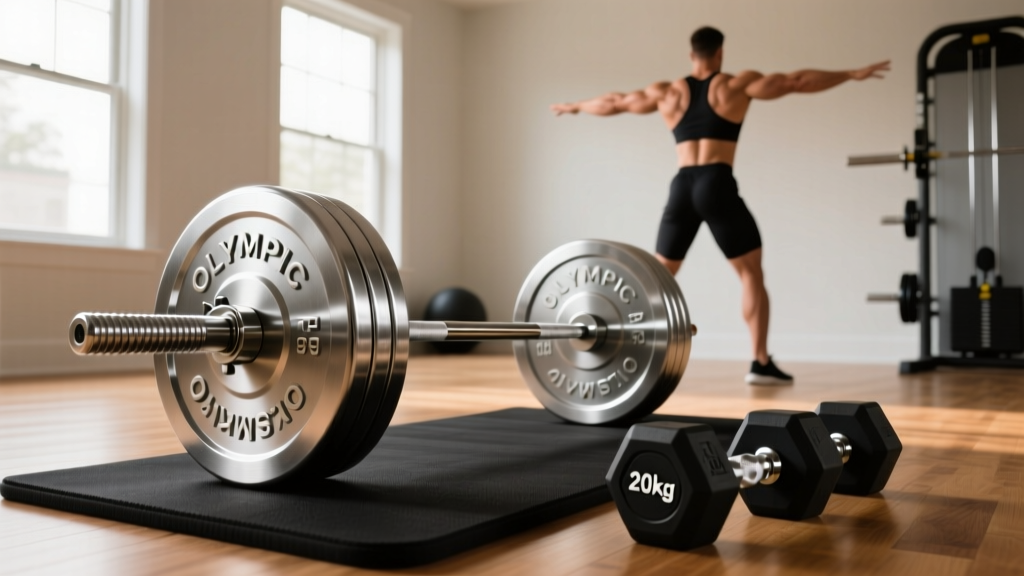
When programming accessory work to complement your heavy barbell bench presses, you might be tempted to search for standing dumbbell flys chest routines to isolate the pectorals. As strength and conditioning experts, we must address a massive biomechanical flaw in this specific movement pattern when using free weights.
The Gravity Vector Flaw
Dumbbells rely entirely on gravity, which pulls straight down toward the floor. When you stand upright and perform a dumbbell fly, the resistance vector is vertical. This means your anterior deltoids (front shoulders) are doing the work of a front raise. Your pectoralis major only experiences mechanical tension at the very bottom of the arc when your arms are parallel to the floor. The top 80% of the movement provides zero chest stimulation.
The E-E-A-T Solution: To properly execute a standing chest fly, you must align the resistance vector horizontally, perpendicular to your torso. This requires using a dual-cable column system or heavy resistance bands anchored behind you. If you are strictly using dumbbells, you must be supine (lying on a flat or incline bench) to align gravity with the transverse adduction function of the pecs. Pairing your heavy Olympic barbell bench press with supine dumbbell flys or standing cable flys ensures complete sternal and clavicular pec development without wasting energy on biomechanically inferior standing dumbbell variations.
Bushings vs. Bearings: What Matters for the Bench?
The rotation mechanism inside the barbell sleeve dictates how smoothly the plates spin. According to expert analyses on barbell sleeves, your choice depends entirely on your training style.
- Bronze/Composite Bushings: These provide a slow, controlled spin. They are ideal for powerlifting (bench press, squat, deadlift) because they prevent the bar from violently twisting in your hands during slow, heavy grinds. If your primary goal is moving maximum weight on the bench, buy a bushing bar.
- Needle Bearings: These allow for a lightning-fast, frictionless spin. They are mandatory for Olympic weightlifting (snatches, clean and jerks) where the bar must rotate rapidly during the turnover phase. Using a bearing bar for heavy bench pressing can actually cause unwanted rotational instability.
2026 Pricing & Value Tiers
Navigating the current market requires understanding what you are actually paying for. Here is the 2026 pricing landscape for Olympic barbells:
- Budget Tier ($150 - $220): Expect 165k to 180k PSI tensile strength, hill knurling, and basic composite bushings. Fine for beginners, but will likely bend if you regularly drop loads over 300 lbs.
- Mid-Tier / The Sweet Spot ($295 - $450): This is where you find 190k+ PSI steel, precise volcano knurling, and lifetime warranties against bending. The Rogue Ohio Bar and REP Fitness Excalibur dominate this space, offering 95% of the performance of elite bars at a fraction of the cost.
- Elite / Competition Tier ($800 - $1,200+): IWF/IPF certified bars from Eleiko, Uesaka, or Werksan. You are paying for 215k+ PSI Swedish or Japanese steel, +/- 10g weight tolerances, and proprietary needle bearings. Only necessary for sanctioned competitive lifters.
Final Thoughts on Building Your Arsenal
Investing in the right Olympic barbell is a decades-long commitment. Prioritize a 190k+ PSI shaft with a volcano knurl pattern for the best balance of grip and comfort. Furthermore, always critically evaluate exercise selection—understanding the physics behind movements like the standing dumbbell flys chest variation will save you from junk volume and accelerate your hypertrophy gains. Train smart, respect the biomechanics, and let the iron do the work.
More gear to consider
All reviews
Budget Breakdown: P-Orbital Dumbbell-Shaped Loadable Handle Value

Kettlebell Care: Cast Iron vs Competition & Dumbbell Good Mornings

Dumbbell Y Raises: Rubber Hex vs Urethane Maintenance Guide
Beyond the Biggest Dumbbell Curl: Barbell Knurling Guide

Neoprene Dumbbells for Home Use vs. Benching 100 Pound Dumbbells