
Barbell Weight & Knurling: Full Body Workout with Bench and Dumbbells
Transition from a full body workout with bench and dumbbells to heavy barbell lifts. Compare Olympic barbell weight tolerances, PSI, and knurling.

For millions of home gym owners, a full body workout with bench and dumbbells serves as the foundational blueprint for building muscle and establishing baseline strength. Dumbbells offer unparalleled unilateral benefits and joint-friendly range of motion. However, as you approach the intermediate threshold in 2026, the biomechanical ceiling of dumbbells becomes glaringly obvious. Grip fatigue and stabilizer burnout will inevitably limit your prime mover output on heavy compounds like squats, deadlifts, and bench presses.
To break through this plateau, upgrading to an Olympic barbell is non-negotiable. But navigating the modern barbell market requires a deep understanding of metallurgy, weight calibration, and knurling geometry. This in-depth buying guide dissects the exact specifications you need to look for when transitioning from dumbbells to the barbell.
The Dumbbell Ceiling: Why Absolute Load Matters
When performing a full body workout with bench and dumbbells, your central nervous system must allocate significant resources to stabilizing two independent objects. While excellent for hypertrophy, this stabilization requirement caps the absolute load you can place on your largest muscle groups. For example, pressing a pair of 120 lb dumbbells is an elite feat of balance and strength, but it translates to roughly a 275 lb barbell bench press—a weight that requires vastly different neurological recruitment patterns.
An Olympic barbell unifies the load, allowing you to overload the prime movers (pectorals, quadriceps, glutes, and spinal erectors) without grip or stabilizer failure acting as the limiting factor. To do this safely and effectively, the bar itself must be engineered to precise tolerances.
Decoding Barbell Weight, Tensile Strength, and Whip
Not all 20kg (44.09 lb) bars are created equal. The structural integrity of a barbell is dictated by its tensile strength, measured in Pounds per Square Inch (PSI).
📊 The PSI Hierarchy (2026 Standards)
- Below 165k PSI: Budget Amazon bars. Prone to permanent bending (yield failure) under heavy deadlifts. Avoid.
- 190k PSI: The standard for high-quality commercial and home gym multipurpose bars. Adequate for most lifters.
- 200k - 205k PSI: Premium power bars. Highly resistant to bending, providing a stiff, stable platform for heavy benching and squatting.
- 215k+ PSI: Elite competition bars (e.g., Eleiko, Uesaka). Offers maximum durability and specific 'whip' characteristics.
Weight Calibration and Federation Standards
If you are buying a bar for serious progression, weight accuracy matters. According to the International Powerlifting Federation (IPF) Technical Rules, competition bars must weigh exactly 20kg with incredibly tight tolerances. Budget bars often claim to be 45 lbs but can weigh anywhere from 43 to 47 lbs due to poor manufacturing oversight. Premium manufacturers calibrate their bars to within +/- 15 grams of the 20kg mark, ensuring that the math on your progressive overload spreadsheet is actually accurate.
The Knurling Matrix: Grip Geometry Explained
Knurling is the cross-hatched pattern machined into the steel shaft. It is the single most subjective yet critical feature of any barbell. In 2026, the market has standardized around three primary knurling profiles. Understanding these will dictate how the bar feels during heavy, chalk-laden sets.
| Profile | Geometry | Aggressiveness | Best Application | 2026 Benchmark Model |
|---|---|---|---|---|
| Hill | Rounded peaks, shallow valleys | Mild / Passive | High-rep WODs, beginners, bare hands | American Barbell California Bar |
| Mountain | Pointy peaks, deep valleys | Aggressive / Sharp | Olympic weightlifting, heavy pulling | Eleiko IWF Weightlifting Bar |
| Volcano | Cratered peaks (rimmed edges) | Grippy but not sharp | Powerlifting, heavy squats/bench | Rogue Ohio Power Bar |
Expert Insight: The 'Volcano' knurl is widely considered the holy grail of modern power bars. By machining the top of the peak off, manufacturers create a rimmed edge that bites into the skin without tearing calluses, offering superior grip for low-rep, heavy sets compared to the sharp 'Mountain' profile.
Sleeve Rotation: Bushings vs. Needle Bearings
When transitioning from a full body workout with bench and dumbbells to barbell work, you will notice the sleeves (the ends where plates load) spin. This rotation mitigates the rotational inertia of the weight plates, protecting your wrists during dynamic movements.
- Bronze/Composite Bushings: Found on power bars and budget multipurpose bars. They offer a slow, deliberate spin. Ideal for squats, bench presses, and deadlifts where excessive sleeve rotation can actually cause the bar to roll out of your hands.
- Needle Bearings: Found on Olympic weightlifting bars (like those certified by the International Weightlifting Federation). They provide a lightning-fast, frictionless spin. Mandatory for the snatch and clean & jerk, but often overkill and slightly less stable for heavy, slow powerlifts.
2026 Barbell Market: Top Picks for the Dumbbell Convert
Based on current pricing, metallurgy, and quality control, here are the top three barbells for lifters upgrading from a dumbbell-centric home gym.
1. The Undisputed Standard: Rogue Ohio Power Bar
Price: $295.00 - $345.00 (depending on coating)
Specs: 205k PSI, 15-inch volcano knurl, bronze bushings, single IPF knurl mark.
Why it wins: The Rogue Ohio Power Bar remains the gold standard for home gyms. The 29mm shaft diameter and aggressive volcano knurl provide a locked-in feel that dumbbells simply cannot replicate. The Cerakote finish options in 2026 offer unparalleled rust resistance for garage gyms.
2. The Premium Hybrid: Kabuki Strength New Generation Power Bar
Price: $335.00
Specs: 200k+ PSI, 1.5mm knurl depth, stainless steel shaft, chrome sleeves.
Why it wins: Kabuki's proprietary knurling machine creates a slightly deeper bite than Rogue's, making it exceptional for heavy deadlifts. The stainless steel shaft requires zero maintenance, a massive upgrade from cheap zinc-coated bars that corrode within a year.
3. The Olympic Specialist: Eleiko IWF Training Bar
Price: $850.00+
Specs: 215k+ PSI, Swedish steel, needle bearings, mountain knurl.
Why it wins: If your post-dumbbell goals involve Olympic weightlifting, Eleiko's Swedish steel offers a 'whip' (elastic deformation) that stores and releases kinetic energy during the clean and jerk. It is a specialized tool, but unmatched in quality.
Translating Your Routine: Dumbbell to Barbell
Upgrading your equipment requires a shift in programming. Here is how to map your existing dumbbell movements to their barbell counterparts for maximum progressive overload.
| Dumbbell Movement | Barbell Equivalent | Biomechanical Advantage |
|---|---|---|
| DB Goblet Squat | Barbell Back Squat | Removes core/arm bottleneck; allows true leg failure. |
| DB Bench Press | Barbell Bench Press | Unifies the load path; enables micro-loading (2.5 lb jumps). |
| DB Romanian Deadlift | Barbell RDL / Conventional Deadlift | Lowers center of gravity; accommodates 45 lb plates for full ROM. |
| DB Overhead Press | Barbell Strict Press | Increases total systemic load and core stabilization demands. |
Final Verdict: Making the Investment
A full body workout with bench and dumbbells will always have a place in your programming for accessory work, joint rehabilitation, and unilateral isolation. However, to maximize your genetic potential for absolute strength and central nervous system adaptation, a high-quality Olympic barbell is mandatory. Prioritize a 190k+ PSI tensile strength, a volcano knurl profile for powerlifting or mountain for weightlifting, and ensure the bar is calibrated to IWF/IPF weight tolerances. By understanding the metallurgy and geometry outlined in this guide, you will invest in a tool that will outlast your lifting career.
More gear to consider
All reviews
Tested and Step Compared: Real-World Performance Data for Industrial Weighing Systems
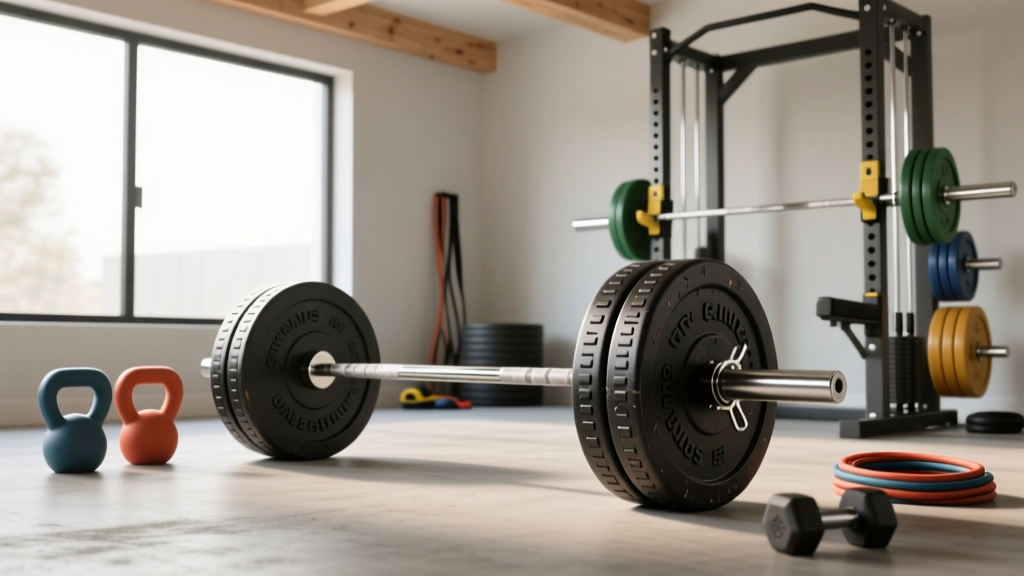
Barbell Knurling & Weight Guide: Beyond Dumbbell Workout Exercises
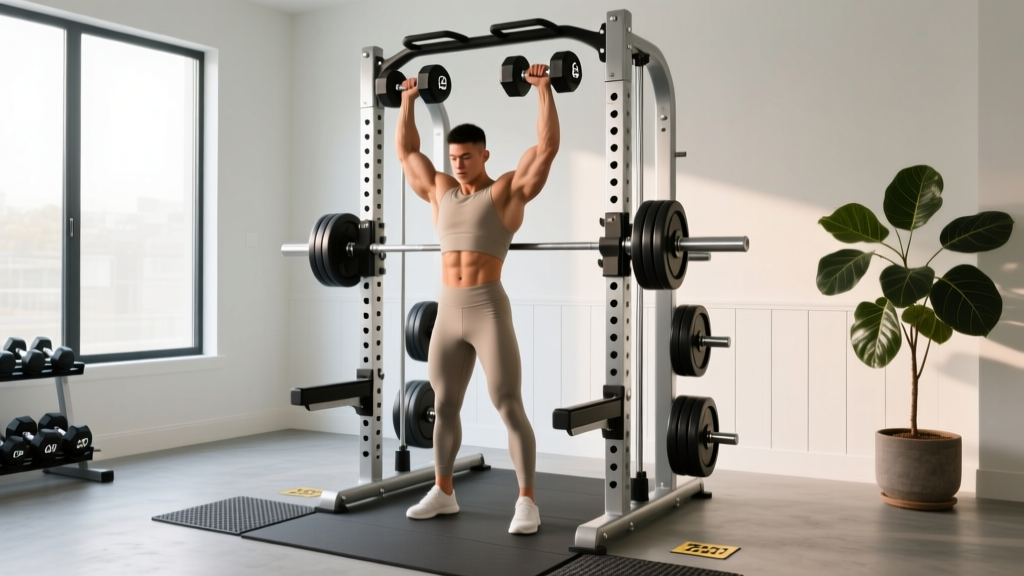
Rack Layouts for the Standing Overhead Press with Dumbbells

Adjustable Dumbbell Setup & Best 20 Lb Dumbbell Exercises 2026

EZ Bar vs Straight Bar Value & Reverse Grip Chest Press Dumbbell
