
Olympic Barbell Knurling & Centr Rubber Dumbbell Set Setup Guide
Master your 2026 home gym with our walkthrough on Olympic barbell knurling, weight selection, and installing the Centr rubber dumbbell set.

The Architecture of a Complete Free-Weight Zone
Building a premium home gym in 2026 requires more than just purchasing heavy objects; it demands a meticulous understanding of biomechanics, metallurgy, and spatial planning. Whether you are outfitting a commercial facility or a high-end garage gym, the transition from raw equipment delivery to a fully calibrated training environment is where most lifters fall short. This complete setup and installation walkthrough bridges the gap between your primary compound movement tool—the Olympic barbell—and your secondary isolation equipment, specifically focusing on the integration of a premium centr rubber dumbbell set. By mastering barbell weight tolerances, knurling profiles, and precise racking installations, you ensure longevity, safety, and optimal performance.
Decoding Olympic Barbell Weight Standards and Tolerances
Before unboxing and assembling your racks, you must verify the anatomical and metrological specifications of your Olympic barbell. According to the International Weightlifting Federation (IWF), a standard men's Olympic barbell must weigh exactly 20kg (44.09 lbs) and measure 2200mm in total length, with a 28mm shaft diameter. The women's specification dictates a 15kg (33.06 lbs) bar, 2010mm in length, with a 25mm shaft.
Commercial vs. Competition Tolerances
While IWF-certified competition bars boast a weight tolerance of +/- 10 grams, standard commercial gym bars often carry a +/- 50 gram variance. When setting up your primary lifting station, always calibrate your digital floor scale. If your 20kg bar reads 19.8kg, you must account for this 200-gram deficit in your progressive overload tracking. Furthermore, verify the tensile strength of the steel shaft. A high-quality Olympic bar should feature a minimum tensile strength of 190,000 PSI (pounds per square inch) to prevent permanent deformation during heavy eccentric drops.
Expert Insight: Never assume the sleeve length is universal. Standard Olympic sleeves are 16.3 inches (415mm). If you are using specialized powerlifting plates that are wider than standard bumper plates, measure your sleeve capacity before loading past 500 lbs.The Tactile Science of Barbell Knurling
Knurling—the cross-hatched pattern machined into the steel shaft—is the single most critical interface between your central nervous system and the load. Understanding knurl geometry is essential when selecting a barbell that complements your training style. As detailed in BarBend's comprehensive knurling guide, there are three primary geometric profiles utilized by top manufacturers in 2026:
- Volcano Knurling: Characterized by sharp, distinct peaks with deep valleys. This provides an aggressive, sandpaper-like grip ideal for heavy deadlifts and powerlifting. (e.g., Rogue Ohio Power Bar).
- Mountain Knurling: Features flatter peaks and moderate depth. It offers a secure grip without tearing the calluses during high-volume Olympic lifts or dynamic movements.
- Hill Knurling: The peaks are slightly rounded off, creating a smoother, less aggressive feel. This is the gold standard for Olympic weightlifting and high-rep front squats where the bar rests directly on the clavicle.
Measuring Knurl Depth
The aggressiveness of the knurl is dictated by its depth, typically ranging from 0.015 inches (shallow/moderate) to 0.025 inches (deep/aggressive). When pairing an aggressive barbell with secondary equipment, you must consider hand fatigue. This is precisely why integrating a well-designed dumbbell set is crucial for accessory work.
Integrating the Centr Rubber Dumbbell Set
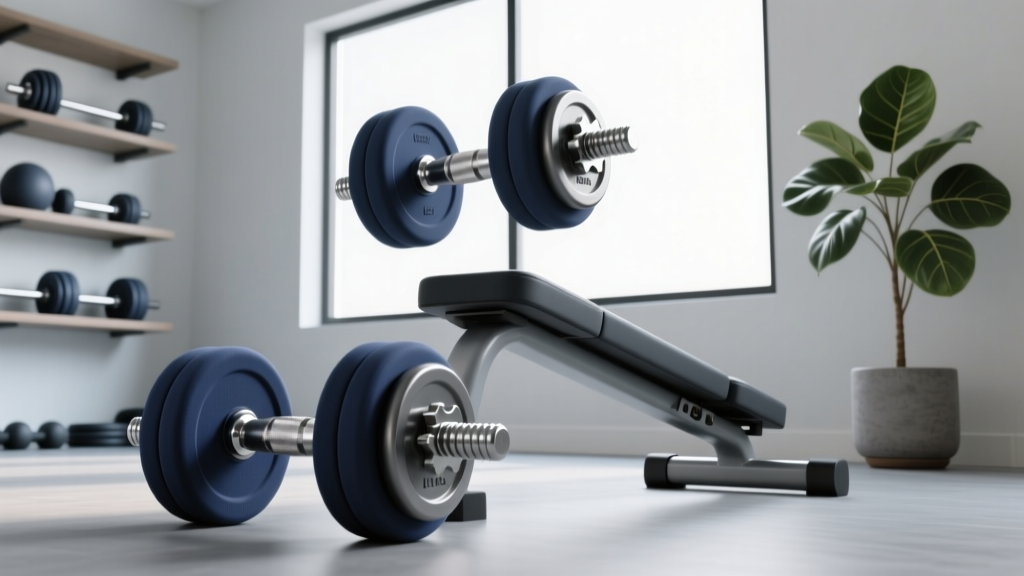
While the Olympic barbell handles heavy axial loading, your accessory and hypertrophy work requires ergonomic precision. The centr rubber dumbbell set is engineered to complement the heavy barbell work by providing a distinct tactile and structural contrast. Unlike the aggressive volcano knurl of a power bar, the Centr dumbbells feature a moderately knurled, hard-chrome handle that secures the grip without destroying the skin during high-rep lateral raises or Bulgarian split squats.
Material and Footprint Specifications
The heads of the Centr set utilize a premium virgin rubber/urethane blend. This is a critical upgrade from cheap recycled rubber, which off-gases volatile organic compounds (VOCs) and degrades under UV exposure. The hexagonal head geometry prevents rolling, a mandatory safety feature when performing renegade rows or floor-based transitions. When planning your gym layout, a standard 5-to-50 lb (10-pair) Centr rubber dumbbell set requires a horizontal rack footprint of approximately 52 inches wide by 24 inches deep, weighing in at roughly 550 lbs total when fully loaded on the rack.
"The transition from a 28mm barbell shaft to a 34mm contoured dumbbell handle requires a neurological adaptation in grip strength. Never underestimate the forearm fatigue induced by switching between the two modalities in a single superset."
Step-by-Step Rack and Dumbbell Installation Walkthrough
Proper installation of your storage and lifting infrastructure ensures safety and maximizes floor space. Follow this exact sequence for assembling your 3-tier A-frame dumbbell rack and positioning it relative to your Olympic lifting platform.
- Base Assembly and Leveling: Assemble the steel A-frame rack on a flat surface. Insert the M10 x 30mm hex bolts through the base gussets. Do not fully tighten until all four feet are planted.
- Tier Spacing Calibration: Attach the three horizontal tiers. The industry standard vertical clearance between tiers is 7.5 inches. This accommodates the 6-inch diameter of a 50lb Centr rubber dumbbell head while leaving 1.5 inches of clearance for easy gripping.
- Torque and Securing: Using a calibrated torque wrench, tighten all structural bolts to 35 Nm (Newton-meters). If your rack features an anti-tip wall-mount bracket, locate the wall studs and secure using 3/8-inch lag screws driven at least 2.5 inches into the wood stud.
- Placement Strategy: Position the dumbbell rack exactly 36 inches away from the edge of your Olympic lifting platform. This specific distance allows for safe dismounting and walking clearance while keeping the weights within the peripheral vision of the lifter.
Equipment Comparison Matrix: Barbell vs. Dumbbell Mechanics
Understanding the mechanical differences between your primary and secondary equipment helps in programming and maintenance. Review the data table below to understand how your Olympic barbell and Centr rubber dumbbell set interact with your training environment.
| Feature | Olympic Barbell (20kg) | Centr Rubber Dumbbell Set |
|---|---|---|
| Shaft/Handle Diameter | 28mm (Men's) / 25mm (Women's) | 32mm - 35mm (Ergonomic Contour) |
| Knurl Aggressiveness | High (Volcano/Mountain profiles) | Moderate (Chrome etched) |
| Drop Tolerance | High (Requires bumper plates) | Moderate (Rubber heads absorb shock) |
| Maintenance Requirement | Monthly shaft oiling & sleeve dusting | Weekly rubber wipe-down (no oil) |
Drop Zone Calibration and Flooring Protection
Both Olympic barbell drops and heavy dumbbell throws require specialized flooring to protect the concrete substrate and the equipment itself. Standard interlocking foam tiles are entirely insufficient for a 2026 free-weight zone. You must install 3/4-inch (19mm) thick vulcanized rubber horse stall mats or specialized high-density drop pads.
Critical Warning: Never drop the Centr rubber dumbbell set from above shoulder height onto bare concrete. While the rubber heads absorb linear impact, the internal steel core can fracture or detach from the handle housing under extreme sheer force. Always lower heavy dumbbells under control or drop them only from waist height onto 3/4-inch vulcanized rubber.Maintenance Protocol for Longevity
To maintain the spin and knurl integrity of your equipment, implement a strict maintenance schedule. According to equipment longevity experts at Garage Gym Reviews, you should use a stiff nylon brush to remove chalk and dead skin from the barbell knurl weekly. Follow this by applying three drops of 3-in-One oil to the sleeve bushings and spinning the sleeve to distribute the lubricant. For your Centr rubber dumbbell set, avoid harsh chemical cleaners like bleach or ammonia, which break down the rubber polymers over time. Instead, use a simple solution of distilled water and a few drops of mild dish soap, applied with a microfiber cloth, to maintain the matte finish and grip integrity.
Final Setup Verification
Before loading your first working set, perform a final spatial audit. Ensure the barbell collars are secured with competition-grade spring clips or aluminum clamp collars. Verify that the dumbbell rack is entirely free of wobble by applying 50 lbs of downward pressure on the top tier. By respecting the engineering nuances of both your Olympic barbell's knurling and the ergonomic design of your Centr rubber dumbbell set, you create a cohesive, safe, and elite-tier training environment built to withstand years of progressive overload.
More gear to consider
All reviews
Space-Saving Racks for Dumbbell Workouts to Tone Arms

Setting Up Your Home Gym: Arm Dumbbells & Olympic vs Standard Plates

Optimizing Space for the Barbell Curl Dumbbell Superset Routine

Bumper vs Iron Plates: Trends & Dumbbell Side Bend Muscles Worked
Neoprene Dumbbells for Home: Neutral Grip Incline Dumbbell Press
