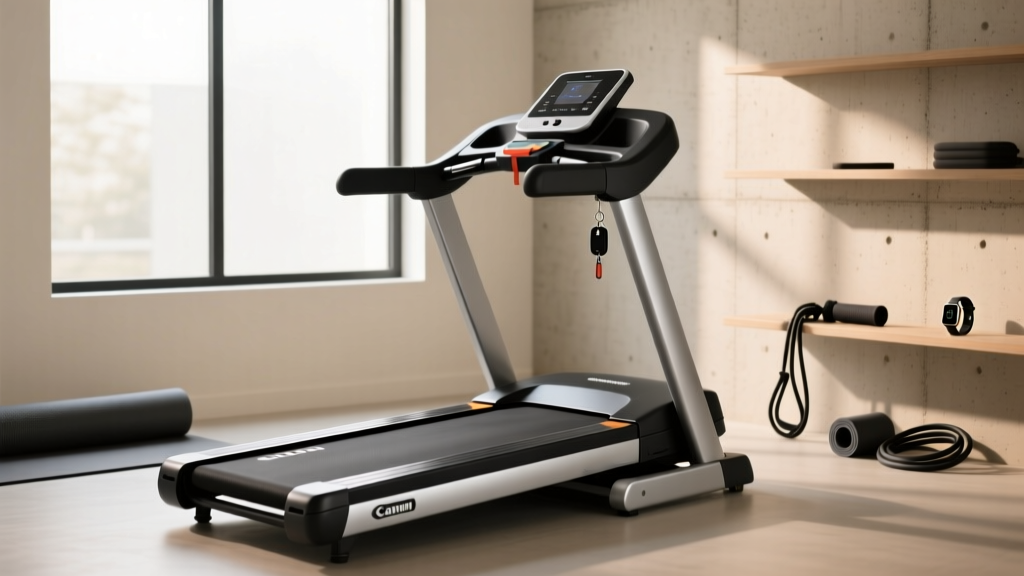
NordicTrack C1500 Treadmill vs Stationary Bikes: Value Breakdown
We analyze the 5-year costs, maintenance, and ROI of the NordicTrack C1500 treadmill versus upright, recumbent, and spin stationary bikes.

The Home Gym Dilemma: Treadmill vs. Bike Fleet
Building a home gym in 2026 requires navigating a minefield of subscription models, hidden maintenance costs, and depreciating hardware. When allocating a $1,000 to $2,500 budget, most buyers face a critical crossroads: invest in a traditional walking/running machine like the NordicTrack C1500 treadmill, or diversify into stationary bike types (upright, recumbent, and spin)?
While marketing materials focus on upfront retail prices, the true financial impact of cardio equipment lies in its Total Cost of Ownership (TCO). This value analysis strips away the hype, comparing the long-term budget breakdown, biomechanical ROI, and real-world failure modes of the NordicTrack C1500 against the three primary categories of stationary bikes.
Quick Takeaway: The NordicTrack C1500 offers superior weight-bearing bone density benefits but carries higher mechanical maintenance and mandatory software costs. Stationary bikes—particularly magnetic upright and recumbent models—offer a lower 5-year TCO with near-zero drivetrain maintenance, making them the superior budget choice for multi-user households.NordicTrack C1500 Treadmill: 2026 Cost & Value Analysis
The NordicTrack C1500 is a popular mid-tier folding treadmill, frequently found in warehouse clubs and direct-to-consumer channels. It features a 2.75 CHP Mach Z motor, a 20-inch by 55-inch tread belt, and a 12% motorized incline. But what does it actually cost to keep it running?
Upfront and Hidden Costs
- Hardware Cost: Typically retails between $799 and $999, depending on seasonal promotions.
- iFIT Subscription: To unlock the auto-adjusting incline/speed and interactive mapping, iFIT costs $39/month ($468/year). While you can use the C1500 in manual mode without it, the machine's primary value proposition is deeply tied to this software.
- Delivery & Assembly: Threshold delivery is often included, but professional assembly runs $150–$250. The C1500 weighs roughly 185 lbs; assembling the uprights and console alone is a frustrating two-person job.
Maintenance and Edge Cases
Treadmills are high-friction environments. The C1500 requires 100% silicone belt lubrication every 150 miles or 3 months. Failure to do so increases amp draw on the 2.75 CHP motor, leading to thermal shutdowns or premature control board failure—a $200+ replacement part. Furthermore, the 55-inch belt length is a known edge case: runners taller than 6'1' will find their stride clipped, forcing an unnatural gait that can lead to Achilles strain.
Stationary Bike Types: Upright, Recumbent, and Spin Bikes
If the treadmill feels like a financial and mechanical liability, the stationary bike market offers three distinct alternatives, each with a vastly different value proposition.
1. Upright Bikes (The Versatile Middle-Ground)
Upright bikes mimic the geometry of a traditional bicycle but with a wider, more forgiving saddle and a heavier flywheel. Models like the Schwinn IC4 or Bowflex C6 (approx. $799) use magnetic resistance.
- Value Proposition: Magnetic resistance means there is zero physical friction on the flywheel. There are no brake pads to replace and no belts to snap.
- Subscription Flexibility: Unlike NordicTrack's closed ecosystem, most 2026 upright bikes feature dual-sided pedals (SPD cleats and flat cages) and Bluetooth connectivity, allowing you to use third-party apps like Zwift or Peloton Digital for $12–$14/month, avoiding expensive proprietary lock-in.
2. Recumbent Bikes (The Joint-Saver)
Recumbent bikes, such as the Horizon Comfort R ($899), feature a step-through design and a bucket seat with a mesh lumbar backrest.
- Value Proposition: Recumbents have the lowest failure rate in the home cardio industry. The seated position removes upper body sway, meaning the console and handlebars undergo virtually zero stress.
- The Budget Advantage: Most high-end recumbents do not require mandatory monthly subscriptions to access their full suite of resistance levels and pre-programmed routes. You pay for the hardware, and you own the experience.
3. Spin Bikes (The High-Intensity Calorie Torch)
Indoor cycling bikes (e.g., Peloton Bike+ at $1,445 or the commercial-grade Keiser M3i at $2,395) are built for high-cadence, out-of-the-saddle interval training.
- Value Proposition: Unmatched cardiovascular output per square foot. The heavy flywheel (often 35–45 lbs) provides immense inertial momentum.
- The Catch: Spin bikes are sweat magnets. The most common failure mode in home environments is sweat corrosion destroying the bottom bracket bearings and rusting the flywheel housing. Furthermore, the proprietary clip-in pedals wear out rapidly under high-wattage sprinting, requiring $80-$120 replacements every 18 months.
5-Year Total Cost of Ownership (TCO) Matrix
To understand the true budget breakdown, we must project costs over a 60-month period, assuming 4 workouts per week.
| Equipment Type | Upfront Cost | 5-Yr Sub Cost | 5-Yr Maintenance | Total 5-Yr TCO |
|---|---|---|---|---|
| NordicTrack C1500 | $899 | $2,340 (iFIT) | $150 (Lube/Belt) | $3,389 |
| Magnetic Upright (Schwinn IC4) | $799 | $840 (Zwift) | $40 (Cleats) | $1,679 |
| Recumbent Bike (Horizon) | $899 | $0 | $0 | $899 |
| Spin Bike (Peloton Bike+) | $1,445 | $2,640 (All-Access) | $150 (Pedals/Cleats) | $4,235 |
Biomechanics, Joint Loading, and Cardiovascular ROI
Budget is only half the equation; the physiological return on investment dictates whether you will actually use the machine for five years. According to the American Heart Association, adults need at least 150 minutes of moderate-intensity aerobic activity per week. How you achieve this matters for your joints.
Expert Insight: The NordicTrack C1500 features FlexSelect cushioning, which reduces impact by up to 15% compared to outdoor asphalt. However, running still generates ground reaction forces equal to 2.5x your body weight. For users with pre-existing lumbar or knee issues, a CDC-recommended low-impact alternative like a recumbent bike is vastly superior for long-term adherence.
Caloric Expenditure Reality Check: A 180-lb user running at 6.0 mph on the C1500 will burn roughly 700 calories per hour. That same user on a recumbent bike at a moderate pace will burn roughly 450 calories. However, because recumbent and upright bikes eliminate the joint pain that often forces treadmill users to skip workouts, the actual weekly caloric burn often favors bikes due to higher consistency rates.
Real-World Failure Modes: What the Manuals Don't Tell You
When analyzing value, you must account for how these machines break down in a residential environment.
- Treadmill Deck Delamination (C1500): If a user over 220 lbs runs exclusively at 0% incline on the exact center of the C1500's 55-inch belt, the MDF deck can develop a depression within 24 months. This increases friction and will eventually trip the machine's thermal breaker. Fix: Vary your incline and walking/running zones to distribute wear.
- Spin Bike Bottom Bracket Seizure: Indoor cycling bikes lack the weather-sealing of outdoor bicycles. Sweat drips directly down the seat post into the bottom bracket. Fix: Wipe down the seat post after every ride and apply marine-grade grease to the threads annually.
- Upright Bike Magnetic Drift: Cheaper upright bikes use a physical magnet pulled by a cable. Over time, the cable stretches, meaning 'Resistance Level 10' no longer matches the console display. High-end models use servo-motors to position the magnet, eliminating this drift.
The FitGearPulse Decision Framework
Do not buy based on the sticker price. Use this framework to finalize your 2026 cardio investment:
Choose the NordicTrack C1500 Treadmill If:
- You are training for a road race (5K to Half-Marathon) and need to practice impact loading and pacing.
- You have a dedicated, climate-controlled room (garages destroy treadmill electronics via humidity and dust).
- You are highly motivated by gamified, instructor-led virtual trails and don't mind the $39/month iFIT fee.
Choose Stationary Bike Types (Upright/Recumbent/Spin) If:
- Recumbent: You are recovering from injury, managing arthritis, or want a zero-subscription, 'buy-it-and-forget-it' machine for aging in place.
- Upright: You want the best financial ROI, prefer using third-party apps like Zwift, and want a machine that requires zero mechanical maintenance.
- Spin: You are a high-intensity interval training (HIIT) enthusiast who prioritizes maximum cardiovascular output in under 45 minutes and doesn't mind aggressive sweat management.
Ultimately, the NordicTrack C1500 is a capable entry-level running machine, but its 5-year TCO is heavily inflated by software subscriptions and mechanical upkeep. For pure budget efficiency and long-term joint preservation, a high-quality magnetic upright or recumbent bike remains the undisputed champion of the home cardio space.
More gear to consider
All reviews
Sprinting Intervals on Treadmill: Beginner Guide & Noise Levels

Compact Portable Pool Treadmill Trends: 2026 Market Report

ProForm Intermix Acoustics 2.0 Treadmill & Compact Cardio Options
Bowflex T6 Treadmill Reviews: Curved vs Motorized Setup

Home Stair Climber Guide: Better Than a Treadmill Workout Warm Up?