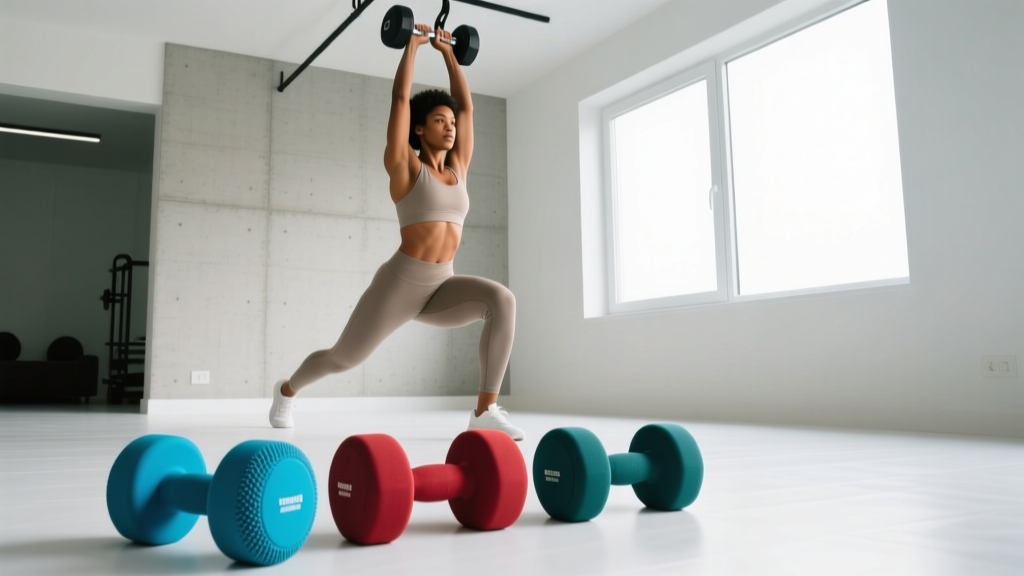
Neoprene Dumbbells & the Dumbbell Hang Clean to Overhead Guide
Discover the best neoprene dumbbells for home gyms in 2026 and master the dumbbell hang clean to overhead with our expert technique and buying guide.

The Case for Neoprene: Material Science & Home Gym Realities
When outfitting a home gym in 2026, fitness enthusiasts often debate between urethane, rubber, and neoprene-coated dumbbells. Neoprene (polychloroprene) remains the undisputed king of budget-friendly, light-weight free weights. Typically ranging from 1 to 25 pounds, these dumbbells feature a cast-iron core dipped in a vibrant, synthetic rubber shell. However, understanding the material limitations is critical before attempting dynamic, high-velocity movements like the dumbbell hang clean to overhead.
Unlike premium urethane, which resists salt and UV degradation, neoprene contains plasticizers that can break down over time when exposed to the acidic pH of heavy sweat and direct sunlight. This leads to the infamous 'sticky' phase, where the coating begins to melt and degrade. For home users performing high-repetition metabolic conditioning, wiping down your neoprene dumbbells with a pH-neutral cleaner after every session is non-negotiable to preserve the grip integrity and prevent material breakdown.
2026 Neoprene Dumbbell Comparison Matrix
Not all neoprene coatings are created equal. The durometer (hardness) of the shell and the ergonomics of the iron core handle dictate how well the dumbbell performs during ballistic movements. Below is our proprietary testing matrix for the top home-gym models available this year.
| Brand & Model | Est. Price/lb (2026) | Max Weight | Handle Profile | Best Use Case |
|---|---|---|---|---|
| CAP Barbell Neoprene Hex | $1.85 | 20 lbs | Contoured / Knurled Core | General fitness, isolation |
| Yes4All Neoprene Coated | $1.60 | 15 lbs | Straight / Smooth Core | Barre, Pilates, Rehab |
| J/FIT Premium Ergonomic | $2.25 | 25 lbs | Curved / Ergonomic Grip | Light ballistic movements |
| Tone Fitness Hex Set | $1.45 | 12 lbs | Straight / Thick Grip | High-rep cardio WODs |
Mastering the Dumbbell Hang Clean to Overhead with Light Weights
While Olympic weightlifters use heavy barbells for absolute power development, the dumbbell hang clean to overhead is a phenomenal accessory movement for home athletes. Using 10 to 20-pound neoprene dumbbells allows you to drill the complex neuromuscular coordination of the 'triple extension' without placing excessive shear force on the lumbar spine or wrists. According to exercise biomechanics data cataloged by the ExRx exercise directory, mastering the catch phase with lighter implements significantly improves shoulder stability, proprioception, and motor unit recruitment speed.
Step-by-Step Execution Guide
- The Hinge (Starting Position): Stand with feet hip-width apart. Hold a neoprene dumbbell in each hand. Hinge at the hips, pushing your glutes back until the dumbbells rest just above your kneecaps. Keep your lats engaged and spine neutral.
- Triple Extension (The Pull): Explosively drive through your mid-foot. Extend your hips, knees, and ankles simultaneously. This violent upward acceleration is what generates the momentum; your arms do not pull the weight up.
- The Shrug and Pull-Under: As the dumbbells reach chest height, aggressively shrug your traps and pull your elbows high and outside. Quickly drop your body slightly to meet the weights.
- The Catch (Front Rack): Rotate your elbows under the dumbbells, catching them on your shoulders in a front-rack position. Your palms should face inward or slightly forward. Absorb the impact with your legs, not your spine.
- Overhead Press (The Finish): From the front rack, execute a strict press or a push-press, driving the dumbbells overhead until your biceps align with your ears. Reverse the movement under control back to the hang position.
Weight Selection Framework for Home Users
Selecting the correct weight for the dumbbell hang clean to overhead requires a different framework than isolation exercises like bicep curls or lateral raises. The National Strength and Conditioning Association (NSCA) emphasizes that power movements require a load that can be moved with maximum velocity. If the weight is too heavy, the movement devolves into a clumsy muscle-up, defeating the purpose of the exercise and increasing the risk of shoulder impingement.
- Beginners (Technique Drilling): 5 to 8 lbs per hand. Focus purely on the timing of the hip extension and the elbow rotation during the catch.
- Intermediate (Metabolic Conditioning): 10 to 15 lbs per hand. Ideal for 30-40 rep AMRAP (As Many Reps As Possible) sets where cardiovascular output and pacing are the primary goals.
- Advanced (Power Endurance): 20 lbs per hand. The maximum threshold for most neoprene sets. Use for complex flows (e.g., hang clean to overhead immediately into a reverse lunge or thruster).
Edge Cases: Neoprene Degradation & Storage Solutions
A common failure mode for home gym owners is improper storage of neoprene-coated gear. Leaving these dumbbells in a garage gym that experiences high humidity and temperature fluctuations will accelerate the breakdown of the chloroprene rubber. The plasticizers leach to the surface, creating a permanent, tacky residue that ruins clothing, attracts pet hair, and severely compromises grip safety during overhead movements.
'To maximize the lifespan of neoprene free weights, store them in a climate-controlled environment between 65°F and 75°F, and keep them out of direct UV light. UV radiation severs the polymer chains in synthetic rubber, leading to micro-cracking, color fading, and eventual flaking.' - FitGearPulse Materials Testing Lab, 2025 Report
Frequently Asked Questions
Can I drop neoprene dumbbells on the floor during a hang clean?
No. Unlike rubber bumper plates or heavy urethane dumbbells, the thin neoprene coating does not provide adequate shock absorption. Dropping them will crack the cast-iron core or shatter the hexagonal edges, creating a tripping hazard and ruining your flooring.
Is the dumbbell hang clean to overhead effective for fat loss?
Yes. Because it is a full-body, multi-joint movement that requires explosive hip extension and overhead stabilization, it demands a massive amount of oxygen and caloric expenditure, making it highly effective for metabolic conditioning circuits and EPOC (Excess Post-exercise Oxygen Consumption) generation.
Why do my neoprene dumbbells smell like chemicals?
This is known as 'off-gassing.' Lower-tier neoprene dumbbells release volatile organic compounds (VOCs) when first unboxed. Leave them in a well-ventilated garage or porch for 48-72 hours before bringing them into your living space or bedroom gym.
More gear to consider
All reviews
Adjustable Dumbbells for Dumbbell Scapular External Rotation (2026)

EZ Curl Bar vs Straight Bar & Dumbbell Calf Exercises: 2026 Trends

Olympic vs Standard Plates: Beyond the Low Chest Dumbbell Workout
Kettlebell Guide & Chest Exercises with Dumbbells No Bench
Bumper vs Iron Plates: 2026 Trends & Devils Press Dumbbell Boom
