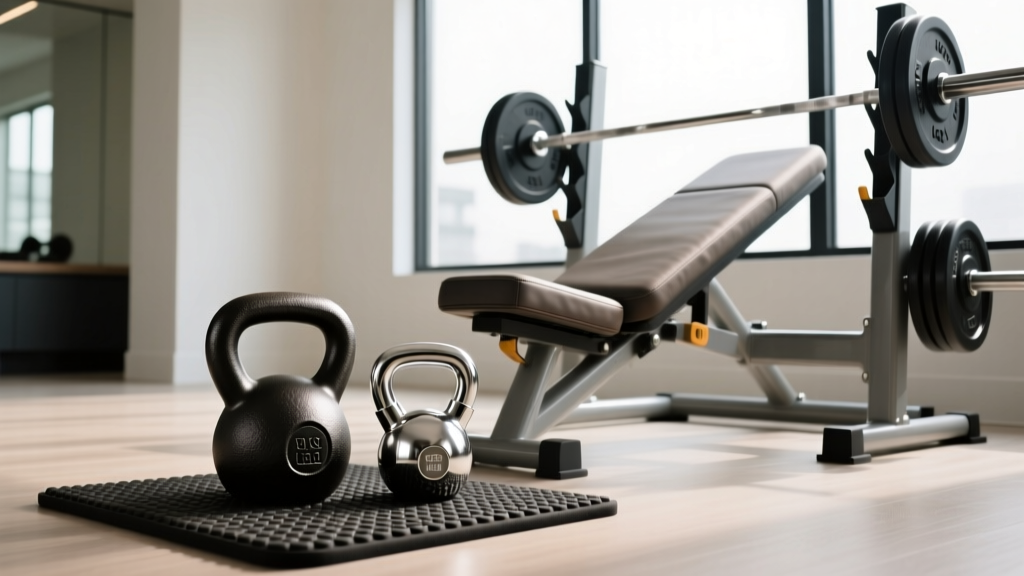
Neoprene Dumbbell Setup & Dumbbell Shoulder Press for Women
Master your home gym setup with neoprene coated dumbbells. Follow our walkthrough for storage, care, and the perfect dumbbell shoulder press for women.

Environmental Setup: Preparing Your Home Gym Space
Building a functional home gym in 2026 requires more than just buying equipment; it demands a strategic installation walkthrough to ensure safety, longevity, and optimal biomechanics. When focusing on a neoprene coated dumbbell for home use, the setup process begins with the physical environment. Neoprene is a synthetic rubber that offers excellent floor protection and grip, but your foundational space still requires precise preparation.
Step 1: Subfloor and Mat Preparation
While neoprene dumbbells are forgiving on hardwood and laminate, dropping a 25-pound hex dumbbell from shoulder height generates approximately 400 Newtons of impact force. To protect your subfloor and dampen acoustic transfer to rooms below, install 3/4-inch thick vulcanized rubber mats.
- Clearance: Measure a minimum 6-foot by 6-foot footprint for your pressing zone.
- Installation: Lay mats in a staggered brick pattern to prevent seam separation under heavy foot traffic.
- Acoustic Dampening: Place a 1/2-inch plywood sub-layer beneath the rubber if you are on a second-floor joist system.
Step 2: A-Frame Dumbbell Rack Assembly
Storing neoprene dumbbells on the floor degrades the coating over time due to ambient moisture and UV exposure. An A-frame rack is the industry standard for home setups. For this walkthrough, we will use the dimensions of the widely adopted CAP Barbell 3-Tier A-Frame Rack (26" W x 15" D x 25" H).
- Unboxing & Inspection: Verify all carriage bolts, washers, and hex nuts. You will need a 14mm socket wrench and a 5mm Allen key.
- Base Assembly: Attach the bottom tier tray to the vertical uprights. Do not fully tighten the bolts yet. Leave them at 60% torque to allow for alignment.
- Tier Spacing: Install the middle and top tiers. Ensure the 12-degree upward tilt of the trays faces outward to prevent cylindrical or slightly worn hex dumbbells from rolling forward.
- Final Torque: Once all tiers are slotted, tighten all carriage bolts to 35 ft-lbs. This prevents the rack from developing a lateral wobble when you pull a heavy 25lb or 30lb neoprene dumbbell from the bottom tier.
Equipment Selection: Neoprene Dumbbell Matrix
Not all neoprene coatings are created equal. In 2026, the market is divided between dip-coated (where the cast iron core is dipped in liquid neoprene) and molded (where neoprene sheets are heat-pressed around the core). Dip-coated models, like the J/fit Hex series, offer superior edge durability, while molded versions, like certain Yes4All lines, may show seam wear after 18 months of heavy use. Below is a selection matrix to guide your home gym purchase.
| Weight Increment | Standard Color Code | 2026 Avg Price (Pair) | Best Application |
|---|---|---|---|
| 3 lbs - 5 lbs | Pink / Orange | $14 - $22 | Lateral raises, rotator cuff rehab |
| 8 lbs - 12 lbs | Green / Blue | $24 - $36 | Bicep curls, tricep extensions |
| 15 lbs - 20 lbs | Yellow / Red | $38 - $55 | Goblet squats, floor presses |
| 25 lbs - 35 lbs | Grey / Black | $60 - $85 | Heavy presses, unilateral rows |
Biomechanical Setup: Dumbbell Shoulder Press for Women
With the physical space and equipment installed, we transition to the biomechanical setup. The dumbbell shoulder press for women requires specific postural installations to account for female skeletal geometry. Women generally possess a wider carrying angle (cubital valgus) and a different shoulder-to-pelvis width ratio compared to men. This makes scapular stability and elbow tracking paramount to avoid anterior shoulder capsule strain.
Expert Setup Tip: The 75-Degree Bench RuleNever use a perfectly flat 90-degree bench for a seated shoulder press. A 90-degree angle forces the lumbar spine into hyperextension and limits the natural upward rotation of the scapulae. Set your adjustable bench to a 75-degree or 80-degree incline. This slight recline aligns the glenohumeral joint with the natural path of the dumbbells, drastically reducing the risk of shoulder impingement, a common issue highlighted by the Cleveland Clinic.
Step-by-Step Postural Installation
- Pelvic Anchoring: Sit on the 75-degree bench. Plant your feet flat on the floor, slightly wider than shoulder-width. Drive your heels into the mat to create full-body tension.
- Scapular Retraction: Pinch your shoulder blades together and pull them down toward your hips (depression and retraction). This creates a stable 'shelf' on the bench.
- Grip Installation: Grip the neoprene dumbbells. The knurling on the cast-iron core beneath the neoprene should sit directly over the callus line of your palm, not the fingers. This prevents wrist extension under load.
- Elbow Tracking: Bring the dumbbells to shoulder height. Your elbows should be tucked slightly forward (about 15 to 20 degrees in front of the frontal plane), not flared out perfectly to the sides. According to ExRx.net, this scapular plane (scaption) alignment optimizes anterior deltoid recruitment while protecting the rotator cuff.
Execution Walkthrough & Progressive Overload
Executing the dumbbell shoulder press for women with neoprene weights offers a distinct advantage: the high-friction neoprene coating prevents the dumbbell from slipping against your torso or palms during the initial clean to the shoulder position, especially if you are sweating in a non-climate-controlled home gym.
The Lift Sequence
- Phase 1 (Concentric): Exhale and press the dumbbells upward and slightly inward. Stop just short of locking out the elbows to maintain continuous tension on the deltoids.
- Phase 2 (Transition): At the apex, the dumbbells should be directly over your ears, not in front of your face. The neoprene hex heads should be parallel to each other.
- Phase 3 (Eccentric): Inhale and lower the weights slowly over a 3-second count. Stop when your elbows break the plane of your shoulders. Going deeper with heavy dumbbells places undue shear force on the biceps tendon.
8-Week Progressive Overload Framework
To build strength safely, follow the NSCA guidelines for resistance training progression. Start with a weight that allows 10 repetitions with 2 reps in reserve (RIR).
| Week | Sets x Reps | Rest Period | Progression Trigger |
|---|---|---|---|
| 1-2 | 3 x 10 | 90 seconds | Master the 75-degree bench setup |
| 3-4 | 3 x 8 | 120 seconds | Increase weight by 2.5 - 5 lbs |
| 5-6 | 4 x 6 | 120 seconds | Increase weight by 2.5 - 5 lbs |
| 7-8 | 4 x 8 | 90 seconds | Consolidate new weight baseline |
Troubleshooting Common Failure Modes
Even with a perfect environmental and biomechanical setup, fatigue can lead to form breakdown. Here is how to troubleshoot the most common errors during the dumbbell shoulder press:
Warning: Lower Back Arching
The Error: As the dumbbells get heavier, you may find your ribs flaring and your lower back peeling off the bench pad.
The Fix: This indicates a lack of thoracic mobility or core bracing. Before your next set, perform 15 banded thoracic extensions. During the press, actively brace your core as if preparing for a punch, and squeeze your glutes to lock your pelvis into the bench.
Wrist Extension (Bending Backwards)
If your wrists bend backward at the bottom of the press, the force vector is misaligned, leading to joint pain. Ensure the handle of the neoprene dumbbell is resting on the heel of your palm. If the neoprene coating on the handle is too thick (common in cheaper 2024-2025 models), consider using lifting straps to artificially reduce the grip diameter and align the wrist.
Neoprene Maintenance Protocol
To ensure your home gym investment lasts, proper maintenance of the neoprene coating is required. Neoprene is porous and can absorb sweat, oils, and bacteria.
- Daily: Wipe down the handles and hex heads with a microfiber cloth dampened with a 50/50 mix of distilled water and white vinegar.
- Monthly: Inspect the seams where the neoprene meets the steel handle. If you see peeling, apply a thin layer of flexible rubber adhesive (like Shoe Goo) to prevent further delamination.
- Avoid: Never use bleach, ammonia, or UV-heavy sunlight exposure, as these chemicals break down the synthetic rubber polymers, causing the coating to become brittle and flake onto your gym mats.
By meticulously following this complete setup and installation walkthrough—from laying the acoustic mats and torquing the A-frame rack, to dialing in the 75-degree bench angle and executing the dumbbell shoulder press for women with biomechanical precision—you will build a safe, effective, and long-lasting home training environment.
More gear to consider
All reviews
Gear for the Best Dumbbell Workouts Arms: Rubber vs Urethane
2026 Market Trends: Bumper vs Iron Plates and the Overhead Dumbbell Tricep Extension
Pulling Exercises with Dumbbells: Adjustable Set Mistakes & Fixes
Heels Elevated Dumbbell Squat Trends & Kettlebell Buying Guide 2026

Hex vs Urethane Dumbbells: Best Gear for Tricep Curls with Dumbbells