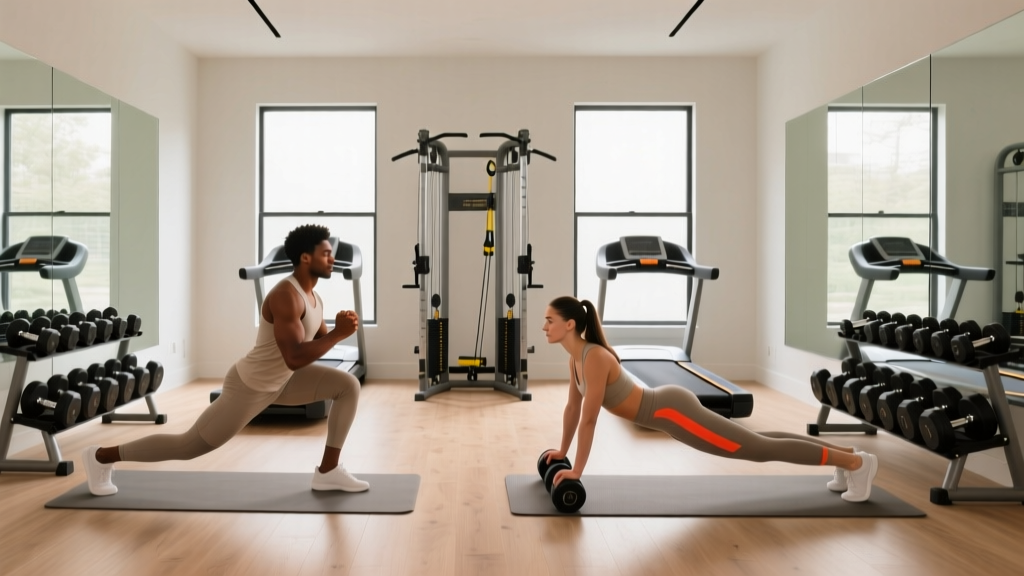
Must Have Equipment for a Home Gym: Couples Setup Guide
Discover the must have equipment for a home gym shared by couples. This step-by-step guide covers dual-user gear, space planning, and budget tips.

The Diplomacy of Iron: Designing a Shared Home Gym
Building a home gym for one person is a straightforward exercise in personal preference. Building one for two, however, is a complex negotiation of biomechanics, spatial geometry, and relationship diplomacy. When determining the must have equipment for a home gym shared by a couple, you aren't just buying gear; you are investing in daily harmony. Mismatched fitness goals, differing strength levels, and conflicting schedules can quickly turn a shared workout space into a point of friction.
According to the Centers for Disease Control and Prevention (CDC), adults need at least 150 minutes of moderate-intensity activity per week, a goal much easier to achieve when your environment is optimized for your specific lifestyle. This step-by-step guide will walk you through the exact equipment, dimensions, and structural choices required to build a dual-user home gym in 2026, ensuring both partners can train safely, effectively, and simultaneously.
Step 1: The Spatial Geometry of Two
The most common failure mode in shared home gyms is underestimating the 'sweep zone.' A solo lifter can comfortably operate in a 10x10 foot (100 sq ft) space. For couples working out simultaneously, the minimum viable footprint is 12x20 feet (240 sq ft).
Calculating the Sweep Zone
- The Barbell Arc: A standard 7-foot Olympic barbell requires 8.5 feet of lateral clearance. You need an additional 3 feet on each side for loading plates and partner walking space.
- The Dumbbell Radius: When performing lateral raises or dumbbell presses, a 6-foot wingspan is common. Two people doing dumbbell work simultaneously require a 12-foot lateral buffer.
- The Transit Path: Never place a bench directly in the transit path between the plate tree and the squat rack. One partner loading weights while the other is mid-set is a primary cause of home gym injuries.
Step 2: Selecting the Core Must-Have Equipment
When shopping for the must have equipment for a home gym designed for two, prioritize modularity and durability over niche specialization.
The 6-Post Power Rack Advantage
Do not buy a standard 4-post squat rack for a shared space. A 4-post rack creates a bottleneck: only one person can use it at a time. Instead, invest in a 6-post power rack like the Rep Fitness PR-4000 (approx. $799) or the Rogue Monster RM-6 (approx. $1,450). A 6-post rack features a front pair of uprights for squatting and benching, and a rear pair of uprights that can house a lat pulldown/low row attachment. This allows Partner A to run heavy squats on the front while Partner B simultaneously performs cable rows on the back, effectively doubling the rack's utility.
The Adjustable Dumbbell Dilemma: Dial vs. Selector Pin
Adjustable dumbbells are non-negotiable for saving space, but the mechanism matters immensely in a shared environment.
- Nuobell 80lb ($549/pair): These use a dial mechanism and feel exactly like traditional dumbbells. They are perfect for isolation movements. Failure Mode: If your partner drops them during a heavy chest press, the internal dial mechanism will shatter, rendering them useless.
- PowerBlock Elite USA ($389/pair): These use a welded steel cage and a selector pin. While the cage shape restricts certain movements (like goblet squats), they are virtually indestructible. Verdict: For a shared gym with mixed experience levels, the drop-proof durability of PowerBlock makes it the superior investment.
The Double Bench Requirement
If you plan to train together, one adjustable bench is a bottleneck that will ruin your workout pacing. Purchase two benches. Invest in one premium option like the Rep Fitness AB-3100 2.0 ($249) for heavy pressing, and a budget-friendly Fitness Reality 1000 Super Max ($129) for auxiliary dumbbell work and step-ups.
Step 3: The Couples' Compromise Matrix
It is rare for two partners to have identical training modalities. Below is a decision framework for resolving common equipment disputes.
| Equipment Category | Partner A Preference | Partner B Preference | The Shared Solution |
|---|---|---|---|
| Barbell Plates | Iron Plates (Loud, cheap) | Bumper Plates (Quiet, thick) | Urethane Coated Iron (e.g., Rogue Urethane). Combines the thin profile of iron with the drop-silence of rubber. |
| Cardio Modality | Running (Treadmill) | Rowing (Concept2) | Wall-mounted Concept2 SkiErg. Takes up only 2 feet of floor depth, preserving central space for yoga or kettlebells. |
| Flooring | EVA Foam Tiles (Soft) | Bare Concrete (Stable) | 3/4" Vulcanized Rubber Mats over plywood. Provides stability for heavy lifts while dampening sound. |
Step 4: Acoustic Isolation and Flooring
Shared homes mean differing schedules. If Partner A lifts at 5:30 AM and Partner B sleeps until 7:00 AM, flooring is not just about protecting the concrete; it is about protecting your relationship. Skip the interlocking EVA foam tiles sold in big-box stores—they compress under heavy loads and offer zero acoustic dampening.
The gold standard for shared home gyms is 3/4" thick vulcanized rubber horse stall mats (approx. $55 per 4x6 sheet from agricultural suppliers like Tractor Supply Co.). For the deadlift and drop zone, lay down a subfloor of 3/4" tongue-and-groove plywood beneath the rubber mats. This dual-layer system disperses kinetic energy, drastically reducing the low-frequency structural vibration that travels through floor joists and wakes up sleeping partners in adjacent rooms.
Step 5: Strategic Mirror Placement
In a solo gym, mirrors go on the front wall. In a couples' gym, front-wall mirrors create blind spots. When Partner A is squatting in the rack, they block the mirror for Partner B, who is doing dumbbell presses in the center of the room. Install a large, shatterproof acrylic mirror on the side wall. This allows both lifters to check their sagittal plane form simultaneously without competing for the same line of sight.
The 80/20 Rule of Shared Gear
When budgeting for your must have equipment for a home gym, allocate 80% of your funds to shared, high-use foundational items (the rack, the barbell, the flooring). Spend the remaining 20% on individualized accessories. Buy two separate sets of lifting belts, wrist wraps, and jump ropes. Sharing sweaty, tension-loaded accessories is unhygienic and leads to constant misplacement.
Step 6: Color-Coded Storage Systems
Nothing breeds resentment faster than a partner leaving mismatched plates on the barbell. To eliminate this, invest in color-coded urethane plates. Brands like Rogue and Rep Fitness adhere to standard weightlifting colors (10lb green, 25lb blue, 35lb yellow, 45lb red). Pair this with a vertical plate tree rather than wall storage. A vertical tree allows both partners to load and unload plates from opposite sides simultaneously, cutting setup time in half.
Temporal Zoning: When Space is Limited
If your available space is under 150 square feet, simultaneous barbell training is physically unsafe. In this scenario, you must implement 'Temporal Zoning.' Create a schedule where the gym is divided by time rather than space. During the first 45-minute block, Partner A claims the barbell and rack, while Partner B utilizes the living room for bodyweight mobility or resistance band work. Swap for the second block. The American Heart Association notes that consistency in workout scheduling is a primary driver of long-term cardiovascular health, making temporal zoning a highly effective psychological tool for couples.
Final Thoughts on Your Shared Setup
Building a home gym for two requires foresight, compromise, and a willingness to invest in heavy-duty, modular equipment. By prioritizing 6-post racks, drop-proof adjustable dumbbells, and acoustic-dampening flooring, you create an environment that supports both partners' fitness journeys. The right setup doesn't just build muscle; it builds a shared routine that strengthens your partnership long after the workout is over.
More gear to consider
All reviews
Home Gym Equipment Cheap: 2026 Beginner Starter Kit

The Ultimate Force Home Gym Floor Plan & Setup Guide

Home Gym for Beginners: How Much Weight Do You Really Need?

Rogue Home Gym Builder 2026: Electrical & Safety Trends
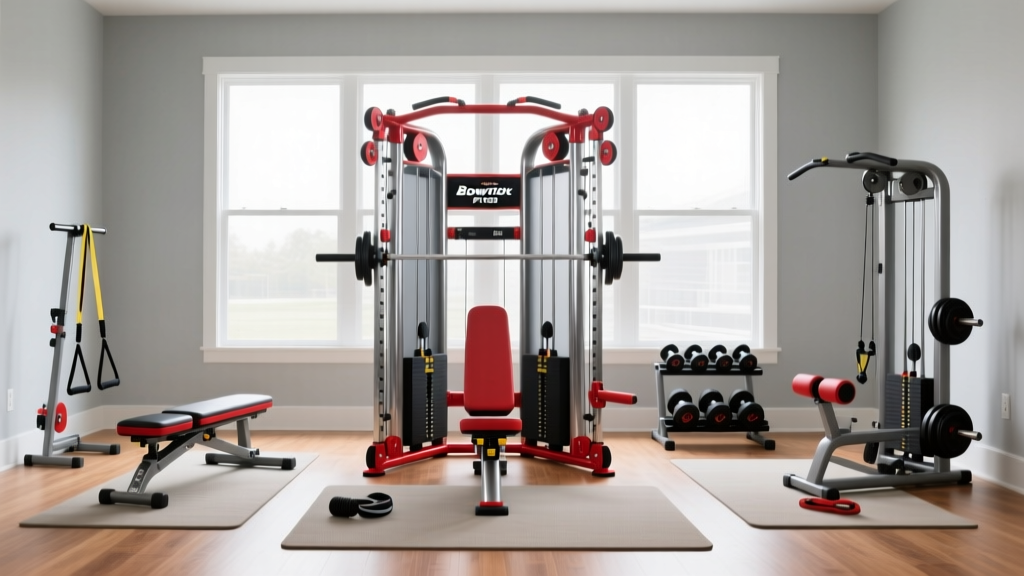
Bowflex PR1000 Home Gym Review vs Budget Alternatives Under $500
