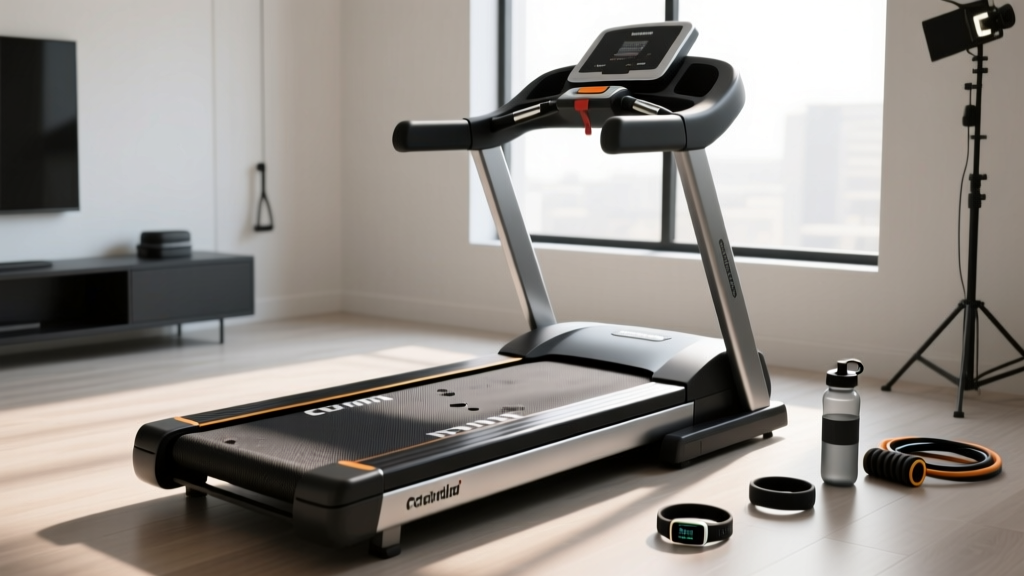
Matrix Endurance Treadmill Motor Guide & HP Comparison
Compare the Matrix Endurance treadmill motor size and horsepower against top rivals. Learn how continuous duty HP impacts your 2026 home gym runs.

The Heart of the Machine: Why Motor Sizing Dictates Treadmill Longevity
When shopping for a high-end home gym setup in 2026, it is easy to be distracted by immersive HD touchscreens, interactive streaming classes, and sleek aluminum consoles. However, the true determinant of a treadmill's lifespan, performance, and safety is hidden beneath the deck: the drive motor. According to the Consumer Reports treadmill buying guide, motor quality and continuous horsepower (CHP) are the most critical factors in predicting long-term machine reliability and user satisfaction.
In this comprehensive guide, we are putting the flagship Matrix Endurance treadmill lineup—specifically the Endurance 5000—head-to-head against its most formidable market rivals: the Sole F85 and the NordicTrack Commercial 1750. By dissecting motor architecture, flywheel dynamics, and continuous duty ratings, we will reveal exactly what you are paying for and how to match motor size to your specific biomechanical needs.
Expert Insight: The Peak vs. Continuous Horsepower TrapMany budget brands advertise "4.0 Peak HP" motors. Peak horsepower only measures the maximum output the motor can achieve for a fraction of a second before burning out. Always look for Continuous Duty Horsepower (CHP), which measures the power the motor can sustain indefinitely during a grueling 10-mile run. The Matrix Endurance series strictly advertises CHP, ensuring transparent performance metrics.
Head-to-Head Motor Comparison Matrix
Before diving into the engineering nuances, let us look at the raw data. The table below compares the motor specifications and physical outputs of the three dominant treadmills in the premium home and light-commercial space.
| Feature | Matrix Endurance 5000 | Sole F85 | NordicTrack 1750 |
|---|---|---|---|
| Motor Type | AC (Alternating Current) | DC (Direct Current) | DC (Direct Current) |
| Continuous HP (CHP) | 4.0 CHP | 4.0 CHP | 3.5 CHP |
| Flywheel Weight | 12 lbs (Precision Balanced) | 8 lbs | 6.5 lbs |
| Max User Weight | 400 lbs | 400 lbs | 300 lbs |
| Top Speed | 12 MPH | 12 MPH | 12 MPH |
| Estimated 2026 Price | ~$5,499 | ~$2,299 | ~$1,999 |
Deep Dive: Matrix Endurance AC Motor Architecture
The most significant differentiator of the Matrix Endurance treadmill series is its use of an AC (Alternating Current) motor in the 5000 model, contrasting sharply with the DC (Direct Current) motors found in the Sole and NordicTrack competitors. But what does this mean for your daily run?
The Carbon Brush Factor
DC motors rely on carbon brushes to conduct electrical current to the spinning armature. Over thousands of miles, these brushes create friction, generate excess heat, and physically degrade. Eventually, they require replacement or the motor burns out. AC motors, like the 4.0 CHP unit in the Matrix Endurance 5000, are brushless. They operate via electromagnetic induction, which drastically reduces internal friction. This allows the Matrix motor to run significantly cooler, making it the preferred choice for light-commercial environments or heavy-use home gyms where multiple users might run back-to-back for hours.
Flywheel Synergy and Belt Hesitation
A motor does not work alone; it relies on the front roller and flywheel to maintain momentum. The Matrix pairs its AC motor with a heavy 12-pound precision-balanced flywheel. When a 220-pound runner's foot strikes the deck at 8 MPH, it creates a massive momentary drag on the belt. A lighter flywheel forces the motor to work overtime to recover that lost momentum, resulting in "belt hesitation" or a micro-stutter. According to Mayo Clinic's running and joint health guidelines, inconsistent belt speeds can subtly alter a runner's gait and stride mechanics, potentially increasing the risk of knee and hip strain over time. The Matrix's heavy flywheel absorbs this impact, delivering a buttery-smooth, consistent belt pull that protects your joints.
"A treadmill's motor and flywheel act as a shock absorber for your kinetic energy. When the drive system is undersized, your body absorbs the deceleration forces instead of the machine."
Sizing Framework: Calculating Your Required CHP
Do you actually need a 4.0 CHP AC motor, or are you overpaying for power you will never use? Use this actionable framework to determine your exact motor requirements based on the American Council on Exercise (ACE) biomechanical load principles.
- Base Intensity Requirement:
- Walking (under 4 MPH): 2.0 CHP minimum
- Jogging (4 to 6 MPH): 2.5 CHP minimum
- Running (6+ MPH / Sprint Intervals): 3.0 CHP minimum
- The Body Weight Multiplier: For every 50 lbs you weigh over 180 lbs, add 0.25 CHP to your base requirement. The motor must work exponentially harder to pull a heavier mass against the friction of the deck.
- The Multi-User / Commercial Factor: If the treadmill will be used by multiple people in a single day (e.g., a household of three runners, or a corporate wellness center), add 0.5 CHP and strongly consider upgrading from a DC to an AC motor to prevent thermal throttling.
If you weigh 230 lbs and plan to do high-intensity interval training (HIIT) sprints at 9 MPH, your base requirement is 3.0 CHP. Because you are 50 lbs over the 180 lb baseline, you add 0.25 CHP. Your absolute minimum requirement is a 3.25 CHP motor. In this scenario, the 3.5 CHP NordicTrack 1750 will suffice, but the 4.0 CHP Matrix Endurance 5000 will run cooler and last years longer under that specific heavy load.
Real-World Failure Modes of Undersized Motors
When users purchase treadmills with motors that are too small for their weight and pace, the machine does not usually fail immediately. Instead, it suffers a slow, frustrating degradation. Here are the specific failure modes we see in the field:
- Thermal Throttling and Shutdowns: DC motors operating near their peak capacity generate immense heat. The internal thermal sensor will eventually trip, forcing the treadmill to abruptly slow down or shut off entirely in the middle of a 5K run to prevent a fire hazard.
- Capacitor Degradation: The start capacitor, which provides the initial jolt of electricity to get the belt moving from a standstill, takes a massive beating if the motor lacks the torque to move a heavy user. This leads to the treadmill "clicking" but failing to start the belt.
- Deck and Belt Friction Burns: An underpowered motor struggles to pull the belt. If the user's foot strikes the deck, the belt stops momentarily while the motor catches up. This micro-slippage creates intense localized heat, melting the underside of the belt and permanently scorching the phenolic deck coating.
- Warranty Voids: Many residential treadmill warranties explicitly state that using an undersized motor for "commercial or multi-user continuous use" voids the motor warranty. Manufacturers can diagnose this by pulling the internal hour-meter and thermal log data from the console's logic board.
Final Verdict: Is the Matrix Endurance Motor Worth the Premium?
The Matrix Endurance treadmill series, particularly the 5000 model, commands a premium price tag of roughly $5,499—more than double the cost of the Sole F85 or NordicTrack 1750. However, when evaluating the equipment strictly through the lens of motor engineering, the value proposition becomes clear for a specific subset of buyers.
If you are a casual walker, a lightweight jogger under 160 lbs, or someone who only uses the treadmill for 30 minutes a day, the 3.5 CHP DC motor in the NordicTrack 1750 or the 4.0 CHP DC motor in the Sole F85 will serve you perfectly well for a decade. Paying extra for an AC motor in this scenario is a waste of capital.
However, if you are a serious marathon trainee logging 40+ miles a week, a heavier runner exceeding 220 lbs, or outfitting a boutique apartment gym where the machine will run for 6 hours a day, the Matrix Endurance 5000 is the undisputed winner. The brushless AC motor, combined with the 12-pound flywheel, eliminates belt hesitation, protects your joints from micro-decelerations, and guarantees a lifespan that easily outlasts its DC competitors. In the world of cardio equipment, you are ultimately paying for the torque, thermal management, and kinetic consistency that only a properly sized, commercial-grade motor can provide.
More gear to consider
All reviews
Stair Climber Setup: Elliptical vs Treadmill for Weight Loss

Home Stair Climber Guide & Treadmill Sled Push Fixes

Home Stair Climber Guide: Deer Run Treadmill Weight Limit Myths
Stair Climber Machine Home Guide vs LiveStrong Treadmill LS 10.0 T

What Every Treadmill Fixer Says About Motor Horsepower