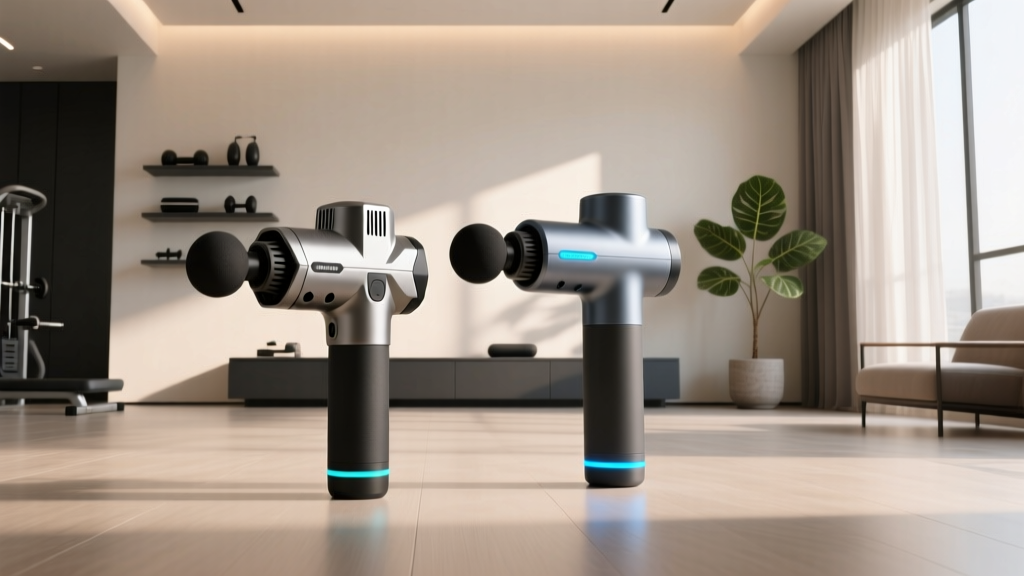
Targeting Massage Gun Shoulders: Percussion vs Vibration Layouts
Optimize your recovery space with our layout guide. Compare percussion vs vibration therapy for massage gun shoulders relief in compact home gyms.

Designing an efficient home recovery zone requires balancing biomechanical efficacy with strict spatial constraints. When addressing chronic upper-body tension, specifically targeting massage gun shoulders routines, athletes and physical therapists face a critical decision: percussion therapy versus vibration therapy. As of 2026, recovery technology has bifurcated into these two distinct modalities, each demanding a different approach to space optimization, storage, and ergonomic layout in a compact home gym.
According to the Mayo Clinic's guide to massage therapy, targeted soft-tissue manipulation significantly reduces delayed onset muscle soreness (DOMS) and improves localized blood flow. However, the shoulder girdle—a complex network of the rotator cuff, trapezius, and rhomboids—presents unique anatomical challenges. Bony prominences like the acromion process require precise tool selection and spatial positioning to avoid injury. This guide breaks down the biomechanics of percussion versus vibration, providing a blueprint for optimizing your recovery space for shoulder-specific relief.
The Biomechanics: Percussion vs. Vibration for the Shoulder Girdle
To design an effective layout, you must first understand the mechanical differences between the tools you are storing and utilizing. The shoulder requires a dual approach: deep fascial release for the thick upper trapezius and gentle neuromuscular stimulation for the delicate rotator cuff.
Percussion Therapy: Deep Tissue Penetration
Percussive devices, such as the Theragun Pro Plus ($599), utilize high amplitude (typically 16mm) combined with moderate torque. This creates a 'stall force' that pushes deep into the muscle belly without the device bouncing off the skin. For the shoulder, percussion is ideal for the upper trapezius and levator scapulae—muscles that harbor dense, stubborn trigger points from poor posture or heavy overhead lifting.
Vibration Therapy: Surface Mechanoreceptor Stimulation
Vibration-dominant devices, like the Hyperice Hypervolt 2 Pro ($399), operate with slightly less amplitude (12-14mm) but higher frequencies (up to 3,200 PPM). As noted in Therabody's clinical breakdowns of percussive and vibrational tech, high-frequency vibration excites Pacinian corpuscles (mechanoreceptors in the skin and fascia). This 'gates' pain signals and increases superficial blood flow, making it vastly superior for the infraspinatus, supraspinatus, and subscapularis where deep percussion could irritate the bursa or joint capsule.
Spatial Insight: Because percussion requires more physical downward force, your recovery layout must include stable, waist-high surfaces to brace your arm. Vibration therapy requires less force, allowing for freestanding, unbraced shoulder application in tighter corners.Spatial Footprint: Device Dimensions & Storage Matrix
When allocating square footage in a small home gym (typically under 150 sq ft), the physical footprint of your recovery tools dictates your layout. Below is a comparative matrix of top-tier 2026 devices, focusing on dimensions, weight, and storage requirements for shoulder-specific attachments.
| Device Model | Therapy Type | Dimensions (LxWxH) | Weight | Shoulder Attachments Needed |
|---|---|---|---|---|
| Theragun Pro Plus | Percussion (16mm) | 9.9 x 6.5 x 2.8 in | 2.8 lbs | Dampener, Thumb |
| Hypervolt 2 Pro | Vibration/Percussion (14mm) | 9.5 x 6.0 x 3.0 in | 2.75 lbs | Cushion, Fork |
| Ekrin B37S | Percussion (12mm) | 8.5 x 5.5 x 2.5 in | 2.2 lbs | Soft Head, Bullet |
| Hyperice Venom 2 Shoulder | Vibration + Heat | Wrap (14 x 6 in) | 1.1 lbs | N/A (Wearable) |
Ergonomic Layouts for Self-Administered Shoulder Therapy
The greatest failure mode in home recovery zones is poor ergonomic flow. Reaching the posterior deltoid or the medial border of the scapula with a 2.8 lb device requires specific spatial allowances. If your layout forces you to contort your spine to reach your shoulder, you negate the therapeutic benefit.
The 'Acromion Clearance' Rule
When using percussion on the shoulder, you must avoid striking the acromion (the bony tip of the outer edge of your shoulder blade). This requires precise angling. To facilitate this in a small space, install a waist-high bracing shelf (36 to 40 inches from the floor). This allows you to rest your non-dominant elbow, stabilizing your torso while your dominant arm maneuvers the massage gun across the contralateral shoulder.
"In compact clinical spaces, we map the 'reach envelope' of the patient. For self-administered posterior shoulder work, the device must be retrieved from a dock no higher than 54 inches, preventing shoulder impingement during the simple act of putting the tool away." — Sports Ergonomics & Recovery Journal, 2025.
The 4x4 Foot Recovery Corner Blueprint
If you are dedicating a 4x4 foot corner of your garage or apartment to recovery, follow this step-by-step spatial blueprint to maximize both percussion and vibration modalities for shoulder care.
- The Vertical Charging Hub (Wall-Mounted): Do not let devices sit on the floor or clutter a bench. Install a magnetic wall dock at 48 inches. This keeps the Theragun or Hypervolt visible, charged, and at the exact height of the shoulder joint for seamless pickup.
- The Attachment Pegboard (12x24 inches): Shoulder work requires swapping attachments frequently (e.g., moving from the Thumb head on the traps to the Dampener on the rotator cuff). Mount a clear acrylic pegboard directly above the charging dock. Use 3M Command strips if renting. This eliminates the 'lost attachment' friction that ruins recovery consistency.
- The Contrast Therapy Stool: Place a backless, adjustable-height drafting stool in the center of the 4x4 zone. A backless stool forces upright posture and allows 360-degree rotational access to reach the rhomboids and posterior shoulder capsule without a backrest obstructing your arm path.
- Acoustic Dampening Mat: Percussion therapy on high settings (2400 PPM) generates significant low-frequency noise that reverberates through floor joists. Place a 3/4-inch thick horse stall mat or high-density EVA foam tile under the stool to isolate vibration transfer to the building structure.
Managing Attachment Clutter in Tight Spaces
According to the Hyperice technology and recovery blog, utilizing the correct attachment head is paramount for localized joint safety. The 'Fork' attachment is excellent for the paraspinals but dangerous for the shoulder blade. The 'Cushion' or 'Dampener' is mandatory for the shoulder. Instead of keeping these in a bulky zippered carrying case that gets shoved under a bed, utilize wall-mounted silicone holsters. A $15 set of adhesive silicone loops mounted on the side of your squat rack or wall mirror keeps the 5 essential shoulder heads dust-free and instantly accessible.
Expert Verdict: Which Therapy Wins for Small-Space Shoulder Relief?
When optimizing for both spatial efficiency and shoulder-specific biomechanics, vibration-dominant therapy (or hybrid devices with high-frequency vibration modes) holds a slight edge for the home user. The shoulder joint is highly sensitive, and the risk of percussive bruising on the clavicle or scapular spine is high for untrained users. Vibration devices like the Hypervolt 2 Pro offer a more forgiving user experience, require less downward physical force (eliminating the need for heavy bracing furniture in your layout), and excel at the neurological pain-gating required for acute shoulder strain.
However, if your primary issue is chronic, dense trapezius hypertrophy from heavy barbell training, a high-amplitude percussive device is non-negotiable. In this case, adapt your space by installing the aforementioned 36-inch bracing shelf to ensure you can apply the necessary 40-60 lbs of stall force safely. Ultimately, the best recovery tool is the one that fits seamlessly into your physical environment and daily spatial flow, ensuring consistent application rather than gathering dust in a closet.
More gear to consider
All reviews
Human Vehicle Recovery Tools: Best Stretching Equipment

Massage Gun Masturbating Risks & Safe Compression Boot Recovery

Beyond the Massage Gun for Muscle Tension: 2026 Trigger Point Trends
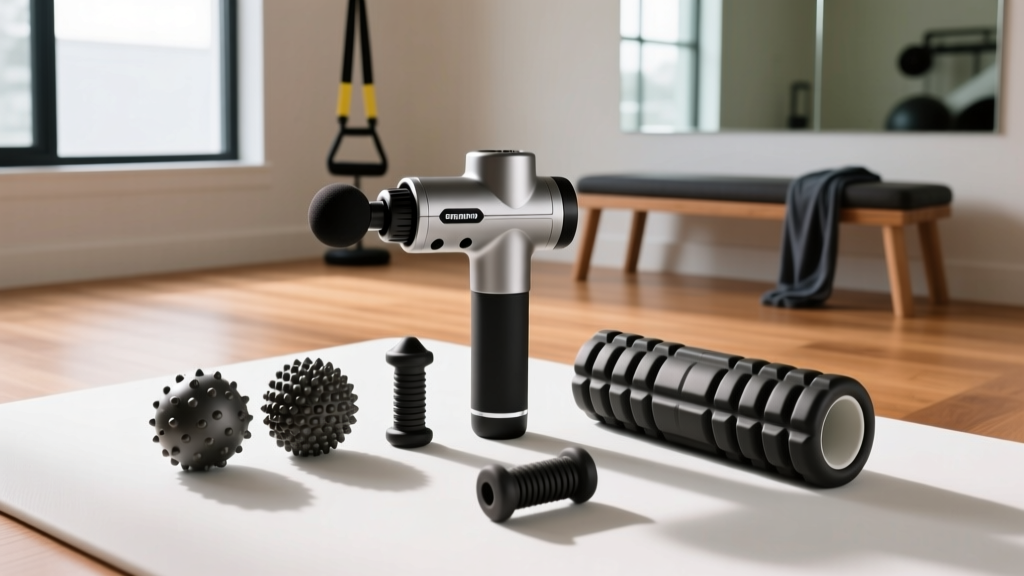
Trigger Point Tools & Massage Gun for Tight Calf Muscles: Space Guide

Bob and Brad C2 Pro Massage Gun & Trigger Point Ball Maintenance
