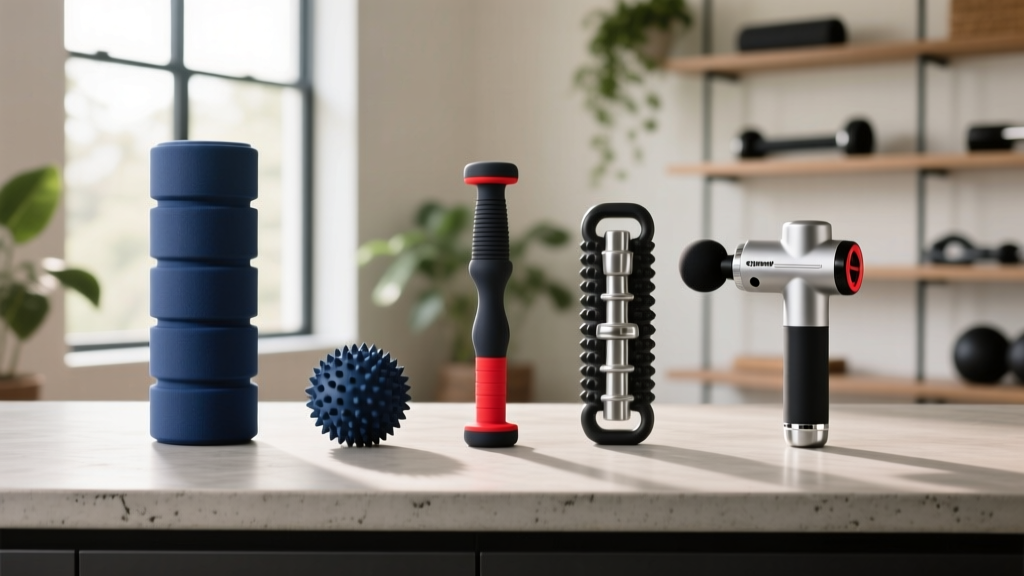
Trigger Point Therapy Tools: 2026 Budget & Value Breakdown
Discover the true value of top trigger point therapy tools. We break down costs, material durability, and ROI for massage balls and deep tissue sticks.

The Economics of Myofascial Release
When building a comprehensive recovery arsenal, athletes and weekend warriors alike often face a confusing market of myofascial release devices. Trigger point therapy tools and balls range from $5 rubber spheres to $150+ smart-tech recovery nodes. But does a higher price tag always equate to better muscle relief? According to Harvard Health, targeted pressure on myofascial trigger points can significantly reduce localized muscle tension and improve range of motion, but the modality's success relies heavily on the tool's density, leverage, and material integrity. In this 2026 budget breakdown, we analyze the true cost-per-use, material science, and long-term value of the most popular trigger point therapy tools on the market.
Material Science: What You Are Actually Paying For
Before evaluating specific brands, it is critical to understand the material engineering that dictates a tool's lifespan and effectiveness. The primary metric for massage balls is the Shore A Hardness Scale, which measures the indentation resistance of elastomeric materials.
- 50A - 65A (Soft to Medium): Typically made from medical-grade silicone or soft TPE (Thermoplastic Elastomer). Ideal for sensitive areas like the cervical spine or pectorals.
- 70A - 85A (Firm): Standard vulcanized rubber or high-density TPE. The sweet spot for glutes, IT bands, and thoracic erectors.
- 90A+ (Extra Hard): Solid composite plastics or ultra-dense lacrosse-style rubber. Reserved for deep, stubborn adhesions in thick muscle bellies.
Cheap tools often use low-grade TPE that initially feels firm but suffers from compression set—a material failure where the ball permanently deforms into an oval shape after 3 to 4 months of heavy bodyweight loading. Premium tools utilize vulcanized rubber or cross-linked silicone, which maintain their spherical geometry and density for years.
Tier 1: The Under $25 Essentials (High ROI, Low Cost)
Lacrosse Balls & Silicone Peanuts
The undisputed champions of budget-friendly recovery are standard rubber lacrosse balls and dual-sphere 'peanut' rollers. Priced between $5 and $12, these tools offer an unparalleled cost-to-benefit ratio.
| Tool Type | Avg. Cost | Shore A Hardness | Best Application | Lifespan |
|---|---|---|---|---|
| Standard Lacrosse Ball | $5 - $8 | ~75A | Glutes, Piriformis, Calves | 1-2 Years |
| Silicone Peanut Roller | $12 - $18 | 60A - 70A | Cervical/Thoracic Spine | 3+ Years |
| Cheap 'Spiky' Massage Balls | $8 - $15 | Variable (often 85A+) | Plantar Fascia, Palms | 3-6 Months |
The Value Verdict: A standard lacrosse ball is a mandatory baseline for any athlete. However, avoid ultra-cheap 'spiky' balls from generic online marketplaces. The rigid plastic spikes can cause localized bruising, and the glued seams frequently split under the 150+ lbs of pressure applied during floor work.
Tier 2: Mid-Range Leverage Tools ($25 - $60)
TheraCane vs. Body Back Buddy
While floor-based balls are excellent, they require you to contort your body to reach the mid-back, rhomboids, and rear deltoids. This is where leveraged trigger point sticks dominate. The Mayo Clinic notes that myofascial pain syndrome often manifests in hard-to-reach postural muscles, making self-administered leverage crucial.
The TheraCane ($39.95) is the industry veteran. Made from a rigid, fiberglass-reinforced polymer, its hook design allows for precise, heavy-pressure application to the levator scapulae and upper traps. The Body Back Buddy ($29.99) offers a similar S-curve design but features 11 distinct pressure knobs, allowing for varied tissue engagement.
Pro-Tip for Leverage Tools: The value of a TheraCane isn't just in the plastic; it's in the biomechanical leverage. By hooking the cane over your shoulder and pulling the opposite handle, you can generate up to 40 lbs of localized pressure without fatiguing your grip or straining your rotator cuff—a feat impossible with a simple massage stick.Tier 3: Premium Precision & Smart Tech ($60 - $150+)
RadBall and Arion Thunderball
At the top of the budget spectrum, brands like RAD and Arion integrate advanced ergonomics and smart technology. The RADBall ($119.00) is a firm, 5-inch vulcanized rubber sphere encased in a high-tension silicone sleeve. The sleeve provides a 'grippy' traction that prevents the ball from slipping on hardwood floors or yoga mats during dynamic rolling, while the inner core delivers unyielding 90A density for deep tissue shearing.
The Arion Thunderball ($89.00) introduces localized heat and vibration. While vibration is heavily marketed, sports science literature published in the National Institutes of Health (NIH) suggests that while vibration can temporarily alter pain perception (gate control theory), the mechanical pressure of the tool's physical geometry remains the primary driver of fascial release. Therefore, you are paying a premium for sensory modulation and comfort, not necessarily superior mechanical tissue breakdown.
Cost-Per-Use Matrix: Calculating Your Recovery ROI
To determine true value, we must look beyond the sticker price and calculate the Cost-Per-Use (CPU) over a 24-month period, assuming a dedicated user performs trigger point therapy 4 times a week (approx. 416 sessions over two years).
- Lacrosse Ball ($6.00): $0.014 per session. (Exceptional Value)
- Body Back Buddy ($29.99): $0.072 per session. (High Value for upper back)
- TheraCane ($39.95): $0.096 per session. (High Value for precision)
- Arion Thunderball ($89.00): $0.213 per session. (Moderate Value, reliant on tech features)
- RADBall ($119.00): $0.286 per session. (Premium Value, justified by anti-slip traction and extreme durability)
Hidden Costs: When Cheap Tools Fail
Budgeting for recovery tools requires accounting for failure modes. The most common hidden cost in the trigger point market is the replacement cycle of low-density TPE. A $15 generic massage ball may seem like a bargain, but if it develops a compression set and loses its spherical shape after 8 weeks, it becomes useless for targeted trigger point work, forcing a repurchase. Over two years, an athlete might spend $60 replacing cheap TPE balls, whereas a single $25 high-density vulcanized rubber ball would have lasted the entire duration.
Furthermore, cheap plastic massage hooks often suffer from micro-fractures along the injection molding seams. Under heavy torque, these tools can snap abruptly, posing a laceration risk. Investing in fiberglass-reinforced polymers (like the TheraCane) eliminates this catastrophic failure mode.
Final Verdict: Allocating Your Recovery Budget
If you are operating on a strict budget under $30, your money is best spent on a high-quality vulcanized rubber lacrosse ball ($8) and a Body Back Buddy ($29.99). This combination covers 95% of the body's myofascial trigger points, from the plantar fascia to the suboccipital muscles.
If your budget extends to the $50–$100 range, upgrading to a TheraCane for upper-body leverage and a RADBall for lower-body traction provides a professional-grade, at-home physical therapy experience. Avoid over-investing in vibratory or heated massage balls unless you specifically require sensory pain-gating for hyper-sensitive nervous systems; mechanical density and ergonomic leverage will always yield the highest long-term ROI in trigger point therapy.
More gear to consider
All reviews
Beyond the Massage Gun Video: Trigger Point Tool Maintenance

Cupping Therapy Equipment for Athletes & Massage Gun for Hamstring

Sauna Blanket vs Panel: Can You Take a Massage Gun in Your Carry On?

Infrared Sauna Blanket vs Panel: Complete Buyer's Guide

Space-Saving Recovery: Massage Gun Stroke Length & Trigger Tools
