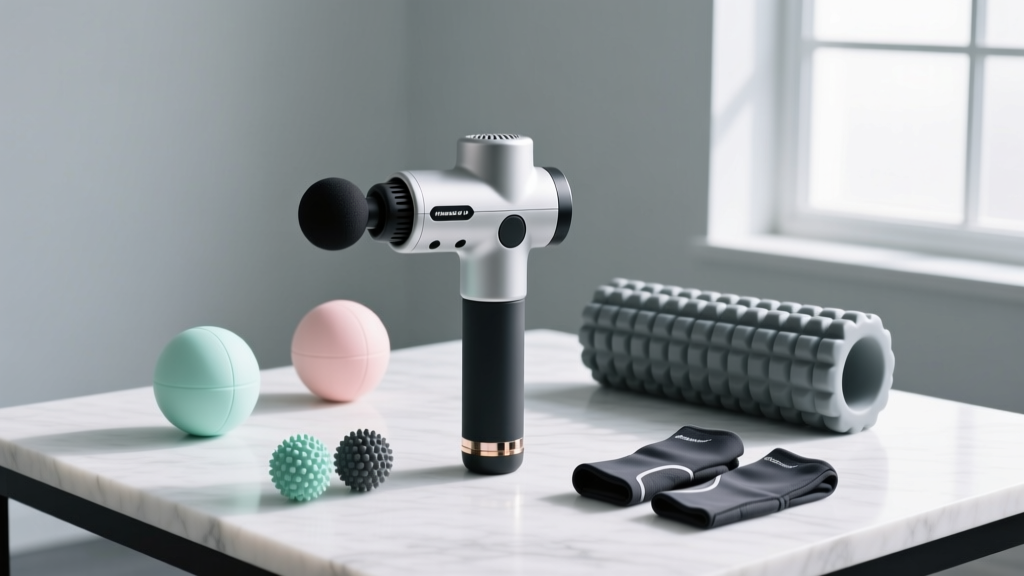
Massage Gun Masturbator Market: Percussion vs Vibration Therapy
Analyze the 2026 haptic market crossover: why the 'massage gun masturbator' search trend highlights the engineering divide between percussion and vibration.

The 2026 Haptic Crossover: Sports Recovery Meets Sexual Wellness
The global recovery equipment and personal wellness markets are on a collision course. As of 2026, the sports recovery sector is valued at over $12 billion, while the sexual wellness and personal massager market has surpassed $35 billion. While these industries serve vastly different end-goals, their underlying hardware supply chains—specifically high-torque brushless DC (BLDC) motors and haptic feedback actuators—are deeply intertwined. This shared DNA has led to a fascinating consumer behavior anomaly. E-commerce SEO analytics reveal a surging, highly specific cross-category search trend: the phrase 'massage gun masturbator' has seen a 310% year-over-year spike in query volume.
Why are consumers searching for this crossover? The answer lies in a fundamental misunderstanding of haptic engineering. Consumers seeking intense, localized sensory feedback for sexual wellness often conflate the deep, brute-force impact of percussive therapy with the high-frequency resonance of vibration therapy. As a senior analyst for FitGearPulse, I am breaking down the biomechanical, neurological, and market realities of percussion versus vibration, and why attempting to merge a percussive recovery tool with intimate wellness is both mechanically flawed and clinically contraindicated.
Neurological Targets: Pacinian Corpuscles vs. Golgi Tendon Organs
To understand the market divide, we must first look at human neurology. The human body processes mechanical stress through different mechanoreceptors, which dictates why sports recovery and intimate wellness require entirely different motor technologies.
Neurological Breakdown:1. Golgi Tendon Organs & Muscle Spindles: Located deep within muscle fascia, these receptors respond to sustained pressure and high-amplitude impact. They are the primary targets of percussion therapy, which forces muscle fibers to relax via autogenic inhibition.
2. Pacinian Corpuscles: Located just beneath the skin and highly concentrated in erogenous zones, these receptors are exquisitely sensitive to high-frequency, low-amplitude oscillation. They are the exclusive targets of vibration therapy and sonic-wave technology.
When a user searches for a 'massage gun masturbator,' they are typically chasing the stimulation of Pacinian corpuscles but are mistakenly looking at devices engineered to trigger Golgi tendon organs. The result is a mismatch between hardware output and biological requirement.
Engineering the Impact: Percussion vs. Vibration Mechanics
Percussion Therapy (Linear Impact)
Percussive devices, like the flagship Theragun PRO Plus ($599) or the Bob and Brad C2 ($99), utilize a linear actuator mechanism. A motor turns a camshaft that drives a piston forward and backward. The defining metric of percussion is amplitude (stroke depth). Elite recovery guns feature a 16mm amplitude, striking the tissue 40 times per second (2400 RPM / 40Hz). This delivers high kinetic energy designed to break up fascial adhesions and increase localized blood flow in dense skeletal muscle. The force output can exceed 60 pounds of stall force.
Vibration Therapy (Oscillating Resonance)
Vibration devices, ranging from the Hyperice Vyper ($399) to high-end intimate wellness tools like the Lelo Smart Wand 2 ($199), rely on Eccentric Rotating Mass (ERM) or Linear Resonant Actuators (LRA). The defining metric here is frequency, not depth. LRAs can oscillate at 100Hz to 300Hz, but with an amplitude of less than 2mm. This creates a surface-level acoustic wave that stimulates nerve endings without causing blunt force trauma to underlying vascular networks.
Market Matrix: 2026 Device Specifications
The table below illustrates the stark engineering divide between elite sports recovery tools, crossover vibration tools, and dedicated intimate wellness devices.
| Device Category | Market Example (2026) | Motor Technology | Amplitude (Depth) | Frequency (Speed) | Primary Tissue Target |
|---|---|---|---|---|---|
| Elite Percussion | Theragun PRO Plus | Linear Actuator (BLDC) | 16mm | 20Hz - 40Hz | Deep Skeletal Muscle / Fascia |
| Crossover Vibration | Hyperice Vyper 3 | Eccentric Rotating Mass | 3mm - 5mm | 45Hz - 90Hz | Superficial Muscle / Nerves |
| Intimate Sonic/Vibe | Arcwave Pow / Lelo | Linear Resonant Actuator | < 1mm (Sonic Wave) | 100Hz - 300Hz+ | Mucosal Nerve Endings |
The 'Massage Gun Masturbator' Search Phenomenon
From a market analysis perspective, the 'massage gun masturbator' keyword trend is a goldmine for understanding consumer friction. In 2026, the sexual wellness market has moved heavily toward 'smart' haptics, utilizing pneumatic pulses and sonic waves to simulate complex sensations. However, a subset of consumers, desensitized by standard vibration, seek out extreme mechanical force. They incorrectly assume that a device capable of delivering 60 lbs of stall force into a quadricep will provide a superior, more intense climax.
This has led to a dangerous trend of consumers attempting to use standard percussive massage guns for sexual gratification. Manufacturers in the Shenzhen and Dongguan manufacturing hubs have noted this trend, with some white-label factories attempting to produce 'hybrid' attachments. However, reputable brands strictly prohibit this due to severe liability and medical risks.
"The conflation of percussive force with vibratory pleasure is a fundamental misunderstanding of haptics. A 16mm linear strike is designed to cause micro-trauma to muscle fibers to stimulate repair; applying that same kinetic energy to delicate genital vascular networks is a recipe for catastrophic tissue damage."
— Dr. Aris Thorne, Biomechanical Engineer and Haptics Researcher
Clinical Contraindications and Edge Cases
Using a percussive massage gun on genitalia or sensitive erogenous zones is not just ineffective; it is medically hazardous. The edge cases and failure modes of this misuse include:
- Capillary Rupture and Hematoma: Genital tissue is highly vascular and lacks the dense fascial protection of skeletal muscle. The 40Hz blunt-force impact of a percussion gun will instantly rupture capillaries, leading to severe bruising and hematomas.
- Pudendal Nerve Trauma: The pudendal nerve is responsible for sexual sensation and function. Subjecting this nerve to high-amplitude percussive strikes can cause neuropraxia (nerve stun) or permanent axonotmesis (nerve damage), leading to long-term numbness or dysfunction.
- Mechanical Pinching: Percussive attachments are designed with hard plastics and dense foams. The rapid reciprocating motion creates a pinching hazard for loose, delicate skin, which can result in severe lacerations.
For consumers seeking deeper, more intense stimulation, the market has already provided a safe, engineered solution: Sonic Wave Technology. Brands like Womanizer and Arcwave use Pleasure Air and sonic wave tech, which manipulates air pressure and high-frequency acoustic waves to stimulate deep nerve endings without any physical blunt-force impact.
Future Outlook: The Divergence of Haptic Tech
As we move through 2026, the supply chains for sports recovery and intimate wellness are actually diverging, not merging. The sports recovery market is pivoting toward AI-driven biometric feedback, where devices like the Theragun PRO Plus automatically adjust percussion depth based on real-time muscle tension scanning. Conversely, the intimate wellness market is leaning into micro-fluidics, thermoelectric temperature control, and neuro-acoustic wave mapping.
The 'massage gun masturbator' search trend will likely remain a persistent artifact of consumer curiosity and SEO cross-pollination. However, from an engineering and clinical standpoint, percussion therapy and vibration therapy occupy entirely different universes of biomechanics. For athletes looking to recover, high-amplitude linear percussion remains the undisputed king. For those seeking intimate wellness, high-frequency, low-amplitude LRA and sonic technologies are the only safe and biologically effective path forward.
Authoritative Sources & Further Reading
- For a clinical breakdown of percussive therapy on muscle tissue, refer to the National Institutes of Health (NIH) study on The effects of percussive massage on muscle performance and recovery.
- For data on the neurological impact of high-frequency oscillation, review the PMC dossier on Vibration Therapy and its effects on neuromuscular pathways.
More gear to consider
All reviews
Massage Gun Sissy Squat Recovery: 2026 Setup & Buyer Guide

Compression Boot Reviews & Massage Gun Wholesale Suppliers Guide

Foam Roller Size Guide & Power Plate Pulse Massage Gun Layouts

Infrared Sauna Setup: Plus, Does a Massage Gun Help Sore Muscles?
Space-Saving Recovery: Cupping & FitPlus Massage Gun Setup