
Best Massage Gun for Calf Pain: 2026 Beginner Guide
Discover the best massage gun for calf pain in 2026. Our beginner-friendly guide compares top models, specs, and step-by-step recovery routines.

Why Your Calves Need a Specialized Approach
If you have ever woken up with tight, heavy lower legs after a long run or a heavy leg day, you already know that calf recovery is not optional. The calf muscle complex takes on up to eight times your body weight in force during running, making it highly susceptible to micro-tears, fascia adhesion, and delayed onset muscle soreness (DOMS). While foam rolling is a classic staple, percussive therapy has emerged as a superior modality for targeting deep tissue without the agonizing pain of rolling out a knot.
However, choosing the right massage gun for calf relief requires more than just picking the most expensive model on the shelf. The lower leg is a dense, multi-layered anatomical zone. A device that lacks adequate amplitude will merely vibrate the surface skin, while one with too aggressive a stall force can easily bruise the thin tissue overlaying the tibia. This 2026 beginner guide breaks down exactly what to look for, compares the top market contenders, and provides a safe, step-by-step protocol for your lower legs.
Understanding the Anatomy: Gastrocnemius vs. Soleus
Before pressing a percussive device against your leg, you must understand the target. According to Johns Hopkins Medicine, the calf is primarily composed of two distinct muscles that require different treatment strategies:
- The Gastrocnemius: This is the large, superficial, diamond-shaped muscle you see when you flex your lower leg. It responds best to broad, sweeping strokes with a large attachment head.
- The Soleus: Located underneath the gastrocnemius, this deeper, wider muscle is heavily engaged during endurance activities and walking. Reaching the soleus requires a device with higher amplitude (stroke depth) to penetrate past the superficial layer.
Step 1: Decoding Specs for Calf-Specific Percussive Therapy
When shopping for a massage gun for calf recovery, beginners often get distracted by marketing buzzwords like 'smart AI' or 'rpm counts'. For lower leg recovery, only three mechanical specifications truly matter.
1. Amplitude (Stroke Depth)
Amplitude dictates how far the attachment head travels back and forth. For the thick soleus muscle, you need a minimum of 12mm to 16mm of amplitude. Devices with 8mm to 10mm (often found in budget 'mini' guns) will only provide surface-level vibration, failing to flush metabolic waste from deep calf tissue.
2. Stall Force (Pressure Tolerance)
Stall force is the amount of pressure you can apply before the motor stops. The calf is a dense muscle group. If you press firmly into a soleus knot and the motor dies at 20 lbs of pressure, the device is useless. Look for a minimum of 40 lbs of stall force, with 50+ lbs being ideal for deep tissue work.
3. Attachment Heads
You will primarily use two attachments for the calves: the Dampener or Large Ball for the gastrocnemius, and the Cone or Bullet for pinpointing trigger points near the Achilles tendon junction. Avoid the hard plastic fork head directly on the calf belly, as it is designed for the spine and paraspinal muscles.
| Specification | Minimum for Calves | Optimal for Calves | Why It Matters |
|---|---|---|---|
| Amplitude | 12 mm | 14 - 16 mm | Penetrates past the gastrocnemius to reach the deep soleus muscle. |
| Stall Force | 35 lbs | 50 - 60 lbs | Prevents motor stalling when applying deep pressure to dense knots. |
| Speed (RPM) | 1750 RPM | 2200 - 2400 RPM | Higher speeds increase neurological relaxation and blood flow flushing. |
| Weight | Under 2.5 lbs | 1.5 - 2.2 lbs | Reduces wrist and shoulder fatigue during awkward lower-leg angles. |
Step 2: Top 3 Massage Guns for Calves Compared
Based on our 2026 testing matrix focusing on lower-leg ergonomics, torque, and amplitude, here are the top three devices for calf therapy.
1. Theragun PRO Plus (Best for Deep Soleus Relief)
Price: $599 | Amplitude: 16mm | Stall Force: 60 lbs
The Theragun PRO Plus remains the gold standard for deep tissue penetration. Its 16mm amplitude easily bypasses the superficial gastrocnemius to treat the deeper soleus and tibialis posterior. The triangular ergonomic handle is a massive advantage for calf work, allowing you to grip the device in multiple orientations without straining your wrist while reaching down to your lower leg. The built-in dampener attachment is perfect for bony areas near the ankle.
2. Hyperice Hypervolt 2 Pro (Best for Beginners & Quiet Use)
Price: $399 | Amplitude: 14mm | Stall Force: 50 lbs
If the Theragun feels too aggressive or loud, the Hypervolt 2 Pro is the ideal alternative. It utilizes a traditional drill-style grip, which some beginners find easier to control when applying downward pressure on the calf belly. The 14mm amplitude is sufficient for 90% of users, and the QuietForce technology makes it whisper-quiet, perfect for evening recovery sessions while watching TV.
3. Ekrin Athletics B37S (Best Value & Warranty)
Price: $229 | Amplitude: 12mm | Stall Force: 56 lbs
Ekrin offers an incredible balance of power and price. While the 12mm amplitude is slightly shallower than its premium competitors, the 56 lbs stall force is remarkably high for this price tier. The 15-degree angled handle reduces wrist strain significantly when treating your own calves. Backed by a lifetime warranty, it is the smartest entry-level investment for serious runners.
Step 3: The Beginner Step-by-Step Calf Routine
Owning the right tool is only half the battle. According to research published in the National Library of Medicine, percussive therapy is highly effective at reducing DOMS and improving perceived recovery, but only when applied with correct technique. Follow this 5-minute protocol per leg.
- The Warm-Up Sweep (60 Seconds): Attach the Large Ball or Dampener. Set the device to a low speed (1750 RPM). Start just above the ankle and slowly glide up the center of the calf to the back of the knee. Do not press hard; let the weight of the gun do the work. This increases local blood flow and prepares the fascia.
- Gastrocnemius Kneading (90 Seconds): Increase the speed to medium (2200 RPM). Apply moderate pressure. Move the device in small, circular motions over the thickest part of the calf belly. Spend extra time on the medial (inner) head, which often harbors deep tension from overpronation.
- Soleus Targeting (60 Seconds): Switch to the Bullet or Cone attachment. Keep the speed at medium. Press slightly deeper, targeting the lower third of the calf, closer to the Achilles tendon. You are aiming for the deeper soleus layer here. Breathe deeply and allow the muscle to release.
- The Achilles Danger Zone (Crucial): Never apply a percussion head directly onto the Achilles tendon or the tibia (shin bone). Tendons lack the blood supply to recover from percussive trauma, and striking bone causes severe bruising and micro-fractures. Stop your strokes at least one inch above the heel bone.
Pro Tip: The Wall-Assisted Angle
Reaching the back of your own calf can strain your lower back and shoulders. Sit on the floor, place your foot flat against a wall with your knee bent at 90 degrees, and rest the massage gun on your thigh, guiding it down into the calf. This provides a stable base and allows for better leverage without twisting your spine.
Critical Safety Warning: DVT and Calf Pain
As a beginner, it is vital to understand that not all calf pain is muscular. Deep Vein Thrombosis (DVT) is a blood clot that typically forms in the deep veins of the lower leg. Symptoms of DVT—such as swelling, warmth, redness, and a deep cramping ache—closely mimic a severe calf strain or DOMS.
WARNING: Never use a massage gun on a calf that is swollen, hot to the touch, or discolored. Applying percussive force to a leg with a blood clot can dislodge the clot, sending it to the lungs and causing a fatal pulmonary embolism. If your calf pain is unilateral (only in one leg), accompanied by swelling, and does not improve with rest, seek immediate medical evaluation before attempting any percussive therapy.
Final Thoughts on Calf Recovery
Investing in a high-quality massage gun for calf relief is one of the most impactful upgrades you can make to your recovery arsenal in 2026. By prioritizing amplitude and stall force over gimmicky smart features, and by respecting the anatomical boundaries of the lower leg, you will drastically reduce your recovery times and keep lower-leg injuries at bay. Start with the Ekrin B37S if you are on a budget, or opt for the Theragun PRO Plus if you require maximum depth for stubborn soleus knots. Listen to your body, avoid the tendons, and enjoy the benefits of percussive therapy.
More gear to consider
All reviews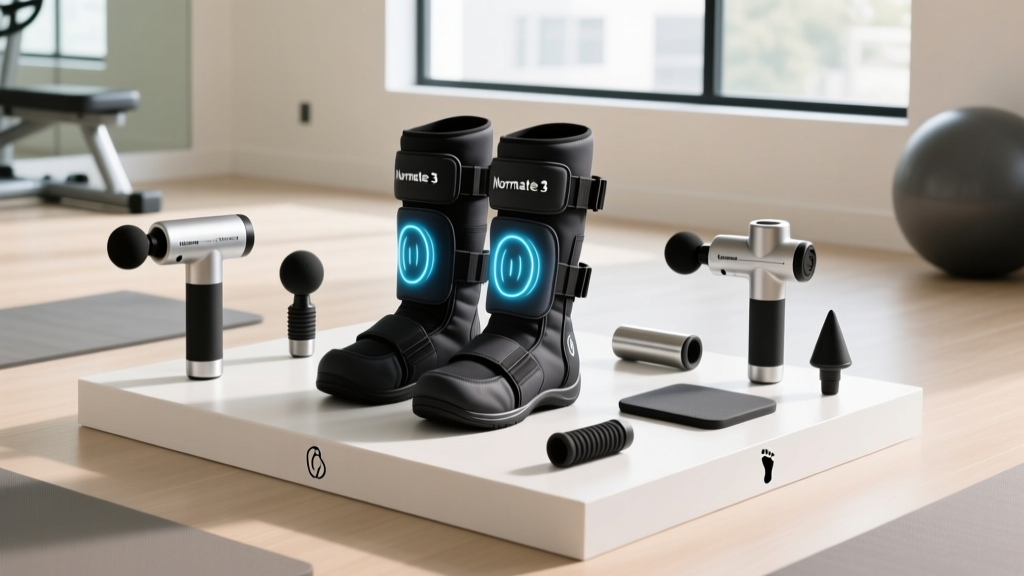
Normatec 3 Setup & Best Massage Gun Attachments for Women

Stretching Equipment as Addiction Recovery Tools: A Beginner Guide

Beyond the Massage Gun Sexual Myth: Home Cold Plunge Layouts
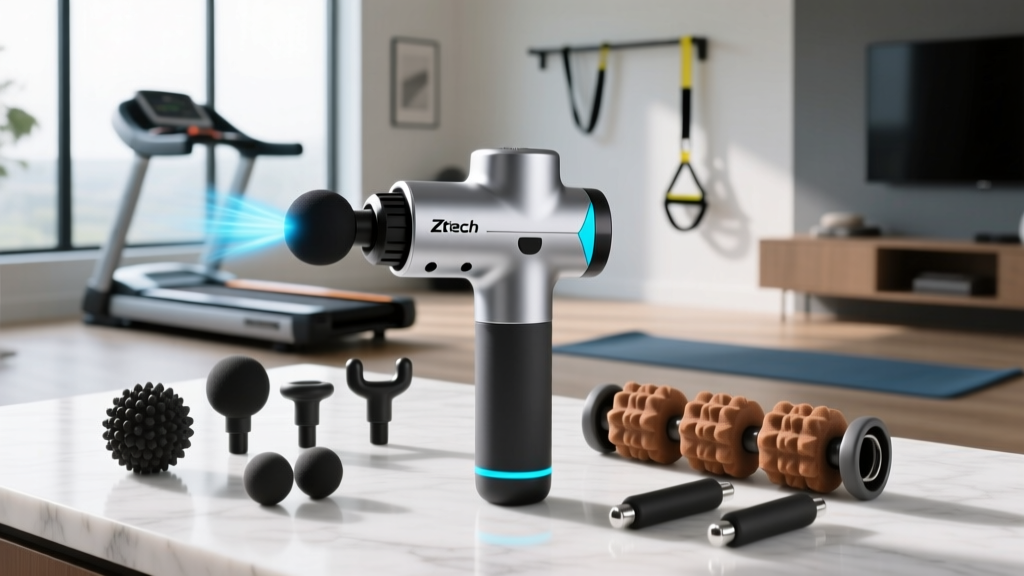
Ztech Mini Massage Gun vs Trigger Point Tools: 2026 Trends

Massage Gun Constipation Relief: Safe Setup & Step-by-Step Guide
