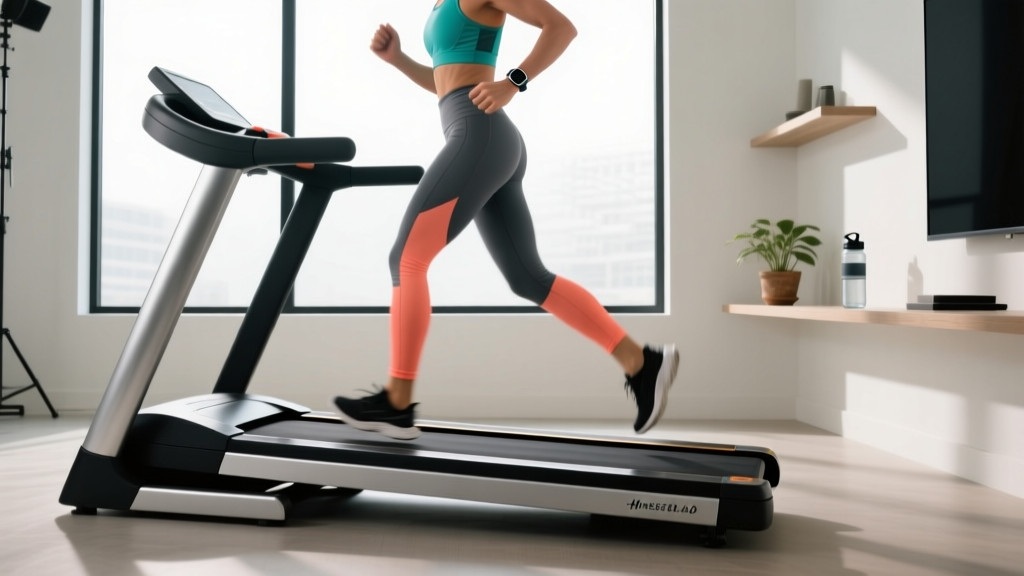
Best Treadmill That You Power: 2026 Walking Pad Review
Discover the best treadmill that you power for 2026. We compare manual walking pads and curved non-motorized treadmills for home use.

The Shift to Self-Powered Home Cardio
The work-from-home era cemented the motorized walking pad as a household staple, but as we move through 2026, a significant shift is occurring in the home fitness market. Consumers are increasingly seeking a treadmill that you power—a non-motorized, manual alternative that eliminates electricity costs, reduces mechanical failure points, and drastically increases caloric expenditure. Whether you are looking for a compact flat manual walking pad for under your standing desk or a high-performance curved manual treadmill for intense interval training, the self-powered category offers distinct biomechanical advantages.
Unlike motorized walking pads where the belt pulls your feet, a manual treadmill requires you to drive the belt with your own stride. This engages the posterior chain (glutes and hamstrings) far more aggressively. According to the American Heart Association, incorporating higher-intensity walking into your daily routine yields superior cardiovascular benefits, and manual treadmills naturally elevate your heart rate without requiring you to increase your physical speed.
Motorized vs. Manual: The Core Difference
Motorized Walking Pads: Rely on a DC motor and controller board. Speed is dictated by a remote. Prone to electronic failure if overloaded.
Manual (Treadmill That You Power): Relies on user biomechanics, gravity (on curves), or magnetic tension (on flats). Zero electronic components to burn out. Speed is limited only by your leg drive.
Top 3 Non-Motorized Walking Pads & Curved Treadmills for 2026
Not all manual treadmills are created equal. The market is split between budget-friendly flat magnetic models and premium curved slatted-belt models. Here is our in-depth review of the top performers.
1. Sunny Health & Fitness SF-T723016 (Best Budget Flat Manual)
For those who want a simple, under-desk walking solution without the hum of a motor, the Sunny Health SF-T723016 is a standout entry-level manual treadmill. Priced around $289, it utilizes a magnetic tension system rather than a motor to provide belt resistance.
- Belt Dimensions: 42' L x 13' W (Compact, strictly for walking)
- Weight Capacity: 220 lbs
- Resistance: 8 levels of magnetic tension
- Real-World Insight: Because it is flat and manual, you must hold onto the included front handlebars to generate enough backward force to pull the belt at a brisk pace. It is not designed for hands-free typing while walking; it is a dedicated manual walking workout tool.
2. Assault Fitness AirRunner (Best Mid-Tier Curved)
The AirRunner bridges the gap between commercial gym equipment and home use. Priced at $3,499, it features a 17-inch wide slatted rubber belt that requires zero lubrication. The curve of the deck naturally pulls your foot down and back, simulating outdoor ground reaction forces.
- Belt Dimensions: 63' L x 17' W
- Weight Capacity: 350 lbs
- Max Speed: Unlimited (User-dependent)
- Real-World Insight: The AirRunner is heavy (280 lbs) and lacks transport wheels, making it a permanent fixture in your room. However, the absence of a motor means you will never face the $400+ controller board replacements common in motorized walking pads after 3-4 years of heavy use.
3. TrueForm Runner (Premium Compact Curved)
At $4,295, the TrueForm Runner is the gold standard for home athletes who want a treadmill that you power. Its dual-belt design (two separate 12-inch tracks) forces symmetrical leg drive, correcting muscle imbalances often masked by single-belt motorized treadmills.
- Belt Dimensions: 62' L x 24' W (Dual 12' tracks)
- Weight Capacity: 400 lbs
- Footprint: 70' x 32' (Surprisingly compact for a curved runner)
- Real-World Insight: The dual-track design means if your left leg is weaker, the left belt will slow down, providing immediate biofeedback. It is exceptionally quiet, registering under 55 decibels at a brisk walk, making it ideal for apartment living.
Head-to-Head Comparison Matrix
| Model | Type | Belt Size | Weight Limit | Est. Price (2026) |
|---|---|---|---|---|
| Sunny SF-T723016 | Flat Magnetic | 42' x 13' | 220 lbs | $289 |
| Assault AirRunner | Curved Slatted | 63' x 17' | 350 lbs | $3,499 |
| TrueForm Runner | Curved Dual-Track | 62' x 24' | 400 lbs | $4,295 |
| Technogym Skillmill | Curved Commercial | 63' x 19' | 400 lbs | $11,500+ |
Biomechanics and Caloric Burn: What the Science Says
Why choose a manual treadmill over a $150 motorized walking pad? The answer lies in human biomechanics. When you use a motorized walking pad, the motor does the work of pulling your leg backward. On a treadmill that you power, your hamstrings and glutes must actively pull the belt backward and propel your center of mass forward.
A pivotal study published in the National Center for Biotechnology Information (NCBI) demonstrated that running or walking on a curved, non-motorized treadmill increases energy expenditure by approximately 30% to 40% compared to a motorized treadmill at the exact same speed. Furthermore, the study noted a significant increase in posterior chain muscle activation.
'By eliminating the motorized assistance, users are forced to generate all horizontal propulsive forces, resulting in higher heart rates and greater caloric demand even at walking speeds of 3.0 mph.'
This aligns perfectly with the concept of NEAT (Non-Exercise Activity Thermogenesis). As noted by the Mayo Clinic, increasing your daily NEAT through higher-effort movement can significantly impact long-term weight management. A 30-minute walk on a manual curved treadmill can yield the caloric deficit of a 45-minute walk on a standard motorized pad.
Critical Buying Factors for Manual Pads
Before purchasing a self-powered treadmill, evaluate these specific technical constraints to ensure it matches your use case.
1. Belt Friction and Maintenance
Flat manual treadmills (like the Sunny model) use standard PVC belts that require regular silicone lubrication. If you neglect this, the friction between the belt and the wooden deck increases, making the treadmill feel 'stuck' and requiring immense leg strength to initiate movement. Curved treadmills use vulcanized rubber slats on ball-bearing rollers, requiring zero lubrication, but the slats will eventually need replacing after 50,000+ miles (a $400-$600 maintenance cost).
2. The 'Start-Up' Force Requirement
The most common complaint among new manual treadmill users is the initial force required to get the belt moving from a dead stop. On flat manuals, this is mitigated by holding handlebars and pushing backward. On curved models, you must lean forward into the curve to let gravity assist the first step. If you have severe knee or hip joint limitations, the start-up torque required for a manual treadmill may exacerbate joint pain.
3. Desk Compatibility
If your goal is to use this under a standing desk, curved treadmills will not fit. The front lip of a curved treadmill rises 10 to 14 inches off the ground to create the incline, which will collide with standard desk crossbars. For under-desk use, you are restricted to flat manual models or low-profile motorized pads.
Frequently Asked Questions
Can I run on a flat manual walking pad?
No. Flat manual treadmills are strictly designed for walking (up to 3.5 mph). Attempting to run on a flat manual belt creates excessive friction and shear force, which can snap the belt or damage the rear roller bearings. For running, you must use a curved manual treadmill.
Are manual treadmills bad for your knees?
Actually, curved manual treadmills are often better for knee health. The slatted rubber belts on models like the AirRunner and TrueForm absorb up to 40% more impact shock than the hard phenolic decks found on cheap motorized walking pads. Additionally, the curved deck encourages a mid-foot strike, reducing the harsh heel-strike impact that travels up the tibia to the knee.
How do I control the speed if there is no remote?
On a treadmill that you power, your body is the remote. To speed up, you simply walk or run faster, moving higher up the curve (on curved models) or increasing your stride frequency (on flat models). To stop, you slow your stride and grab the handrails; the belt will stop the moment your feet stop driving it.
More gear to consider
All reviews
Treadmill Motor Setup: Treadmill or Elliptical for Belly Fat?

Do You Need a Subscription for NordicTrack Treadmills? Compact Cardio

Beyond Ok Go Treadmills: Stair Climber Setup Guide

NordicTrack C1550 Treadmill vs 2026 Compact Portable Cardio Options

XTERRA TR 150 Treadmill Noise Test & Quiet Cardio Machine Guide
