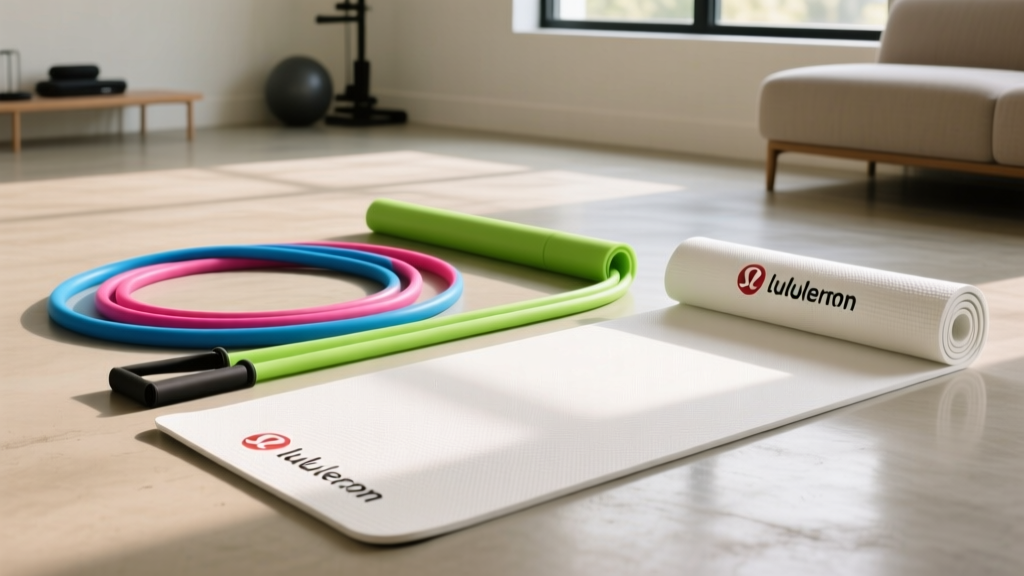
Loop Band vs Tube Band & Lululemon Take Form Yoga Mat Budget
We break down the loop band vs tube band comparison and analyze if the lululemon take form yoga mat is worth the premium price for your home gym budget.

The 2026 Home Gym Dilemma: Premium Surfaces vs. Variable Resistance
When allocating a home gym budget in 2026, fitness enthusiasts face a recurring dilemma: should you invest heavily in a premium foundational surface, or maximize your resistance training arsenal? This exact question arises when consumers weigh the cost of high-end accessories against versatile strength tools. Specifically, we are looking at the loop band vs tube band comparison and how those costs stack up against premium floor gear like the lululemon take form yoga mat. Building a functional, space-efficient home gym requires a ruthless cost-per-use analysis. Dropping $148 on a single piece of rubber might seem unjustifiable when that same budget could purchase a comprehensive, multi-tiered resistance band system capable of replacing hundreds of pounds of free weights.
In this budget breakdown and value analysis, we will dissect the biomechanical differences, real-world failure modes, and exact pricing of loop versus tube bands. Furthermore, we will evaluate whether premium yoga surfaces earn their keep in a hybrid fitness routine, ensuring every dollar of your 2026 equipment budget delivers maximum ROI.
The Anchor Expense: Evaluating the Lululemon Take Form Yoga Mat
Before diving into resistance bands, we must establish the baseline cost of premium fitness accessories. The lululemon take form yoga mat currently retails for approximately $148. It features a 5mm natural rubber base for cushioning and a 3D-textured polyurethane top layer engineered for high-sweat grip. According to Wirecutter's comprehensive yoga mat testing, polyurethane-topped natural rubber mats consistently outperform PVC alternatives in grip and durability, but they come at a steep premium.
Budget Rule of Thumb: Never allocate more than 40% of your initial home gym budget to a single floor surface unless your primary discipline is restorative yoga, Pilates, or heavy floor-based mobility work. For hybrid athletes, a $40-$60 high-density TPE mat often suffices, freeing up $90+ for resistance tools.If your routine heavily incorporates floor-based core work, mobility flows, or Pilates, the $148 investment in the Lululemon mat provides exceptional joint protection and tactile feedback. However, if your primary goal is hypertrophy, strength, or cardiovascular conditioning, that $148 is better spent on a high-tier resistance band ecosystem. This brings us to the core of our analysis: choosing the right band architecture.
Loop Band vs Tube Band: Mechanics, Pricing, and Use Cases
Resistance bands are not created equal. The structural differences between flat continuous loops and cylindrical tubes dictate their lifespan, tension curves, and exercise compatibility.
Flat Loop Bands (Continuous Latex/TPE)
Loop bands are continuous, flat strips of layered latex or TPE. They range from thin mini-bands (used for glute activation) to massive 4-inch-wide powerlifting bands. A premium set, such as the Rogue Fitness Monster Bands, costs between $115 and $140 for a full spectrum set (from 1/4-inch to 2.5-inch widths). They stretch up to 2.5x their resting length and are designed to be anchored to heavy rig uprights, wrapped around barbells, or looped under the feet for deadlifts and squats.
Cylindrical Tube Bands (With Carabiners)
Tube bands are cylindrical, hollow or solid rubber tubes equipped with plastic or metal carabiners at the ends, allowing them to be clipped to handles, ankle straps, or door anchors. A top-tier system like the Bodylastics 260 lb Extreme Set retails for roughly $59.95. These systems utilize anti-snap technology (a woven nylon cord running through the center of the tube) to prevent catastrophic failure.
| Feature | Flat Loop Bands | Tube Bands (Stackable) |
|---|---|---|
| Average Set Cost | $115 - $140 | $40 - $65 |
| Max Tension Capacity | Up to 200+ lbs (per band) | Up to 40 lbs (per tube) |
| Anchor Versatility | High (wraps around any pole/bar) | Moderate (requires specific clips/doors) |
| Comfort on Skin | Low (can dig in, roll up) | High (used via padded handles) |
| Primary Use Case | Powerlifting, pull-up assist, heavy compound | Isolation, rehab, cable-machine mimicry |
Budget Breakdown: Allocating a $250 Accessory Fund
Let us apply a practical decision framework. Assume you have a $250 budget to upgrade your home gym accessories in 2026. Here are two distinct allocation strategies based on training modalities.
Scenario A: The Hybrid Athlete (Strength & Mobility)
- Rogue Monster Band Set (3 core bands): $85.00
- Premium TPE Yoga Mat (e.g., Gaiam or BalanceFrom): $35.00
- Wooden Gymnastic Rings with Straps: $45.00
- Heavy-Duty Door Anchor & Ankle Straps: $25.00
- Total: $190.00 (Leaves $60 for future micro-upgrades)
Verdict: This setup sacrifices the premium feel of the lululemon take form yoga mat but provides an incredibly robust strength and hypertrophy toolkit. The loop bands handle heavy compound loading, while the rings offer unmatched upper-body stabilization.
Scenario B: The Yogi & Rehab Focus
- lululemon take form yoga mat: $148.00
- TheraBand CLX Loop System (Rehab/Light Resistance): $25.00
- Stackable Tube Band Set (Light/Medium): $45.00
- Cork Yoga Blocks (Pair): $22.00
- Total: $240.00
Verdict: If your training revolves around Vinyasa flows, Pilates, and physical therapy, the premium mat is non-negotiable. The polyurethane grip prevents slipping during Downward Dog, while the lighter tube and CLX bands provide the exact low-impact, variable resistance needed for joint rehabilitation.
Real-World Failure Modes and Edge Cases
A true value analysis must account for equipment lifespan. Cheap gear breaks; premium gear degrades differently. Understanding these failure modes prevents wasted money.
According to the American Council on Exercise (ACE), elastic resistance training provides linear variable resistance, which closely mimics the natural strength curves of human muscle bellies. However, the structural integrity of the elastomer is paramount to safety during peak concentric loading.
Tube Band Failure: Carabiner Shear
The most common failure point for tube bands is not the rubber snapping in the middle, but the metal carabiner slicing through the rubber collar under high tension. If a 40lb tube is stretched to its 3x limit during a heavy chest press, the sheer force at the connection point can exceed 120lbs. Edge Case: Always inspect the plastic or metal collar. If it shows white stress marks, discard the tube immediately. Systems with internal nylon safety cords (like Bodylastics) prevent the band from snapping back into your face, but they do not prevent the collar from detaching.
Loop Band Failure: Micro-Fissures and UV Degradation
Flat loop bands fail silently. Latex is highly susceptible to UV light, ozone, and petroleum-based oils (including many lotions and pre-workout spills). Rolling a heavy loop band tightly and leaving it in a hot car creates micro-fissures along the fold lines. Expert Tip: Store heavy loop bands flat or loosely coiled in a dark, climate-controlled drawer. Wipe them down with a damp cloth and mild soap—never use chemical disinfectants, which strip the latex of its natural moisture and accelerate dry rot.
Mat Failure: Polyurethane Hydrolysis
The lululemon take form yoga mat's polyurethane top layer is incredibly grippy because it is slightly porous, absorbing moisture to create traction. The trade-off is that it also absorbs sebum (body oils) and sweat salts. Over 2 to 3 years of heavy use, this leads to hydrolysis, where the top layer begins to break down, flake, or lose its grip. To maximize the $148 investment, clean the mat exclusively with a 50/50 mix of distilled water and witch hazel, avoiding all essential oil-based cleaners.
Biomechanical Tension Profiles
When choosing between loops and tubes, consider the biomechanics of your target muscles. Research published by the National Center for Biotechnology Information (NCBI) highlights that elastic resistance alters the torque-angle curve of an exercise.
With tube bands, the tension increases linearly as the tube stretches. This is excellent for isolation movements like bicep curls or lateral raises, where the muscle is weakest at the end of the range of motion. The tube forces the muscle to work hardest precisely where it is mechanically strongest (the shortened position).
With heavy loop bands, the tension curve is more aggressive due to the sheer volume of latex. When used for accommodating resistance (e.g., looping a band over a barbell during a back squat), the loop band deloads at the bottom of the squat (where the lifter is mechanically weakest) and peaks at lockout (where the lifter is strongest). This specific tension profile is impossible to replicate with standard tube bands, making heavy loops mandatory for serious powerlifters and strength athletes.
Final Verdict: Where Should Your Money Go?
The decision between investing in premium surfaces like the lululemon take form yoga mat versus building a diverse resistance band arsenal comes down to your primary training stimulus.
- Buy the Lululemon Mat & Tube Bands if: Your routine consists of 70% floor work, yoga, Pilates, and joint rehab. The tactile grip of the mat and the handle-based versatility of tube bands will yield the highest daily utility.
- Buy the Budget Mat & Heavy Loop Bands if: Your routine consists of calisthenics, powerlifting, hypertrophy, and athletic conditioning. The heavy loops will allow you to perform assisted pull-ups, add accommodating resistance to free weights, and execute heavy rotational movements that would easily snap a standard tube band.
Ultimately, fitness gear value is measured in consistency and safety. By understanding the exact failure modes and tension profiles of your equipment, you can build a 2026 home gym that is both financially efficient and biomechanically superior.
More gear to consider
All reviews
Resistance Band Sets Guide: Levels, Types & Manduka Yoga Mat Cleaner

Medicine Ball Weight Guide: The Charlie Follows Yoga Mat Trap

BOSU vs Stability Ball: Gym Layouts & Balance Yoga Mat Pairings

Stability Ball vs BOSU Ball Maintenance: Beyond the Yoga Mat Basket
Beyond Buying Yoga Mats at Whole Foods: Block & Strap Care Guide
