Loop Band vs Tube Band: Best Picks & Nike Reversible Yoga Mat Review
Discover our expert loop band vs tube band comparison, plus a hands-on review of the Nike reversible yoga mat for your ultimate home resistance setup.

The Foundation of Home Resistance: Beyond the Band
As we navigate the fitness equipment landscape in 2026, elastic resistance remains a cornerstone of both rehabilitation and high-performance hypertrophy. However, a recurring debate among home-gym enthusiasts and physical therapists alike is the choice between flat loop bands and handled tube bands. While both offer variable linear resistance, their biomechanical applications, durability profiles, and ideal use cases differ drastically. Furthermore, your resistance setup is only as effective as the foundation it rests upon. Performing high-tension banded floor work requires superior grip and joint cushioning, which is why we are pairing this comprehensive loop band vs tube band comparison with an in-depth, hands-on review of the Nike reversible yoga mat to complete your ultimate resistance training ecosystem.
The Core Mechanics: Loop Band vs Tube Band Comparison
To make an informed purchasing decision, we must look past the marketing jargon and examine the material science and biomechanics of each band type. According to strength and conditioning guidelines from the American Council on Exercise, elastic resistance provides ascending tension, meaning the exercise becomes harder at the peak of the concentric contraction. How that tension is delivered depends entirely on the band's architecture.
Loop Bands (Flat Continuous Bands)
Loop bands are flat, continuous ribbons typically manufactured from natural latex or thermoplastic elastomer (TPE). Premium models, such as the Rogue Fitness Echo Bands or Serious Steel Assist Bands, utilize a layered latex dipping process that allows for an elongation limit of up to 250% to 300% before reaching their tensile breaking point. Because they lack handles, loop bands force you to grip the rubber directly or wrap them around your wrists and ankles. This makes them unparalleled for compound lower-body movements (like banded squats and hip thrusts), pull-up assistance, and accommodating resistance attached to traditional barbells.
Tube Bands with Handles
Tube bands consist of cylindrical extruded latex tubing, often encased in a braided nylon sleeve to prevent catastrophic snapping. Brands like Bodylastics and GoFit dominate this space, utilizing heavy-duty steel carabiners to attach ergonomic plastic or foam handles. The braided sleeve limits elongation to a safer 150% to 200%, acting as a built-in fail-safe. Tube bands are engineered to mimic cable machines, making them the superior choice for upper-body isolation exercises like triceps pushdowns, lateral raises, and seated rows.
Head-to-Head Comparison Matrix
| Feature | Loop Bands (Flat) | Tube Bands (Handled) |
|---|---|---|
| Material | Layered Natural Latex / TPE | Extruded Latex w/ Nylon Sleeve |
| Max Elongation | 250% - 300% | 150% - 200% (Sleeve limited) |
| Best Use Case | Compound lifts, pull-up assist, powerlifting | Isolation, cable-mimics, upper body |
| Avg. Price Range | $25 - $60 (per set) | $30 - $80 (per set) |
| Durability Risk | Edge micro-tears from rolling | Carabiner shear / tubing dry rot |
The Anchor Base: Hands-On Review of the Nike Reversible Yoga Mat
You cannot safely execute heavy banded floor work on a slippery hardwood floor or a cheap PVC mat. When performing banded glute bridges or seated cable rows, the downward and outward force requires a mat with high-friction traction and adequate density to protect your sacrum and spine. Enter the Nike reversible yoga mat, a staple in our 2026 testing lab that consistently bridges the gap between studio yoga and hardcore resistance training.
Material and Traction Dynamics
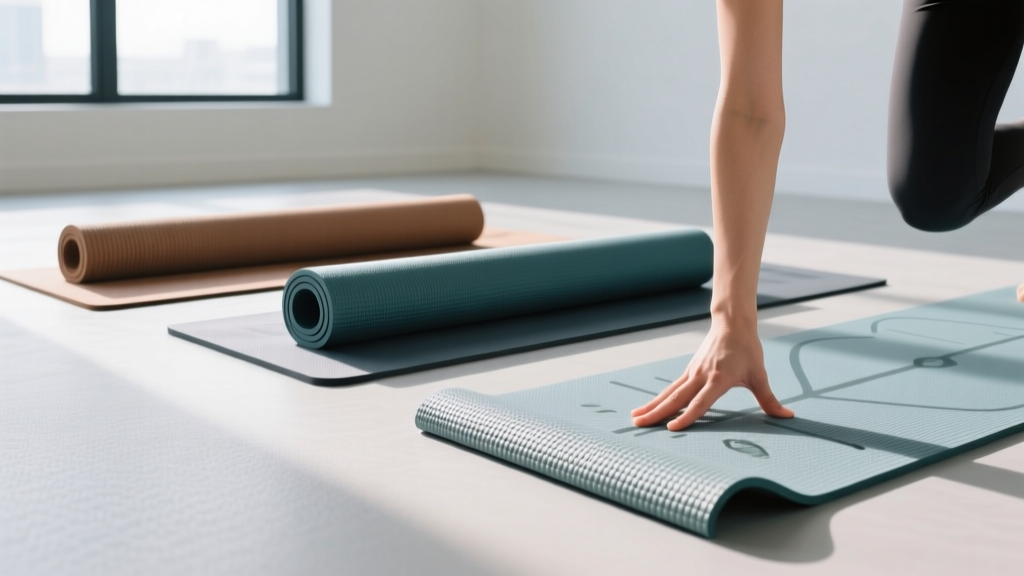
Retailing between $35 and $45, the standard 4mm Nike reversible yoga mat is constructed from high-density TPE (Thermoplastic Elastomer). Unlike porous PVC, TPE features a closed-cell structure that repels sweat and prevents bacterial growth—a critical factor when you are sweating through high-rep banded circuits. The 'reversible' aspect is not just a colorway change; it is a dual-texture engineering feat. The top side features a smooth, sweat-wicking finish for barefoot stability, while the bottom side features a pronounced ribbed texture. During our testing, this ribbed underside acted like a suction cup on hardwood floors, completely eliminating the mat slippage that plagues lesser brands during heavy banded squats.
Joint Protection Under Load
The 4mm thickness hits the sweet spot for resistance training. Thicker 6mm to 8mm mats tend to compress unevenly under heavy loads, causing ankle instability during banded split squats. The Nike mat's 4mm density provides enough cushioning to protect your lumbar spine during banded deadbugs and floor presses, while remaining firm enough to transfer kinetic energy efficiently during standing movements.
Expert Insight: Mat Care for Band Users
When using loop bands, never drag the rough edge of the band across the mat's surface to create tension. The friction can cause micro-abrasions on the TPE surface over time. Instead, step firmly onto the band and lift your foot to adjust tension.
Expert Decision Framework: Which Setup Should You Buy?
The Centers for Disease Control and Prevention (CDC) recommends adults engage in muscle-strengthening activities at least two days a week. To meet this efficiently at home, your gear must align with your specific physiological goals.
- For Hypertrophy and Bodybuilding: Invest in a premium Tube Band set (like the Bodylastics MAX) paired with the Nike reversible yoga mat. The handles allow for strict isolation of the biceps, triceps, and deltoids, while the mat ensures your footing remains planted during heavy standing curls.
- For Powerlifting and Athletic Performance: Choose a Loop Band set (like Serious Steel). You will need the heavy 1-inch to 2-inch bands for accommodating barbell bench presses and the thinner bands for dynamic warm-ups. The Nike mat is essential here for barefoot stability during banded lateral walks and hip mobilizations.
- For Rehab and Travel: Opt for mini-loop bands (flat, 9-inch circumference) made of TPE. They are lightweight, easily packable, and gentle on recovering joints. The Nike mat rolls up tightly enough to be checked as luggage, making it the perfect travel companion.
Real-World Failure Modes & Safety Protocols
Elastic resistance equipment is under constant mechanical stress. Ignoring maintenance protocols can lead to severe injuries, particularly facial lacerations from snapping bands. Based on our lab teardowns, here are the primary failure modes you must monitor:
- Latex Oxidation (Loop Bands): Natural latex degrades when exposed to UV light, ozone, and petroleum-based lotions. If your loop bands develop a chalky white residue or feel sticky, the polymer chains are breaking down. Protocol: Store bands in a dark, climate-controlled bag and wipe them down with a damp cloth (no chemical cleaners) after use.
- Carabiner Shear (Tube Bands): The weakest link in a tube band system is the metal carabiner connecting the tubing to the handle. Under loads exceeding 50 lbs per tube, cheap stamped-metal carabiners can bend or snap. Protocol: Upgrade to forged steel carabiners and inspect the nylon webbing loop for fraying before every session.
- Anchor Point Slippage: When anchoring bands to doors or poles, the band can slip if the anchor is not perfectly perpendicular to the force vector. Protocol: Always use a dedicated door anchor with a reinforced foam stopper, and ensure the door hinges are on the side opposite to your pulling direction to prevent the door from popping open.
Frequently Asked Questions
Can I use the Nike reversible yoga mat for high-intensity interval training (HIIT) with bands?
Yes, but with a caveat. The 4mm TPE construction is highly durable, but repetitive, high-impact jumping (like banded jump squats) will accelerate wear on the ribbed underside. For pure HIIT, consider a dedicated rubber horse-stall mat, but for controlled resistance training and yoga, the Nike mat is exceptional.
Which band type is better for beginners?
Tube bands are generally more approachable for beginners because the handles provide a familiar grip similar to dumbbells, and the braided sleeve offers a psychological and physical safety net against snapping. However, beginners should also acquire a light mini-loop band for essential glute activation and knee-tracking drills.
How do I clean my Nike reversible yoga mat after a sweaty banded workout?
Avoid harsh chemical disinfectants, which can break down the TPE material. Instead, mix a solution of 75% water and 25% white vinegar with a few drops of tea tree oil. Lightly mist the mat and wipe it down with a microfiber cloth, allowing it to air dry completely before rolling it up to prevent mold growth.
More gear to consider
All reviews
Speed vs Weighted Jump Ropes & Backpack Yoga Mat Holder Guide
Stability Ball vs BOSU Ball Care: Longevity & Yoga Mat Orange Bases

Pull-Up Assist Band Sizing & Cando Yoga Mat Setup Guide

Coral Yoga Mat Care & Pilates Accessories Maintenance Guide

Stability Ball vs BOSU Ball: 2026 Trends & Lululemon Yoga Mat Carrier