
Maintaining Loadable Dumbbells for Bent Over Reverse Dumbbell Flys
Learn how lateral torque from bent over reverse dumbbell flys damages loadable dumbbells, plus expert maintenance tips to protect collars and sleeves.

The Hidden Biomechanical Stress of Rear Delt Training
Loadable dumbbells with interchangeable plates are a staple in modern home and commercial gyms. Offering the cost-efficiency of a barbell plate collection combined with the unilateral benefits of dumbbell training, handles like the Rogue Fitness Loadable Dumbbell Handles ($95.00/pair) or the Titan Fitness V2 Loadable Dumbbells ($89.99/pair) are exceptional investments. However, not all exercises treat this equipment equally. When you perform bent over reverse dumbbell flys, you subject the dumbbell sleeves, collars, and locking mechanisms to extreme off-axis shear forces that simply do not occur during standard pressing or curling movements.
According to biomechanical analyses of the posterior deltoid lateral raise, the exercise requires a horizontal lever arm. Unlike a bicep curl where gravity pulls the weight straight down along the axis of the handle, a reverse fly holds the weight horizontally away from the body. This creates a massive moment of inertia and rotational torque on the collar. If your loadable dumbbell is not properly maintained, this specific movement is the most likely culprit for catastrophic collar failure, plate slippage, and sleeve scoring.
⚠️ WARNING: The Shear Force Danger ZoneDuring the eccentric (lowering) phase of bent over reverse dumbbell flys, micro-oscillations and momentum shifts transfer directly into the dumbbell collar. Spin-lock collars are highly susceptible to vibrating loose under this specific lateral shear stress, posing a severe crush hazard to your feet and toes.
Top Failure Modes in Loadable Dumbbell Handles
Before diving into the maintenance protocol, it is crucial to understand how interchangeable plate dumbbells actually fail when subjected to high-torque isolation exercises. Based on manufacturer equipment care guidelines and long-term gym equipment testing, here are the primary failure modes:
- Thread Stripping on Spin-Locks: Rushing to change weights between drop-sets often leads to cross-threading. When lateral torque is applied during a reverse fly, cross-threaded zinc or black oxide threads will strip, rendering the collar useless.
- Lever-Lock Spring Fatigue: Snap-ring and lever-lock collars rely on internal springs. Chalk dust and sweat ingress cause these springs to corrode and lose tension, allowing the sleeve to slide outward mid-rep.
- Sleeve Scoring and Bushing Wear: Cheap cast-iron plates with poorly machined 50mm (or worse, 48mm) center holes will grind against the dumbbell sleeve. During the micro-pauses at the peak contraction of a reverse fly, this 'plate chatter' accelerates sleeve wear.
- Knurling Degradation: Rear delt flys require an aggressive pronated or neutral grip. Sweat and dead skin accumulate deeply in the knurling, leading to localized rust pits that tear calluses and compromise grip security.
Loadable Dumbbell Collar Vulnerability Matrix
Not all loadable handles are built the same. The table below breaks down how different collar styles handle the specific lateral torque generated by bent over reverse dumbbell flys.
| Brand / Model | Collar Type | Torque Resistance (Reverse Flys) | Maintenance Frequency |
|---|---|---|---|
| Rogue Loadable Handles | Lever-Lock / Snap | Excellent (High shear tolerance) | Monthly spring cleaning |
| Titan Fitness V2 | Spin-Lock (Threaded) | Moderate (Prone to vibration loosening) | Weekly thread inspection |
| Yes4All Olympic | Standard Spin-Lock | Poor (High risk of lateral slip) | Pre-workout check required |
| Bells of Steel Loadable | Clamp / Lever Hybrid | Very Good (Secure lateral grip) | Quarterly hinge lubrication |
Step-by-Step Maintenance Protocol for Interchangeable Plates
To ensure your loadable dumbbells survive the rigors of posterior chain and shoulder isolation work, implement this targeted maintenance routine. This protocol is specifically designed to counteract the wear patterns caused by horizontal lever-arm exercises.
1. Sleeve and Collar Thread Lubrication
Friction is the enemy of threaded collars. When sweat dries on the threads of a spin-lock dumbbell, it creates a saline crust that increases friction, leading users to over-tighten and eventually strip the metal. Never use standard WD-40, as it attracts dust and degrades rubber bumper plates. Instead, apply a light coat of 3-IN-ONE White Lithium Grease or a specialized barbell sleeve oil to the threads and the inner sleeve surface. Use a microfiber cloth to wipe away excess; the goal is a microscopic protective film, not a dripping surface.
2. Knurling Deep-Clean (Pronated Grip Focus)
Because bent over reverse dumbbell flys demand a secure overhand or neutral grip, your fingers dig deeply into the knurling. To clean this without damaging the zinc or black oxide finish, use a nylon-bristle brush or a brass wire brush. Never use stainless steel wire brushes, as they are harder than the protective coating and will strip the finish, exposing the raw steel to rapid oxidation. Scrub the knurling with a mixture of warm water and mild dish soap, then dry immediately with compressed air or a clean towel.
3. Plate Tolerance and Wobble Mitigation
True Olympic plates feature a 50.4mm center hole designed for 50mm (1.968-inch) sleeves. If you are using budget plates with 48mm holes on a standard Olympic handle, the resulting 'slop' or wobble will cause the plates to bang against the collar during the eccentric phase of the reverse fly. This impact force can crack cast iron plates and dent collars. If you must use mixed-tolerance plates, insert a UHMW (Ultra-High Molecular Weight) polyethylene shim or a rubber O-ring between the plates to absorb the lateral shock.
Expert Insight: 'The eccentric control on a rear delt fly is where the magic happens for muscle hypertrophy, but it is also where the equipment takes the most abuse. Slowing down your 3-second negative not only maximizes posterior deltoid engagement but drastically reduces the micro-oscillations that vibrate spin-lock collars loose.' — Garage Gym Reviews Equipment Testing Team
Troubleshooting Common Issues
Even with rigorous maintenance, heavy usage of loadable dumbbells for high-torque isolation movements will eventually reveal mechanical quirks. Here is how to troubleshoot the most common edge cases:
- Collar Slips Mid-Set: If your lever-lock collar slips during a reverse fly, the internal snap-ring has likely lost tension or accumulated chalk debris. Disassemble the collar (refer to the manufacturer's schematic), soak the spring mechanism in isopropyl alcohol to dissolve chalk and sweat salts, and re-tension the spring with needle-nose pliers.
- Sleeve Spinning Freely: Some loadable dumbbells feature rotating sleeves with internal bushings to reduce torque on the wrist during cleans. However, during a reverse fly, a freely spinning sleeve can make the weight feel unstable. If the rotation becomes too loose, you may need to tighten the internal hex-bolt at the end of the handle or replace the worn bronze bushing.
- Rust Pitting on the Shaft: If you notice dark spots on the bare steel shaft, act immediately. Use a brass brush and a few drops of 3-in-One oil to gently buff out the surface rust. If left untreated, the pit will deepen and eventually snag your skin during high-rep fly sets.
Pre-Workout Safety Checklist
Before you bend over and initiate your first set of reverse flys, run through this 10-second safety audit to prevent equipment failure and injury:
- Visual Thread Check: Ensure the spin-lock collar is seated flush against the plate with no visible gaps indicating cross-threading.
- The 'Shake' Test: Hold the dumbbell horizontally (mimicking the top position of the fly) and give it a firm shake. Listen for excessive plate chatter or collar clicking.
- Grip Integrity: Run your thumb over the knurling to ensure no chalk buildup or rust burrs are present that could compromise your pronated grip.
- Clearance Check: Verify that the outermost collar nut is fully tightened and that no sharp threads are exposed that could scrape your forearms during the movement.
By understanding the unique physical demands that bent over reverse dumbbell flys place on your gear, and by implementing a targeted, metallurgically sound maintenance routine, you can extend the lifespan of your loadable dumbbells by years. Treat your equipment with the same precision you apply to your training, and it will reliably support your posterior chain development for the long haul.
More gear to consider
All reviews
Best Racks for Your Weight Lifting Routine with Dumbbells (2026)
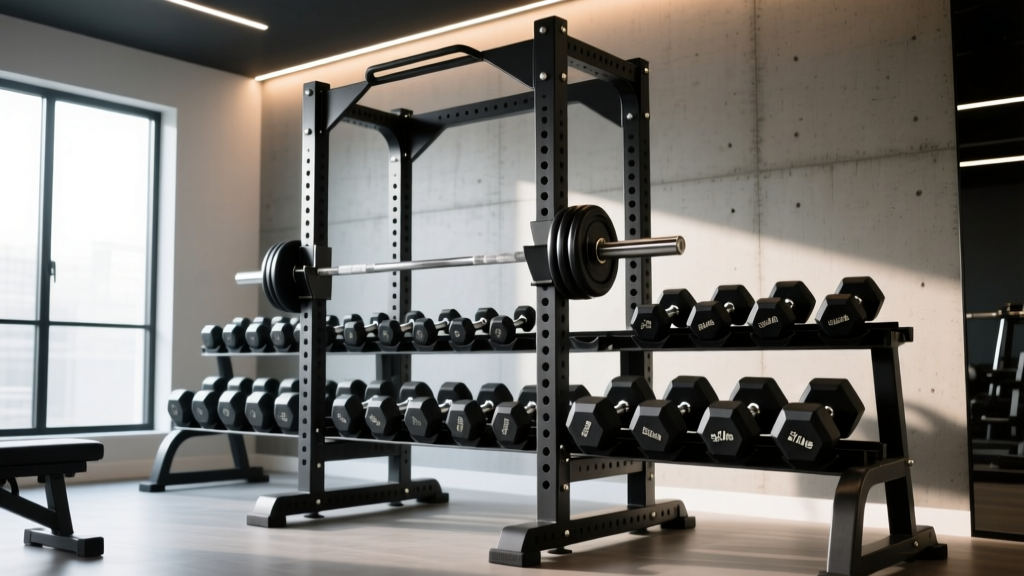
Heavy-Duty Dumbbell Racks to Fuel Your Dumbbell Deadlift High Pull

Olympic vs Standard Weight Plates: 2026 Buying Guide & What Do Dumbbell Pullovers Work?

EZ Bar vs Straight Bar Care & Shoulders Workout with Dumbbells

Best Dumbbell Racks for Your At Home Dumbbell Workout Plan (2026)
