
Maintaining Loadable Dumbbells for the Dumbbell Clean & Press
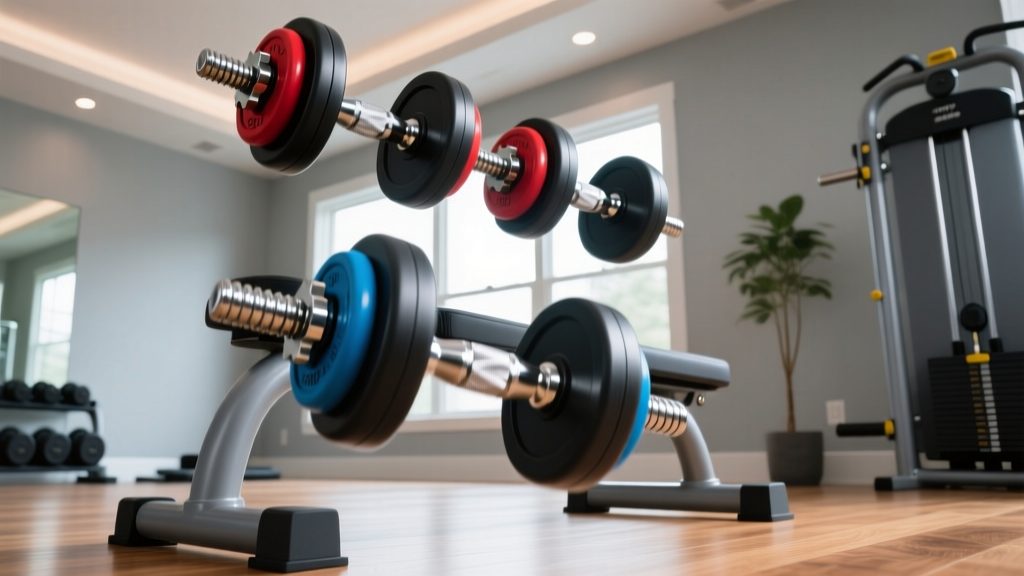
Learn how to maintain your loadable dumbbell with interchangeable plates to withstand the high-impact forces of the dumbbell clean & press.

The Biomechanical Toll of the Dumbbell Clean & Press on Hardware
The dumbbell clean & press is a cornerstone of functional hypertrophy, power development, and full-body coordination. However, when utilizing a loadable dumbbell with interchangeable plates, the dynamic nature of this lift introduces severe mechanical stress to the equipment. Unlike fixed rubber or urethane dumbbells, loadable handles rely on threaded collars, locking pins, or friction-based sleeves to secure the plates. In the current 2026 home gym landscape, where athletes are pushing heavier loads in compact spaces, understanding the intersection of exercise biomechanics and equipment maintenance is critical for safety and longevity.
Impact Force Data: During the 'catch' phase of a heavy dumbbell clean & press, the rapid deceleration at the shoulder rack position generates upward of 3 to 4 Gs of localized force. If your plates are not perfectly seated or your collar threads are degraded, this kinetic shockwave can cause micro-slippage, stripping the internal threads of the handle and creating a catastrophic failure risk mid-press.According to equipment maintenance guidelines highlighted by BarBend, dynamic Olympic and functional movements require a significantly higher standard of hardware inspection than static isolation exercises. A loadable dumbbell is only as safe as its weakest locking mechanism.
Locking Mechanisms: Which Handle Survives Dynamic Cleans?
Not all loadable dumbbells are engineered to withstand the violent acceleration and deceleration of a clean. Before diving into maintenance, it is vital to understand the stress tolerance of your specific handle type. Below is a comparison of the most popular loadable dumbbell handles on the market and their suitability for the dumbbell clean & press.
| Handle Model | Locking Mechanism | Clean & Press Rating | Primary Failure Mode |
|---|---|---|---|
| Rogue Loadable Handles | Threaded Collar w/ O-Ring | High | O-ring degradation from chalk |
| Titan Fitness Loadable | Standard Spinlock Nut | Low to Moderate | Nut vibration and back-off |
| Ironmaster Quick-Lock | Threaded Quick-Screw Pin | Very High | Cross-threading if rushed |
For a comprehensive breakdown of handle dimensions and sleeve tolerances, the Rogue Fitness Loadable Dumbbell Handles product specifications remain the industry gold standard for 50mm Olympic sleeve integration.
The Ultimate Maintenance Protocol for Loadable Handles
To ensure your interchangeable plates stay locked during a heavy dumbbell clean & press, you must implement a rigorous, multi-step maintenance routine. This protocol focuses on thread integrity, friction management, and knurling preservation.
Step 1: Thread Degreasing and Anti-Seize Application
The threads on a loadable dumbbell handle and its corresponding collar are the primary failure point. Over time, skin oils, sweat, and gym chalk infiltrate the threading, creating a gritty paste that accelerates metal-on-metal wear. When the threads degrade, the collar cannot achieve the necessary torque to resist the rotational forces of a clean.
- Degrease: Remove the collar and spray both the handle threads and the internal collar threads with a citrus-based automotive degreaser. Avoid harsh solvents like acetone, which can damage the protective black oxide or zinc coating on the steel.
- Scrub: Use a nylon-bristle detailing brush to agitate the threads. Never use a steel wire brush on the threads, as it will strip the protective coating and invite rust.
- Lubricate: Once completely dry, apply a micro-thin layer of copper anti-seize compound or a PTFE-based dry thread lubricant. This reduces friction during tightening, allowing you to achieve a higher clamping force by hand without stripping the metal.
Step 2: Knurling Rehabilitation
A secure grip is non-negotiable for the dumbbell clean & press. If your hands slip during the pull, you will instinctively over-grip, leading to premature forearm fatigue and sloppy racking mechanics. Furthermore, chalk packed into the knurling acts as an abrasive, slowly sanding down the peaks of the steel pattern.
- For Stainless Steel Handles: Use a stiff brass wire brush. Brass is softer than stainless steel, meaning it will dislodge impacted chalk and dead skin without dulling the knurling peaks.
- For Black Oxide / Zinc Handles: Use a stiff nylon brush and a light mist of 3-in-One oil. Brush in a circular motion to lift debris from the valleys of the knurling, then wipe away the excess oil with a microfiber cloth to prevent a slippery grip.
Step 3: Sleeve and Bushing Care
While loadable dumbbell sleeves do not rotate like Olympic barbell sleeves, the interface between the plate bore and the dumbbell sleeve still requires attention. Micro-rust on the sleeve increases the coefficient of friction, making plate changes difficult and causing the plates to bind. Wipe the sleeves down with a silicone-impregnated cloth after every session. This leaves a protective, non-sticky barrier that repels moisture and allows plates to slide on and off smoothly.
Troubleshooting Mid-Set Failures
Even with meticulous care, the violent nature of the dumbbell clean & press can expose hardware weaknesses. Here is how to troubleshoot common issues specific to loadable dumbbells.
Issue: Collar Backing Off Mid-Set
If your spinlock or threaded collar loosens during the eccentric phase of the press, your threads are likely contaminated or worn. Fix: Deep clean the threads as outlined above. If the issue persists, upgrade to a secondary clamping system, such as a heavy-duty spring collar or a lever-action clamp placed flush against the loadable handle's base collar.
Issue: Excessive Plate Rattle
Plate rattle during the clean phase disrupts your proprioception and focus. This occurs when the plate bore is slightly wider than the 50mm sleeve. Fix: Switch to precision-machined urethane grip plates or use rubber O-rings on the sleeve to take up the microscopic slack between the steel plate and the handle.
'The dumbbell clean & press is the ultimate lie detector for your equipment. If your loadable handles are rattling, slipping, or binding, the lift will expose it immediately. Treat your thread maintenance with the same discipline you apply to your programming.' — Home Gym Engineering Best Practices
Sourcing and Final Thoughts
Maintaining a loadable dumbbell with interchangeable plates requires a shift in mindset. You are no longer just a lifter; you are the mechanic of your own training environment. By understanding the specific forces generated by the dumbbell clean & press, you can proactively address wear and tear before it compromises your safety.
For further reading on the biomechanics of dynamic dumbbell movements and how they relate to equipment selection, the ExRx Weight Training Equipment Guide provides foundational knowledge on matching hardware tolerances to exercise demands. Invest the 15 minutes a week required to degrease, brush, and lubricate your loadable handles, and they will safely support your overhead pressing ambitions for decades to come.
More gear to consider
All reviews
Dumbbell Wood Choppers: Maintaining Loadable Interchangeable Plates

Rubber Hex vs Urethane Dumbbells: Best for Dumbbell Rows?

1-Arm Dumbbell Row Setup: Barbell Collar and Clamp Types Compared

Rubber Hex vs Urethane: Longevity Care for Squats with Dumbbells
How to Fly With Dumbbells: 2026 Adjustable Set Review
