
Loadable Dumbbell Care: Longevity Tips & a Dumbbell Row Alternative
Master loadable dumbbell maintenance to extend gear life. Plus, discover a biomechanically superior dumbbell row alternative for back-day longevity.

Loadable dumbbells with interchangeable plates represent the pinnacle of home and garage gym versatility. Unlike fixed rubber hex dumbbells that cap out at 100 or 120 pounds, a high-quality loadable dumbbell handle allows you to micro-load incremental weight, accommodating progressive overload for years. However, the mechanical complexity of sleeves, snap rings, and bushings requires a strict maintenance regimen. Neglecting this gear leads to seized sleeves, compromised knurling, and catastrophic retention failures.
In this comprehensive 2026 guide, we break down the exact maintenance protocols required to maximize the lifespan of your plate-loaded dumbbells. Furthermore, because heavy unilateral pulling takes a toll on both your equipment and your body, we will cover the most biomechanically sound dumbbell row alternative to protect your lumbar spine during heavy back days.
The Mechanical Anatomy of Loadable Dumbbells
To maintain your equipment, you must understand its failure points. A standard loadable dumbbell consists of four critical zones:
- The Shaft: Typically 1.25-inch to 1.5-inch thick steel with machine knurling. This is where sweat, dead skin, and gym chalk accumulate, leading to oxidation.
- The Sleeves: The section where interchangeable plates slide. Sleeves rotate independently of the shaft via internal bushings or bearings to prevent torque transfer to your wrists during lifts.
- The Bushings: Usually made of oil-impregnated bronze or composite materials. These reduce friction between the shaft and the sleeve.
- The Retention Mechanism: Ranging from internal snap rings (C-clips) to threaded locking collars and drop-in pins. This is the most critical safety component.
The 3-Step Maintenance Protocol for Interchangeable Plates
Routine maintenance should be performed bi-weekly for daily users, or monthly for moderate use. According to the Rogue Fitness Barbell and Dumbbell Care Guide, avoiding harsh chemical solvents is paramount to preserving the factory finish and internal lubricants.
🛠️ Required Maintenance Toolkit
- Stiff nylon-bristle brush (never use wire brushes on zinc or black oxide finishes)
- 3-in-One Multi-Purpose Oil or synthetic barbell oil
- Isopropyl alcohol (70% or higher) and microfiber towels
- Compressed air canister or a soft-bristled toothpick
Step 1: Knurling Extraction and Sanitization
Chalk and dead skin pack into the volcano peaks of the knurling, trapping moisture against the steel. Use the nylon brush to aggressively scrub the shaft dry. Follow up by spraying a microfiber towel with isopropyl alcohol and wiping the handle. Never spray liquid directly onto the dumbbell, as it can seep into the sleeve gap and wash out the internal bronze bushing lubricants.
Step 2: Sleeve Spin and Bushing Lubrication
Over time, the factory grease inside the sleeve degrades. Tilt the dumbbell vertically and apply three to four drops of synthetic oil directly into the seam where the sleeve meets the shaft. Rotate the sleeve manually for 60 seconds to allow capillary action to pull the oil into the bronze bushings. Wipe away any excess oil to prevent dust adhesion.
Step 3: Retention Mechanism Inspection
For models utilizing threaded locking caps (like the Ironmaster), use compressed air to blow out the female threads. Cross-threading a cap due to chalk buildup is the number one cause of stripped locking mechanisms. For snap-ring models, visually inspect the C-clip for metal fatigue or gap widening.
Model-Specific Failure Modes and Fixes (2026 Data)
Not all loadable dumbbells are engineered equally. Below is a breakdown of the most popular interchangeable plate handles on the market, their specific vulnerabilities, and how to address them.
| Model | Approx. Price (Pair) | Primary Failure Point | Targeted Maintenance Fix |
|---|---|---|---|
| Ironmaster Quick-Lock V2 | $399.00 | Threaded screw cap cross-threading due to chalk debris. | Clean female threads with a wooden toothpick; apply a micro-drop of lithium grease to the threads quarterly. |
| Rogue Loadable Handles | $165.00 | Snap ring fatigue and sleeve seizing on the 1.9" shaft. | Monthly synthetic oil drops in the sleeve gap; inspect snap ring seating with a magnifying glass bi-annually. |
| Titan Fitness Loadable | $89.99 | White rust (zinc oxidation) on sleeves in high-humidity garages. | Wipe sleeves with a silicone-impregnated cloth after every use to create a hydrophobic moisture barrier. |
Biomechanical Longevity: The Best Dumbbell Row Alternative
Equipment longevity is only half the battle; your physical longevity matters just as much. The traditional freestanding single-arm dumbbell row is a staple for latissimus dorsi and rhomboid hypertrophy. However, when you are loading heavy interchangeable plates onto a 1.5-inch sleeve handle, the asymmetric shear force placed on the lumbar spine and sacroiliac (SI) joint is immense. The torso acts as a cantilever, and maintaining a neutral spine under a 100+ lb unilateral pull is a common catalyst for herniations.
"Eliminating lumbar flexion and rotational shear under heavy load is paramount for sustained back hypertrophy without orthopedic injury." — ExRx Kinesiology Directory
If you are dealing with lower back fatigue, or if your loadable dumbbells are currently undergoing a deep solvent soak and drying period, you need a highly effective dumbbell row alternative. The gold standard is the Chest-Supported Seal Row or the Incline Bench Dumbbell Row.
Why the Chest-Supported Incline Row Wins
- Zero Spinal Shear: By lying prone on a bench set to a 30-to-45-degree incline, the bench entirely absorbs the downward gravitational vector. Your erector spinae are taken out of the equation.
- Strict Isolation: The chest support eliminates the ability to use momentum or 'body English' to heave the weight up, forcing the lats and mid-traps to do 100% of the work.
- Optimal Sleeve Clearance: Loadable dumbbells with wide plate profiles (like 10lb or 25lb fractional plates) often hit the floor before the lat reaches full extension during a standing row. An incline bench elevates your torso, providing ample clearance for bulky interchangeable plates to reach a full stretch at the bottom of the movement.
For more programming variations and joint-sparing mechanics, the National Strength and Conditioning Association (NSCA) frequently highlights chest-supported pulling variations as essential tools for aging lifters and those managing lumbar disc pathologies.
Environmental Storage and Rust Prevention
How you store your loadable dumbbells and plates dictates their lifespan. Concrete garage floors act as massive moisture wicks, pulling humidity directly into the steel plates and dumbbell sleeves.
⚠️ Warning: Never leave loaded dumbbells resting directly on a concrete floor. The combination of floor moisture and the compressive weight of the plates will cause rapid pitting and rust on the sleeve ends.Best Practices for 2026:
- Use a Vertical Dumbbell Rack: Storing the handles vertically allows gravity to pull any residual moisture away from the sleeve gap and bushings.
- Climate Control: If your gym is in an unconditioned garage, invest in a dehumidifier to keep ambient humidity below 50%.
- Plate Care: Wipe down your interchangeable iron or steel plates with a light coat of mineral oil once a season. Urethane-coated plates require less maintenance but should be kept out of direct UV sunlight to prevent the polymer from degrading and cracking.
Frequently Asked Questions
Can I use WD-40 to clean my loadable dumbbell handles?
No. Standard WD-40 is a solvent and a water displacer, not a long-term lubricant. It will strip the factory grease from your bronze bushings, leading to metal-on-metal grinding and a permanently seized sleeve. Stick to 3-in-One oil or specialized synthetic barbell oils.
How tight should I secure the locking collars on my interchangeable plates?
Hand-tighten the collars firmly, but avoid using tools or excessive wrenching. Over-tightening can warp the internal snap rings or strip the threading on models like the Ironmaster Quick-Lock. The plates should have less than 1mm of lateral play.
Is it safe to drop loadable dumbbells on rubber mats?
While rubber mats absorb some impact, dropping loadable dumbbells—especially those with heavy steel plates attached—transfers massive shockwaves through the retention mechanism. This can cause snap rings to pop out of their grooves or threaded caps to loosen mid-set. Always lower them with control to ensure your safety and protect your equipment's structural integrity.
More gear to consider
All reviews
Rack Storage & Maintenance After the Best Dumbbell Arm Exercises
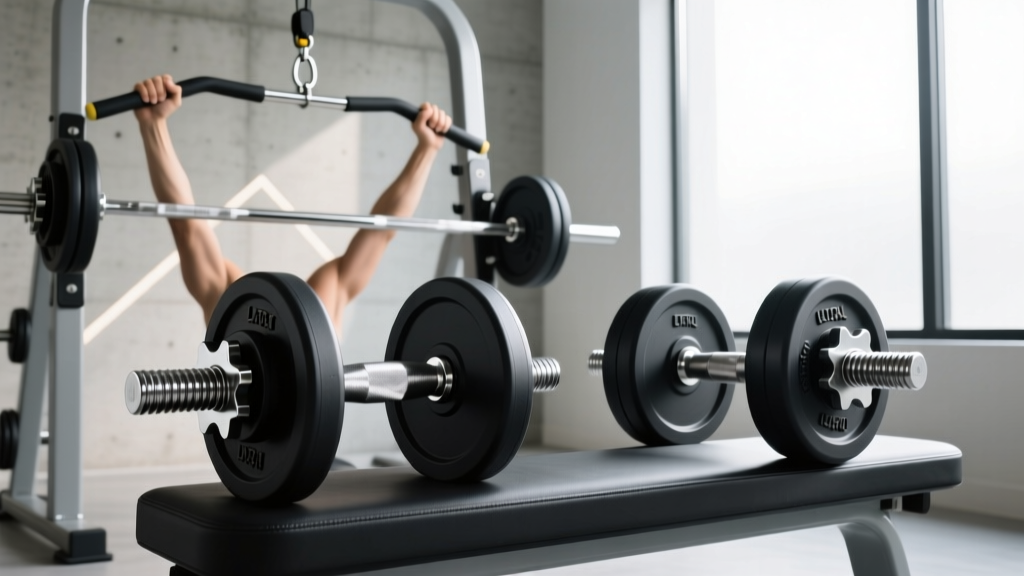
Barbell Collar Comparison: Setup for Lateral Pulldown Dumbbells

Concrete Dumbbell to Olympic Barbell: Weight & Knurling Guide
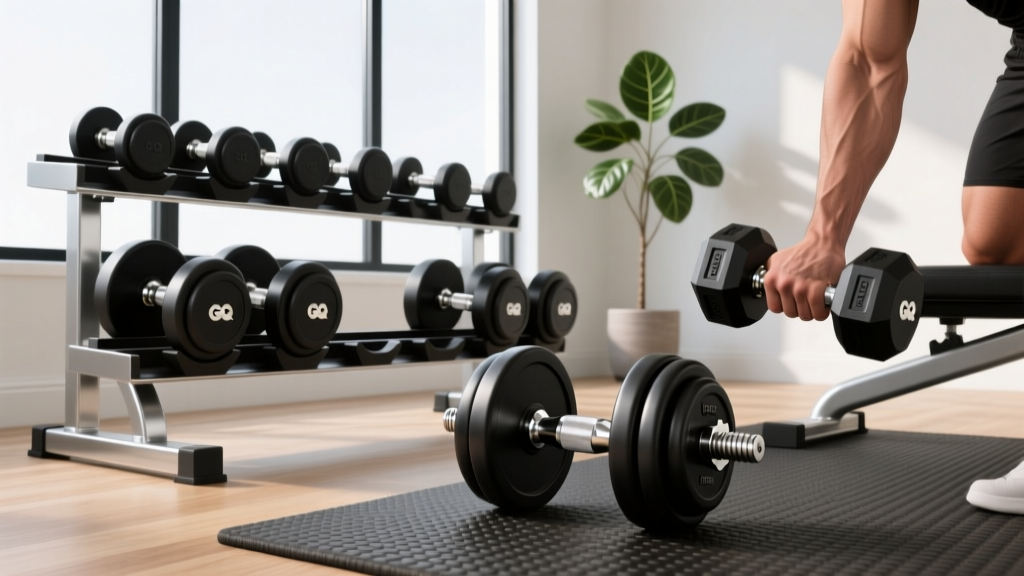
Top Loadable Dumbbells for Lower Chest Dumbbell Exercises (2026)

Dumbbell Bench vs Bench Press: Loadable Space Optimization
