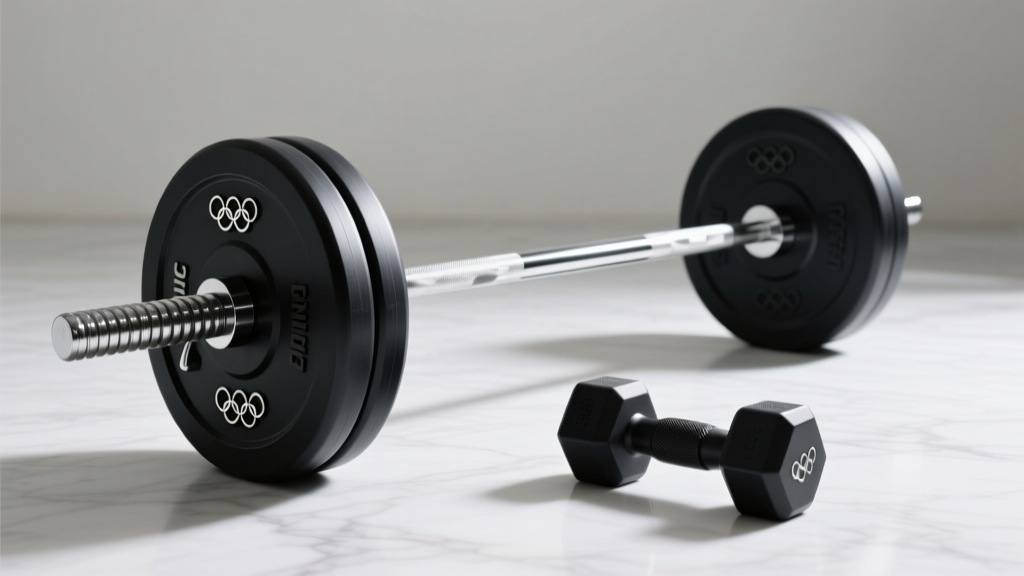
Maintaining Loadable Dumbbells for Daily Dumbbell Workouts
Maximize the lifespan of your plate-loaded dumbbells. Expert maintenance tips, cleaning routines, and safety checks for intense daily dumbbell workouts.

Committing to a regimen of daily dumbbell workouts is one of the most effective ways to build functional strength, correct muscle imbalances, and improve joint stability from the comfort of your home gym. However, high-frequency training places immense mechanical and environmental stress on your equipment. While adjustable selectorized dumbbells have their place, serious lifters often gravitate toward loadable dumbbells with interchangeable plates—such as the Ironmaster Quick-Lock V2, Titan Fitness Loadable Handles, or the Rogue Fitness Loadable Dumbbell—for their rugged durability and authentic barbell-like feel.
Yet, durability is not synonymous with invincibility. As of 2026, with premium loadable handles costing anywhere from $89 for basic Olympic sleeves to $399 for patented screw-lock systems, protecting your investment is paramount. Sweat, friction, and micro-impacts from daily use can degrade collars, strip threads, and pit steel plates. This comprehensive maintenance guide will show you exactly how to care for your loadable dumbbells to ensure they survive years of intense daily dumbbell workouts.
The Hidden Toll of High-Frequency Lifting on Hardware
When you perform daily dumbbell workouts, your equipment is exposed to two primary enemies: corrosive biology and mechanical fatigue. Human sweat is mildly acidic, typically registering a pH between 4.5 and 7.0. When this saline-acidic mixture settles into the knurling of a dumbbell handle or the threads of a spin-lock collar, it accelerates oxidation. According to equipment maintenance guidelines highlighted by the National Strength and Conditioning Association (NSCA), failure to neutralize and remove sweat residue is the leading cause of premature equipment degradation in home and commercial gyms alike.
Mechanically, the repetitive loading and unloading of plates, combined with the dynamic forces of exercises like dumbbell snatches or heavy floor presses, causes microscopic wear on the locking mechanisms. A loose collar doesn't just rattle; it alters the balance of the weight, forcing your stabilizer muscles to overcompensate and increasing the risk of a catastrophic plate shift mid-rep.
Essential Maintenance Matrix by Dumbbell Type
Not all loadable dumbbells are engineered equally. The maintenance protocol for a traditional spin-lock differs vastly from a patented screw-lock system. Use the matrix below to identify your hardware and apply the correct care strategy.
| Locking System | Popular Models (2026) | Primary Failure Mode | Required Maintenance Tool | Care Frequency |
|---|---|---|---|---|
| Traditional Spin-Lock | Titan Fitness Loadable, CAP Barbell | Thread stripping, O-ring degradation, cross-threading | Brass wire brush, 3-in-One oil | Weekly |
| Screw-Lock (Patented) | Ironmaster Quick-Lock V2 | Debris binding in large threads, bent locking pins | Stiff nylon brush, dry PTFE spray | Bi-Weekly |
| Olympic Snap-Ring / Clamp | Rogue Loadable, Eleiko | Snap-ring fatigue, sleeve scoring | Microfiber cloth, mineral oil | Monthly |
Step-by-Step Deep Cleaning & Rust Prevention
To keep your loadable dumbbells in pristine condition, you must implement a tiered cleaning protocol. Garage Gym Reviews consistently emphasizes that using the wrong chemical cleaners can actually strip protective zinc or chrome coatings, leaving bare steel vulnerable to flash rust.
1. The Post-Workout Wipe (Daily)
Immediately after your daily dumbbell workouts, wipe down the handles and plates with a dry microfiber cloth. If you are a heavy sweater, use a cloth lightly dampened with a 50/50 mix of distilled water and white vinegar to neutralize the acidic pH of your sweat. Never leave the handles damp.
2. The Thread and Collar Overhaul (Monthly)
The threads on spin-lock handles are the most critical failure point. Over time, dead skin, chalk dust, and metal shavings accumulate in the grooves.
- Step 1: Remove the collars completely from the handle.
- Step 2: Use a brass wire brush (never steel, as it will scratch and damage the zinc plating) to aggressively scrub the handle threads and the inside of the collar.
- Step 3: Wipe away the dislodged debris with a clean rag.
- Step 4: Apply two drops of a high-quality lubricant like Break-Free CLP or 3-in-One Multi-Purpose Oil to the threads. Spin the collar on and off three times to distribute the oil evenly.
Never use standard WD-40 on your dumbbell threads. Standard WD-40 is a solvent and water displacer, not a long-term lubricant. It will strip away existing lubrication, attract chalk dust, and eventually create a gritty paste that grinds down your threads, leading to irreversible cross-threading.
3. Knurling Revitalization (Quarterly)
The knurling on loadable handles—especially aggressive Olympic-style knurling on models like the Rogue Fitness Loadable Dumbbell—traps chalk and dead skin. Use a stiff nylon brush and a few drops of Simple Green or a dedicated gym equipment cleaner to scrub the knurling in a circular motion. Rinse with a barely damp cloth and dry immediately to prevent flash rusting.
Troubleshooting Common Loadable Dumbbell Issues
Even with meticulous care, high-frequency lifters may encounter mechanical hiccups. Here is how to diagnose and fix the most common issues without voiding your warranty or compromising safety.
'A rattling dumbbell isn't just an annoyance; it's a kinetic disruptor. When plates shift during a heavy eccentric lowering phase, the sudden change in center of mass can easily tear a rotator cuff or strain a wrist ligament.'
— Biomechanics & Strength Conditioning Insight
Issue: The Spin-Lock Collar Won't Tighten Fully
Diagnosis: This is almost always caused by cross-threading or a degraded rubber O-ring inside the collar. If the collar binds halfway down the thread, do not force it. Forcing it will permanently strip the handle.
Solution: Back the collar off completely. Inspect the threads for a 'bur' or flattened ridge. If the threads are intact, replace the internal rubber O-ring (replacement O-rings cost less than $5 online). The O-ring provides the friction necessary to keep the collar locked against the plates during dynamic movements.
Issue: Ironmaster Quick-Lock Screw Mechanism is Binding
Diagnosis: The Ironmaster Quick-Lock V2 uses a massive, robust screw mechanism rather than traditional threads. If it binds, it is usually due to microscopic chalk dust or dirt trapped in the locking pin channel, or the user is attempting to tighten it at an improper angle.
Solution: Blast the locking pin channel with compressed air. Apply a light coat of dry PTFE (Teflon) spray to the pin. Dry PTFE is crucial here because it lubricates without leaving a sticky residue that attracts dust. Ensure you are aligning the screw perfectly straight before turning; the V2 mechanism requires zero force to engage if aligned correctly.
Issue: Plates Rattle Excessively on Olympic Sleeves
Diagnosis: Tolerance gaps between the 2-inch Olympic sleeve and the center hole of the bumper or steel plates. This is common when mixing plate brands.
Solution: Utilize magnetic dumbbell collars or spring-clips designed specifically for short sleeves. Alternatively, apply a single wrap of high-density athletic tape to the sleeve to artificially increase the diameter and create a friction-fit, eliminating the rattle without damaging the steel.
Environmental Controls and Storage Best Practices
Where you store your loadable dumbbells between your daily dumbbell workouts is just as important as how you clean them. Garages and basements are notorious for extreme temperature fluctuations and high humidity, which cause condensation to form on cold steel plates.
- Humidity Control: Keep your gym space below 55% relative humidity. If you live in a coastal or humid climate, invest in a commercial dehumidifier. For localized protection, keep silica gel desiccant packs in your dumbbell storage rack trays.
- Rack Loading: Never leave loadable dumbbells fully assembled on the floor. The constant pressure on the bottom plate can warp rubber-coated plates over time, and the handles remain exposed to ambient moisture. Disassemble them or store them horizontally on a tiered rack with UHMW plastic lining to protect the chrome or zinc finish from scratching.
- UV Protection: If your plates feature rubber or urethane coatings, keep them out of direct sunlight. UV radiation breaks down the chemical bonds in rubber, leading to dry rot, flaking, and a permanent, foul odor.
Conclusion: Consistency in Care Matches Consistency in Training
The discipline required to execute daily dumbbell workouts should extend to the maintenance of the tools that make your progress possible. Loadable dumbbells offer unparalleled versatility and a lifetime of potential use, but only if you respect their mechanical limits and environmental vulnerabilities. By implementing a strict post-workout wipe-down, a monthly thread-brushing routine, and proper storage protocols, you ensure that your equipment remains safe, balanced, and ready for every single rep. Treat your gear with the same respect you give your training program, and it will never fail you when you are pushing for that final, heavy set.
More gear to consider
All reviews
Power Rack vs Squat Rack vs Stand: Dumbbell Chest Routine Setup
How to Use PowerBlock Dumbbells: Setup, Safety & Comparison Guide
Olympic vs Standard Plates & CAP 150 lb Dumbbell Set with Rack Guide

Power Rack vs Squat Rack: Best Dumbbell Workout Program Setups

Top Neoprene Gear for Dumbbell Exercises for Belly Fat for Female