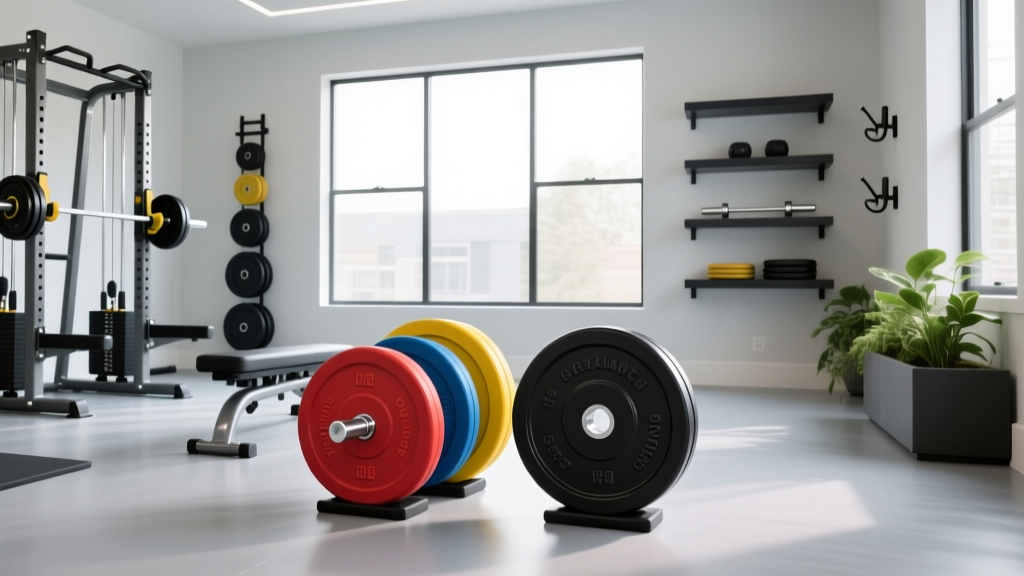
Bumper vs Iron Plates: Gym Layouts for Neutral Grip Dumbbell Presses
Optimize your home gym layout. Compare bumper vs iron plate dimensions and learn space-saving storage tips for heavy neutral grip dumbbell presses.

The Spatial Dilemma: Plate Thickness vs. Bench Clearance
Designing a high-functioning home gym in 2026 requires ruthless spatial efficiency. Whether you are working with a cramped 150-square-foot garage or a dedicated basement studio, every square inch of floor space must serve a distinct purpose. One of the most common layout failures occurs when lifters prioritize barbell storage without accounting for the dynamic movement zones required for dumbbell work. Specifically, the footprint required to safely execute heavy neutral grip dumbbell presses often clashes with the physical dimensions of modern weight plate storage.
Choosing between bumper plates and traditional cast iron plates is not just about noise reduction or dropping weights; it is a foundational layout decision that dictates your storage rack depth, wall clearance, and lateral bench spacing. Below, we break down the exact dimensional differences and provide a concrete framework for optimizing your gym floor plan.
Bumper Plates vs. Cast Iron: The Dimensional Breakdown
To understand how plates affect your layout, we must look past the weight and focus on the geometry. According to equipment specifications from leading manufacturers like Rogue Fitness Echo Bumper Plates, a standard 45lb bumper maintains a uniform 450mm diameter and a thickness of roughly 3.25 inches. In contrast, machined cast iron plates of the same weight are typically 1.5 inches thick, with varying diameters depending on the manufacturer.
| Plate Type (45lb / 20kg) | Thickness | Diameter | Rack Depth Required | Floor Impact Zone |
|---|---|---|---|---|
| Competition Bumper (Virgin Rubber) | 2.15 inches | 450mm | 10 - 12 inches | High Bounce / Low Noise |
| Standard Echo/Crumb Bumper | 3.25 - 4.5 inches | 450mm | 14 - 18 inches | Low Bounce / Deadened |
| Cast Iron / Machined Steel | 1.5 inches | Varies (14-18 inches) | 8 - 10 inches | High Impact / High Noise |
How Plate Choice Dictates Storage Rack Placement
If you opt for crumb rubber bumpers, their extreme thickness means a standard 6-peg wall-mounted rack will max out its weight capacity long before it runs out of physical space. You will need deeper shelving or specialized heavy-duty wall mount storage that protrudes further into the room. Iron plates, being thinner, allow for high-density storage on shallow, flush-mounted wall racks, keeping your perimeter walls clear for movement.
Designing the Neutral Grip Dumbbell Press Zone
The neutral grip dumbbell press (palms facing each other) is a staple for shoulder-friendly chest development. However, the biomechanics of this movement demand specific spatial allowances. Unlike a barbell bench press where the movement is strictly vertical and constrained by rack uprights, dumbbell pressing requires lateral clearance for the eccentric descent and the initial kick-up phase.
The 24-Inch Lateral Rule
When performing neutral grip dumbbell presses with loads exceeding 70 lbs per hand, you must maintain a minimum of 24 inches of unobstructed floor space on both the left and right sides of the bench. This accounts for the width of the dumbbell heads (especially blocky adjustable models like PowerBlock Elites or Nuobell 80s) and the natural splay of the lifter's elbows during the bottom stretch position.
If you place a deep A-frame bumper plate rack just 18 inches from the edge of your bench, you create a severe collision hazard. During a deep, controlled eccentric rep, the dumbbell heads or your elbows will strike the rack or the protruding plates. Therefore, if your gym relies heavily on heavy dumbbell pressing, you must either use flush-mounted iron plate storage on the adjacent wall or push your freestanding plate trees to the corners of the room, sacrificing the convenience of loading the barbell directly next to the squat rack.
Storage Matrix: Matching Floor Plans to Plate Types
Use this decision matrix to determine which plate type and storage method best suits your specific layout constraints and training style.
- Scenario A: The Narrow Galley Gym (Width under 10 feet)
- Recommendation: Cast Iron Plates + Flush Wall-Mounted Shelves.
- Why: You cannot afford the 16-inch protrusion of an A-frame bumper rack. Iron plates on shallow wall shelves preserve the critical 48+ inches of central walking and pressing clearance required for lateral dumbbell movements.
- Scenario B: The Square Garage Gym (12x12 or larger)
- Recommendation: Bumper Plates + Freestanding A-Frame Rack.
- Why: You have the floor space to position the A-frame rack parallel to the squat rack, creating a dedicated 'loading corridor' that stays out of the lateral clearance zone of your adjustable bench.
- Scenario C: The Mixed-Modal Apartment Gym
- Recommendation: Urethane Grip Plates (Iron core, rubber coating).
- Why: Urethane plates offer the thin profile of iron (1.5 inches) with the noise-dampening and floor protection of bumpers, allowing for tight corner storage without deafening downstairs neighbors.
Sleeve Capacity and Mixed-Fleet Storage Edge Cases
A frequently overlooked layout issue arises when lifters attempt to mix bumper plates and iron plates on the same storage tree. Standard Olympic barbell sleeves offer approximately 16.5 inches of loadable length. If you are using thick 45lb crumb bumpers (4.5 inches thick), you can only fit three plates per side (13.5 inches), leaving almost no room for collars. If you attempt to add a fourth plate, or mix in a pair of 10lb iron fractional plates, you will exceed the sleeve length.
From a layout perspective, this means you cannot simply store a 'working weight' on the barbell and leave it parked in a corner. You must allocate specific, separate pegs on your storage rack for fractional iron plates and thick bumpers. If your rack is poorly designed, you will end up stacking plates on the floor, which immediately destroys the 24-inch lateral clearance zone needed for your neutral grip dumbbell presses, turning an organized gym into an obstacle course.
Flooring and Acoustic Considerations in Compact Spaces
Space optimization also involves vertical and acoustic planning. Cast iron plates require a minimum of 3/4-inch thick vulcanized rubber horse stall mats to prevent concrete degradation and reduce high-frequency ringing. Bumper plates can technically be dropped on thinner flooring, but in 2026, most home gym owners opt for interlocking 8mm high-density EVA or rubber tiles to protect the subfloor from the concentrated point-load of dropped dumbbells.
When designing your layout, map out the 'Drop Zone' (under the squat rack and deadlift platform) and the 'Press Zone' (where the bench resides). Keep your iron plate storage adjacent to the Drop Zone, and your dumbbell racks adjacent to the Press Zone. Never force a lifter to carry 100lb adjustable dumbbells across a room littered with 45lb iron plates that have rolled away from a shallow tree rack.
Final Layout Verdict
Choosing between bumper and iron plates is ultimately an exercise in spatial geometry. If your training heavily prioritizes heavy barbell Olympic lifts and deadlifts, the uniform 450mm diameter and drop-safety of bumper plates are non-negotiable—just ensure you budget an extra 6 inches of depth for your storage racks and keep them far away from your bench pressing zones.
However, if your routine is built around hypertrophy, powerbuilding, and frequent neutral grip dumbbell presses, the ultra-thin profile of cast iron or urethane plates allows for flush wall storage. This maximizes your usable floor space, guarantees unobstructed lateral clearance for heavy dumbbell kick-ups, and keeps your 2026 home gym feeling twice as large as its actual square footage.
More gear to consider
All reviews
Rubber Hex vs Urethane: Best for Dumbbell Sumo Squats

Bumper vs Iron Plates: Value & Dumbbell Pullover Benefits

Bumper vs Iron Plates & Single Dumbbell Exercises for Shoulders

Barbell Buying Guide: Knurling & Half Kneeling Dumbbell Overhead Press

Bicep Dumbbell Workouts: Troubleshooting & Adjustable Dumbbell Reviews
