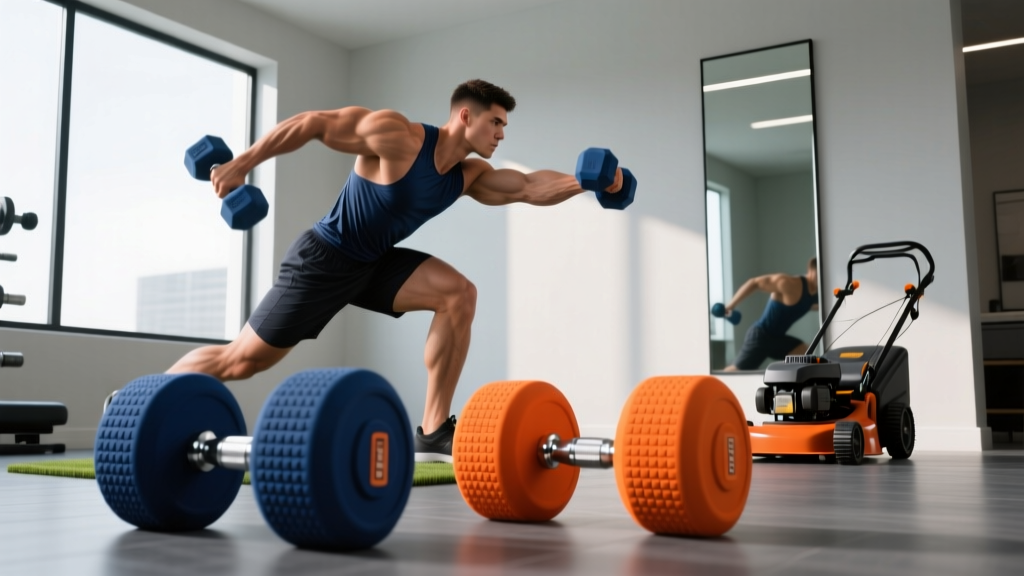
How to Do the Lawn Mower Exercise with Dumbbells Using Neoprene
Master the lawn mower exercise with dumbbells using neoprene weights. Our step-by-step home guide ensures perfect form, grip, and back muscle engagement.

Building a resilient, pain-free back at home does not require a massive power rack or heavy cast-iron plates. For beginners and those focusing on functional mobility, the lawn mower exercise with dumbbells is a premier unilateral movement that targets the latissimus dorsi, rhomboids, and rear deltoids while challenging your core's anti-rotation stability. When performed in a home gym environment, neoprene-coated dumbbells are the optimal tool for this specific movement. Their tactile grip, floor-friendly coating, and manageable weight increments make them perfect for high-repetition, form-focused back training.
In this comprehensive 2026 guide, we will break down the exact biomechanics of the lawn mower pull, explain why neoprene is the superior coating for home use, and provide a step-by-step tutorial to help you build a bulletproof back without leaving your living room.
Why Neoprene is the Ultimate Choice for Home Rows
When executing a diagonal pulling motion like the lawn mower exercise, grip security and equipment management are paramount. Neoprene—a synthetic rubber known for its slight porosity and soft texture—offers distinct advantages over traditional bare cast iron or hard rubber hex dumbbells for beginner home workouts.
- Tactile Grip Without Knurling: Bare steel dumbbells feature aggressive knurling that can tear hand calluses during high-rep unilateral rows. Neoprene provides a secure, sweat-resistant grip that protects your skin while maintaining friction.
- Floor and Furniture Protection: The lawn mower exercise requires a wide, staggered stance. If you need to set the weight down quickly or accidentally drop it, the 2mm to 3mm neoprene shell absorbs impact, protecting hardwood floors and baseboards.
- Hexagonal Anti-Roll Design: Almost all premium neoprene dumbbells (such as the popular Yes4All and CAP Barbell lines) feature a hexagonal head. This prevents the dumbbell from rolling away when placed on the floor between sets, a crucial safety feature for home gyms with limited space.
Equipment Check: Selecting Your Neoprene Dumbbell
Because the lawn mower pull involves a long range of motion and significant core stabilization, beginners should prioritize movement quality over absolute load. In 2026, standard neoprene dumbbells typically range from 2 lbs to 20 lbs, with pricing averaging between $1.50 and $2.20 per pound depending on the brand and retail supply chains.
Material Comparison for Home Pulling Movements
| Coating Type | Grip Security (Sweaty Hands) | Odor Profile | Best For |
|---|---|---|---|
| Neoprene | Excellent (Tacky finish) | None (Odorless) | High-rep home rows, beginners |
| Virgin Rubber | Good (Smooth finish) | Moderate to High | Garage gyms, heavy drops |
| Urethane | Fair (Slippery when wet) | None | Commercial gyms, heavy loads |
| Bare Cast Iron | Excellent (Knurled handle) | None (Can rust) | Advanced lifters, chalk users |
Recommendation: For the lawn mower exercise, women should typically start with an 8 lb to 12 lb neoprene dumbbell, while men should start with a 12 lb to 15 lb dumbbell to properly engage the lats without compensating with the biceps.
Step-by-Step: The Lawn Mower Exercise with Dumbbells
The lawn mower pull differs from a standard one-arm dumbbell row. Instead of pulling straight up to the hip, the lawn mower variation starts across the body and pulls diagonally, mimicking the action of starting a pull-cord engine. According to kinesiology data from ExRx.net, this diagonal path heavily recruits the lower trapezius and latissimus dorsi while demanding rotational core control.
Phase 1: The Stance and Hinge
- Foot Placement: Adopt a wide, staggered stance. If you are pulling with your right arm, step your left foot forward and keep your right foot back, toes pointed slightly outward.
- The Hinge: Push your hips back and hinge forward at a 45-degree angle. Rest your non-working hand (left hand) on your lead thigh or knee for support. Keep your spine completely neutral—do not round your lower back.
- The Starting Position: Let the neoprene dumbbell hang in your right hand, positioned near your left shin or left knee. Your torso should be slightly twisted toward the weight.
Phase 2: The Diagonal Pull (Concentric)
- Initiate with the Scapula: Before bending your elbow, retract your right shoulder blade down and back. Imagine trying to tuck it into your back pocket.
- The Pull: Drive your elbow up and back diagonally across your torso. The dumbbell should travel from your opposite shin toward your right hip pocket.
- The Squeeze: At the top of the movement, your elbow should be pointing toward the ceiling, and your torso should have naturally untwisted to face the floor. Hold for one full second.
Phase 3: The Eccentric Lowering
- Control the Descent: Slowly lower the dumbbell back across your body over a count of three seconds. The neoprene coating allows you to maintain a relaxed but secure grip during this slow eccentric phase without the handle slipping.
- Reset: Allow your shoulder blade to protract slightly at the bottom to get a full stretch in the lat, then immediately begin the next repetition.
Expert Biomechanics Tip: The American Council on Exercise (ACE) emphasizes that the power in any unilateral row must come from the elbow driving backward, not the hand pulling upward. Think of your hand as a mere hook holding the neoprene dumbbell to your arm.
Common Form Breakdowns and Fixes
Even with the ergonomic handle of a neoprene dumbbell, beginners often fall into mechanical traps that reduce lat engagement and strain the shoulder joint.
Warning: Avoid These 3 Mistakes
- Mistake 1: Torso Jerking. Using momentum to swing the weight up. Fix: Lower the weight by 5 lbs and focus on a 3-second eccentric lowering phase.
- Mistake 2: Bicep Dominance. Curling the weight toward the chest instead of pulling to the hip. Fix: Keep your wrist neutral and drive the elbow toward the ceiling.
- Mistake 3: Cervical Strain. Craning the neck to look at a mirror. Fix: Pack your chin and look at the floor about two feet ahead of your lead foot to maintain a neutral cervical spine.
15-Minute Home Back & Core Routine
Incorporate the lawn mower exercise into this beginner-friendly circuit. Perform this routine twice a week, resting 60 seconds between rounds.
- 1A. Lawn Mower Pull (Neoprene Dumbbell): 3 sets of 12 reps per arm
- 1B. Dumbbell Pullover (on floor or bench): 3 sets of 10 reps
- 1C. Bird-Dog (Bodyweight): 3 sets of 8 reps per side (to reinforce the anti-rotation core stability built during the rows)
2026 Neoprene Care and Maintenance
To ensure your home gym equipment lasts, proper maintenance of the neoprene coating is essential. Unlike urethane, neoprene is slightly porous and can absorb sweat, oils, and household dust.
Do Not Use Bleach or Alcohol: Harsh chemical disinfectants will dry out the synthetic rubber, causing it to chalk, crack, and eventually peel off the cast-iron core. Instead, mix a few drops of mild dish soap with warm water in a spray bottle. Mist the dumbbell handles after your workout and wipe them down with a microfiber cloth. Store your neoprene dumbbells out of direct UV sunlight, as prolonged UV exposure degrades the chemical bonds in neoprene, leading to premature fading and structural weakening of the coating.
By mastering the lawn mower exercise with dumbbells and utilizing the joint-friendly, secure grip of neoprene-coated weights, you can build a highly effective, space-efficient back workout right in your home. Focus on the mind-muscle connection, respect the eccentric phase, and watch your posterior chain strength flourish.
More gear to consider
All reviews
Bumper vs Iron Plates: Lateral Raises Machine or Dumbbell Layouts
Space Layouts for Hamstring Exercises at Home With Dumbbells
Power Rack vs Squat Stand: Setup for Single Dumbbell Deadlifts

Dumbbell Lateral Lunges vs Kettlebells: A Cast Iron Budget Guide

Rubber Hex vs Titan Urethane Dumbbells: Hands-On Review
