
Cast Iron vs Competition Kettlebells vs Lat Exercises Using Dumbbells
A 2026 market analysis comparing cast iron and competition kettlebells, evaluating their biomechanics against traditional lat exercises using dumbbells.

The 2026 Unilateral Back Training Market: Kettlebells vs. Dumbbells
The free weight equipment market in 2026 is experiencing a fascinating bifurcation. As commercial and home gym owners optimize their floor space and equipment budgets, the debate over the most efficient tools for unilateral back development has intensified. Historically, lifters and coaches have defaulted to traditional lat exercises using dumbbells—such as the single-arm bench row, the cross-bench pullover, and the Meadows row variant. However, recent market data indicates a massive surge in kettlebell acquisitions specifically for hypertrophy and strength-grind movements.
This trend report analyzes the manufacturing, pricing, and biomechanical realities of the two dominant kettlebell categories—cast iron and competition steel—and evaluates whether they offer a superior stimulus for the latissimus dorsi compared to standard dumbbell training.
Market Breakdown: Cast Iron vs. Competition Steel
Understanding the 2026 pricing landscape requires looking at the manufacturing processes. The price disparity between cast iron and competition kettlebells is no longer just about branding; it is rooted in metallurgy and machining tolerances.
Cast Iron Kettlebells: The Gravity-Casted Standard
Cast iron bells (like the Rogue Fitness Cast Iron or Rep Fitness KG1 series) are produced by pouring molten iron into sand molds. This process is cost-effective but results in variable dimensions. A 16kg cast iron bell is physically smaller than a 24kg bell, and handle diameters fluctuate between 31mm and 35mm depending on the manufacturer and the specific mold used. In 2026, the market average for high-quality powder-coated cast iron bells sits between $1.40 and $2.10 per pound.
Competition Kettlebells: Precision Machined Steel
Competition bells (such as the Kettlebell Kings Competition or Vulcan Absolute lines) are machined from solid steel or constructed with a steel shell and internal weighting. The defining feature is dimensional uniformity: every bell, from 8kg to 32kg, shares the exact same physical dimensions (210mm height, 210mm width, 280mm depth) and a strict 35mm handle diameter. Due to steel tariffs and precision machining costs, 2026 market pricing for competition bells ranges from $3.50 to $5.50 per pound.
| Feature | Cast Iron (Standard) | Competition (Steel) | 2026 Avg. Price / LB |
|---|---|---|---|
| Material | Gravity-cast iron | Machined steel / hollow shell | $1.40 - $2.10 / $3.50 - $5.50 |
| Dimensions | Variable (scales with weight) | Uniform (210x210x280mm) | N/A |
| Handle Diameter | 31mm - 35mm (varies) | Strict 35mm | N/A |
| Center of Mass | Shifts as size changes | Perfectly consistent | N/A |
| Primary Use Case | Heavy grinds, rows, floor work | Technical lifts, snatches, jerks | N/A |
Biomechanical Showdown: Kettlebell Pulls vs. Lat Exercises Using Dumbbells
When programming for back hypertrophy, the implement you choose dictates the leverage, grip demand, and stabilization required. According to foundational kinesiology principles outlined by ExRx.net, the latissimus dorsi functions primarily in shoulder extension, adduction, and internal rotation. How do kettlebells stack up against dumbbells for these functions?
The Offset Center of Mass Advantage
When performing lat exercises using dumbbells, the load is centered directly within the palm of the hand. This allows for a highly stable grip, enabling the lifter to focus entirely on driving the elbow toward the hip for maximum lat contraction. However, the kettlebell introduces an offset center of mass. The bulk of the weight hangs below and slightly behind the wrist joint.
This offset creates a longer lever arm, which drastically increases the anti-rotational demand on the forearm flexors and the brachioradialis. While this makes the grip the limiting factor in heavy kettlebell rows, it also forces a higher degree of core stabilization and thoracic rigidity, which research highlighted by the National Strength and Conditioning Association (NSCA) shows can improve overall posterior chain recruitment during unilateral pulls.
Wrist Geometry and Lat Adduction
Dumbbells allow for seamless pronation and supination. You can easily rotate a dumbbell into a pronated grip to target the teres major and upper lats during a pullover. Kettlebells, constrained by their dual-horn design, force a semi-neutral wrist position. For movements like the gorilla row or the single-arm kettlebell high pull, this neutral grip actually aligns beautifully with the natural path of shoulder adduction, reducing impingement risks in the rotator cuff while heavily loading the mid-to-lower lat fibers.
⚠️ Edge Case Warning: The 35mm Handle Fatigue Factor
If you are transitioning from dumbbells to competition kettlebells for high-volume back work, be aware of the 35mm handle. Most standard dumbbells feature a 28mm to 32mm grip. The uniform 35mm handle on competition bells (and many cast iron bells over 20kg) will cause rapid forearm pump and grip failure, potentially cutting your lat workout short before muscular failure is reached in the back. Consider using lifting straps for heavy kettlebell rows if your grip is the bottleneck.
Buyer’s Decision Framework: Which Bell Belongs in Your Rack?
Based on current 2026 market pricing and biomechanical utility, here is our decision matrix for outfitting your free weight zone.
Choose Cast Iron Kettlebells If:
- Budget is a primary constraint: You need to outfit a full range of weights (12kg to 32kg) and want to save roughly 40-50% compared to steel.
- You focus on heavy, slow grinds: Movements like heavy single-arm rows, floor presses, and deficit push-ups benefit from the compact, dense profile of a heavy cast iron bell.
- You prefer varied grip diameters: Smaller cast iron bells (8kg-12kg) often have thinner handles, which are better suited for lifters with smaller hands performing high-rep pullovers.
Choose Competition Kettlebells If:
- You prioritize technical consistency: If you are also doing snatches, cleans, and jerks, the uniform 35mm handle and identical bell dimensions mean you never have to adjust your rack position or grip mechanics when changing weights.
- You run a commercial facility: The color-coded steel shells (e.g., yellow for 16kg, green for 24kg) make weight identification instant for clients, and steel is vastly more durable against dropping and chipping than cast iron paint.
Stick to Dumbbells If:
- Your sole focus is isolated hypertrophy: If your goal is purely bodybuilding-style isolation without grip or core limitations, traditional lat exercises using dumbbells remain superior. The ability to use a 5lb increment jump, utilize a chest-supported bench, and freely rotate the wrist for peak contraction makes the adjustable or hex dumbbell the undisputed king of pure lat isolation.
Frequently Asked Questions (2026 Market Insights)
Are urethane-coated kettlebells worth the premium over cast iron?
In 2026, urethane-coated kettlebells (like those from Onnit or Eleiko) command a premium of $3.00 to $4.50 per pound. While they offer superior drop-dampening and protect expensive rubber gym flooring, they do not offer a biomechanical advantage for lat training over standard powder-coated cast iron. For pure back-training utility, standard cast iron remains the most cost-effective choice.
Can I use kettlebells for straight-arm lat pulldowns?
While you cannot replicate a cable stack's constant tension, you can perform a kettlebell straight-arm pullover on a bench. However, the resistance curve of a free weight drops off at the top of the movement. For optimal lat engagement through the full range of motion, cables or resistance bands remain superior to both kettlebells and dumbbells for this specific isolation movement.
'The shift toward kettlebells for back training isn't about replacing the dumbbell; it's about integrating a tool that demands full-body tension. A heavy kettlebell row builds a thick back, but it also builds an iron grip and a bulletproof core.' — 2026 FitGearPulse Editorial Review.
Final Market Verdict
The 2026 free weight market proves that there is no single 'best' tool for back development. Cast iron kettlebells offer an unparalleled price-to-performance ratio for heavy, grounded pulling movements. Competition steel bells provide the dimensional consistency required for elite technical lifting. Yet, for pure, unadulterated latissimus dorsi isolation and hypertrophy, the biomechanical freedom provided by lat exercises using dumbbells ensures the dumbbell will never be entirely dethroned. The smartest gym owners and home athletes are not choosing one over the other; they are strategically deploying each implement based on the specific neurological and muscular demands of the training block.
More gear to consider
All reviews
Loadable Dumbbells: The 2026 Trend for Lower Body Dumbbell Exercises

Better Than Any Dumbbell Exercise to Lose Stomach Fat: Barbell Guide

Cast Iron vs Competition Bells & Kettlebell Handle for Dumbbells Value
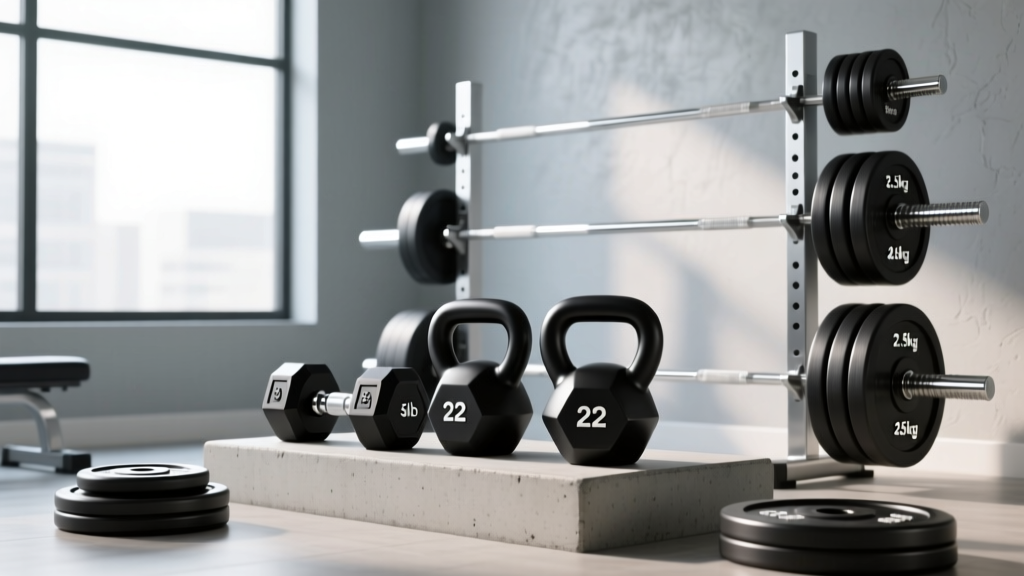
Fixed 22 Pound Dumbbells vs Standard and Olympic Weight Plates

B Stance Dumbbell RDL & Kettlebell Guide: Cast Iron vs Competition
