
Kettlebell Guide & Incline Dumbbell Bench Press Angle Trends 2026
Analyze 2026 free weight trends: cast iron vs competition kettlebells, plus biomechanical data on the optimal incline dumbbell bench press angle.

The 2026 Free Weight Market: A Biomechanical & Material Shift
The free weights and racks sector has undergone a massive transformation as we move through 2026. Driven by a hybrid-training boom that merges ballistic kettlebell flows with precision hypertrophy work, consumers and commercial gym owners are demanding higher manufacturing tolerances and biomechanically optimized equipment. According to recent data from Grand View Research, the global fitness equipment market continues to expand, with free weights outpacing machine-based growth due to their versatility and space efficiency.
This trend report serves a dual purpose. First, we provide a definitive kettlebell buying guide: cast iron vs competitionincline dumbbell bench press angle, revealing how modern adjustable benches are evolving to meet new EMG (electromyography) data regarding pectoral activation and joint preservation.
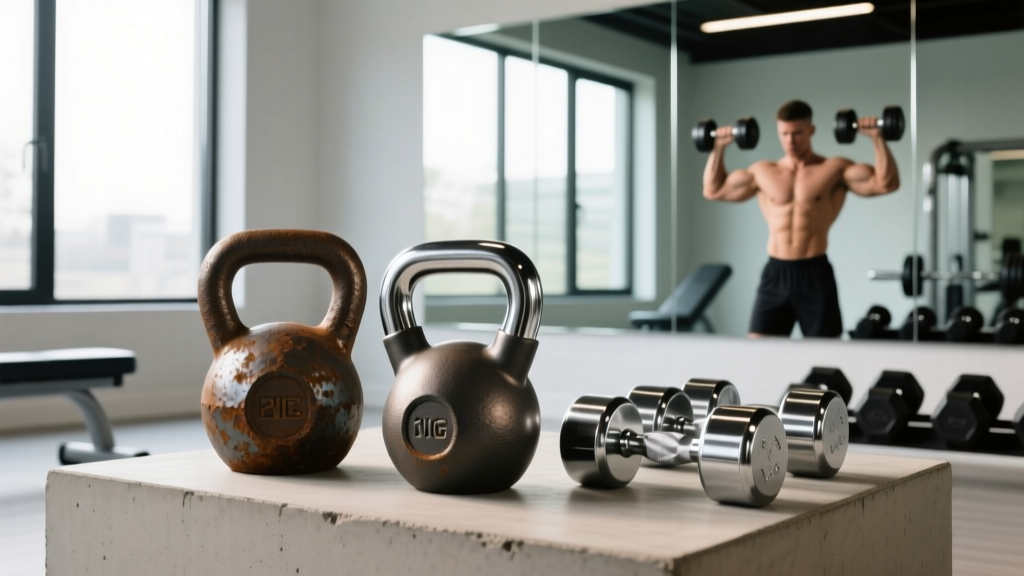
Kettlebell Buying Guide: Cast Iron vs. Competition (Market Analysis)
Choosing between cast iron and competition kettlebells is no longer just about aesthetics; it is a decision rooted in your specific training modalities, space constraints, and budget. In 2026, manufacturing standards have tightened, but distinct differences in dimensional uniformity and coating technologies remain.
| Feature | Standard Cast Iron (e.g., Rogue, Rep) | Competition Style (e.g., Kettlebell Kings, Eleiko) |
|---|---|---|
| Dimensions | Scale with weight (heavier = larger) | Uniform (280mm H x 210mm W) across all weights |
| Handle Diameter | 35mm - 40mm (varies by weight) | 33mm (Standard) or 35mm (Fitness) |
| Base Profile | Flat or slightly rounded | Flat (optimized for renegade rows & tactical ground work) |
| 2026 Avg. Cost | $1.60 - $2.40 per lb | $3.50 - $5.50+ per lb |
| Best For | Grinds, heavy presses, general home gyms | Snatches, jerks, complex flows, technique consistency |
The Cast Iron Advantage: Grinds and Heavy Loads
Cast iron kettlebells remain the undisputed kings of heavy, slow grinds. Because their physical footprint scales with mass, a 40kg cast iron bell offers a thicker, more robust handle (often 38mm+) that accommodates larger hands during heavy double kettlebell front squats or strict presses. Modern 2026 cast iron bells feature advanced e-coat or textured powder-coat finishes that resist chipping and rust far better than the glossy enamel paints of the early 2010s. However, the varying dimensions mean that switching from a 16kg to a 24kg bell requires a micro-adjustment in your rack position and snatch timing, which can disrupt high-rep ballistic sets.
Competition Kettlebells: The Standardization Premium
Competition kettlebells are machined to exact global standards: 280mm in height and 210mm in width, regardless of whether the bell is 8kg or 48kg. This uniformity is critical for kettlebell sport and complex flows. When performing a snatch or a clean and jerk, the trajectory of the bell and the lockout position on the forearm remain identical, allowing the nervous system to lock in the motor pattern. The 33mm handle diameter is universally optimized for the 'hook grip' and forearm resting position. The primary drawback is the premium price point and the larger physical footprint of lighter weights, which are often filled with internal ballistics or steel shot to maintain volume.
💡 2026 Market Insight: The 'Window' vs. 'Flat Bottom' Shift
Historically, competition bells featured a 'window' (hollow space) between the handle and the bell body to save steel. In 2026, top-tier manufacturers have shifted toward solid, flat-bottomed competition designs filled with high-density composites. This eliminates the rattling of internal steel shot found in cheaper models and provides a perfectly stable base for renegade rows and tactical ground-based movements.
Biomechanics Trend Report: Optimizing the Incline Dumbbell Bench Press Angle
While kettlebells dominate the ballistic and functional conditioning space, dumbbells remain the gold standard for unilateral upper-body hypertrophy. Over the past three years, sports science has heavily scrutinized the incline dumbbell bench press angle and its effect on the clavicular (upper) head of the pectoralis major versus the anterior deltoid.
Historically, commercial gyms defaulted to a 45-degree incline. However, modern kinesiology and EMG studies referenced by the National Strength and Conditioning Association (NSCA) indicate that a 45-degree angle often results in excessive anterior deltoid recruitment, effectively turning a chest exercise into a shoulder press. For optimal upper-chest isolation, the data points to a much shallower incline.
The Angle Breakdown: EMG Activation & Equipment Response
- 15° to 30° Incline: The sweet spot for clavicular pec activation. At this angle, the line of pull aligns perfectly with the upper chest muscle fibers while minimizing front-delt takeover. Dumbbells allow for a deeper stretch at the bottom of the movement compared to barbells, maximizing sarcomere lengthening.
- 45° Incline: A hybrid angle. It heavily recruits both the upper pec and the anterior deltoid. Excellent for overall anterior-chain pushing strength, but suboptimal if your front delts are already fatigued from overhead pressing or kettlebell work.
- 55° to 60°+ Incline: Biomechanically, this transitions into an incline/shoulder press. The primary mover becomes the anterior deltoid, with the upper pec acting only as a synergist. According to exercise directories like ExRx.net, angles this steep should be categorized as shoulder-dominant movements.
⚠️ Equipment Warning: The 7.5° Micro-Ladder Necessity
If your adjustable FID (Flat/Incline/Decline) bench only clicks into 30° and 45° increments, you are missing the optimal 15° and 22.5° hypertrophy zones. In 2026, premium benches (like the Rep AB-5200 2.0 and Rogue Utility Bench 3.0) feature 7.5° micro-adjustment ladders specifically to accommodate the precise incline dumbbell bench press angle required for joint-friendly, high-tension upper-chest work.
Cross-Training Synergies: Programming Kettlebells and Incline Pressing
How do these two distinct free-weight categories intersect in a modern training split? The answer lies in managing central nervous system (CNS) fatigue and joint integrity.
- Day 1: Heavy Grinds & Steep Inclines. Pair heavy cast iron kettlebell front squats with a 45-degree incline dumbbell press. The steeper angle complements the heavy, systemic load of the squats by allowing you to move moderate dumbbell weights with high anterior deltoid assistance.
- Day 2: Ballistics & Isolation. Utilize competition kettlebells for high-rep snatches (which demand immense shoulder stability and endurance). Follow this with a 15° to 20° incline dumbbell press. The shallow angle isolates the upper pec without further taxing the already-fatigued anterior deltoids and rotator cuff stabilizers.
Sourcing & Purchasing Framework for 2026
When allocating a $1,500 to $3,000 budget for a premium home gym free-weight setup, prioritize equipment that offers biomechanical precision and material longevity.
'Don't buy weight; buy tolerances. A $40 cast iron bell and a $120 competition bell weigh the same, but the competition bell's 33mm horn and uniform base will dictate your technique consistency for the next decade.' — 2026 FitGearPulse Equipment Editorial Board
The Verdict: Invest in a matched pair of competition kettlebells (16kg and 24kg) for your ballistic and flow work, and supplement with a set of urethane-coated cast iron dumbbells for your heavy grinds. Crucially, ensure your adjustable bench features a 15-degree micro-ladder so you can dial in the exact incline dumbbell bench press angle necessary to protect your shoulders while maximizing upper-chest hypertrophy.
Frequently Asked Questions
Q: Can I use cast iron kettlebells for snatches?
A: Yes, but the varying handle diameters and larger bell profiles of heavier cast iron models can cause forearm bruising during high-rep snatches. Competition bells are vastly superior for this movement.
Q: What is the safest incline dumbbell bench press angle for bad shoulders?
A: A 15° to 30° incline, combined with a neutral grip (palms facing each other), significantly reduces impingement risk on the acromioclavicular joint compared to a 45° pronated grip.
More gear to consider
All reviews
Dumbbell Overhead Triceps Press vs Kettlebell: Cast Iron Value Guide

Rack Setup: Barbell Knurling & Dumbbell Shoulder External Rotation

Olympic vs Standard Plates for Weight Training with Dumbbells
Cast Iron vs Competition Bells & Good Arm Workouts with Dumbbells

Olympic vs Standard Plates for Your Full Body Dumbbell Only Workout
