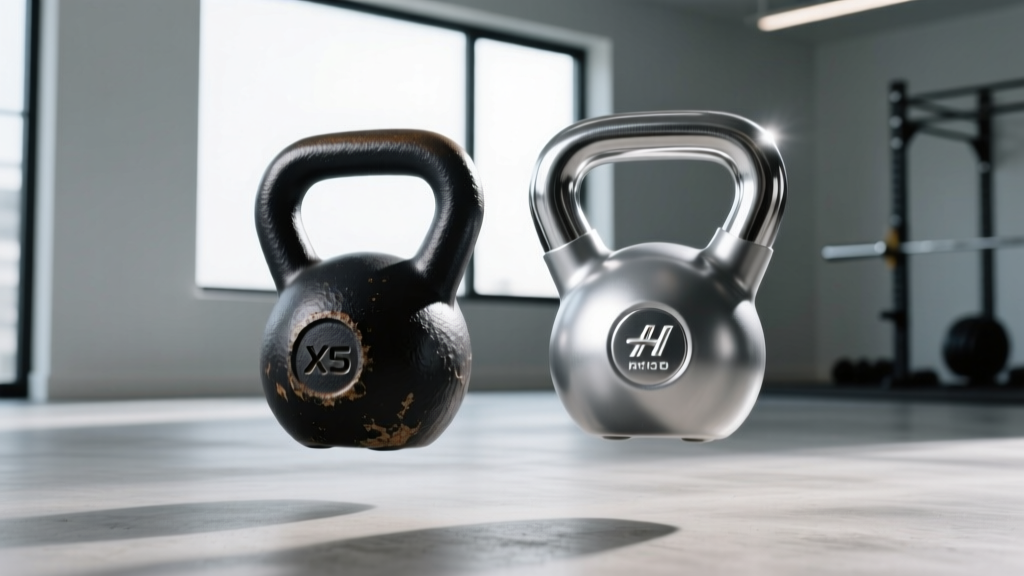
Dumbbell Shoulder Press Alternative: Cast Iron vs Competition Kettlebells
Looking for a dumbbell shoulder press alternative? We break down cast iron vs competition kettlebells, analyzing budget, value, and biomechanics.

The Biomechanical Edge: Why Kettlebells Beat Dumbbells for Overhead Pressing
When athletes and home-gym owners seek a superior dumbbell shoulder press alternative, the kettlebell consistently emerges as the gold standard. While dumbbells offer a balanced center of mass, the kettlebell’s offset load forces the rotator cuff and deep core stabilizers to work overtime. According to biomechanical analyses highlighted by StrongFirst, the kettlebell strict press requires a specific 'groove' that promotes optimal scapular upward rotation and reduces the risk of subacromial impingement—a common failure point in heavy dumbbell pressing.
Furthermore, the kettlebell allows for the 'bottoms-up' press variation. By gripping the handle with the bell facing the ceiling, you drastically increase grip strength demands and neuromuscular activation in the forearm and shoulder girdle. No dumbbell can replicate this stimulus. However, transitioning to kettlebells introduces a critical purchasing dilemma: do you invest in traditional cast iron or standardized competition steel? This decision heavily impacts your budget, your pressing mechanics, and the long-term value of your home gym arsenal.
Cast Iron vs. Competition: The Core Specifications
Before breaking down the financials, it is vital to understand the physical differences between these two styles of kettlebells. The dimensions dictate how the bell sits in the 'rack position' (resting on your forearm and chest before the press), which directly influences wrist health and pressing power.
| Feature | Cast Iron Kettlebells | Competition Kettlebells |
|---|---|---|
| Bell Diameter | Scales with weight (e.g., 16kg is smaller than 24kg) | Uniform 210mm across all weights |
| Handle Diameter | Varies (typically 30mm to 45mm+) | Standardized 33mm (or 35mm for heavy) |
| Material | Solid cast iron, often powder-coated | Hollow steel shell, painted by weight color |
| Rack Position Fit | Changes as weight increases; can bend wrist | Identical fit from 8kg to 32kg; rests on forearm |
| Primary Use Case | Grinds, hypertrophy, general fitness | Ballistics, technical mastery, endurance |
For those utilizing the kettlebell strictly as a dumbbell shoulder press alternative, the rack position is paramount. A 24kg cast iron bell is significantly wider than a 16kg bell, forcing the wrist into deeper extension to accommodate the bulk. Competition bells, maintaining a uniform 210mm sphere, allow the wrist to remain perfectly neutral regardless of the load.
2026 Budget Breakdown: Cost Per Pound and Long-Term Value
As of early 2026, the fitness equipment market has stabilized, but the price gap between cast iron and competition kettlebells remains distinct. Let us analyze the real-world costs using industry benchmarks from premium brands like Rogue Fitness and Kettlebell Kings.
The 'Starter Set' Cost Comparison (16kg, 20kg, 24kg)
- Cast Iron (e.g., Rogue Powder Coat): ~$45 + $58 + $72 = $175 Total (Approx. $1.30/lb)
- Competition (e.g., Kettlebell Kings Steel): ~$95 + $110 + $125 = $330 Total (Approx. $2.45/lb)
Verdict: Cast iron is nearly 50% cheaper upfront, making it the default choice for budget-conscious buyers.
However, value analysis requires looking beyond the initial receipt. If your primary goal is overhead pressing, the 'cost per pound' metric is misleading. With cast iron, the shifting dimensions mean your muscle memory and wrist positioning must adapt every time you jump from a 16kg to a 20kg bell. This micro-adjustment can stall progress and increase the likelihood of wrist tendinopathy. Competition bells eliminate this variable. You are paying a premium for dimensional consistency, which accelerates technical mastery and protects your joints during high-volume pressing cycles.
Value Analysis: Which Style Suits Your Pressing Goals?
To determine which kettlebell offers the highest return on investment for your specific training, apply this decision framework based on your primary physiological goals.
Scenario A: Hypertrophy and Grip Overload (Choose Cast Iron)
If you are using the kettlebell as a dumbbell shoulder press alternative primarily to build muscle mass and crush grip strength, cast iron is your best bet. As you move up to the 28kg and 32kg ranges, the handle diameter on cast iron bells thickens significantly (often exceeding 40mm). This thick handle acts as a natural 'Fat Gripz' attachment, forcing your forearms and brachioradialis to work exponentially harder during the eccentric lowering phase of the press. Furthermore, the solid iron construction can withstand being dropped onto thick rubber mats without the risk of structural denting.
Scenario B: Technical Mastery and Joint Longevity (Choose Competition)
If your goal is to master the strict press, improve shoulder mobility, or perform complex flows (like the clean and jerk), competition bells are non-negotiable. Research published in resources like Examine.com regarding kettlebell biomechanics emphasizes that consistent implement dimensions are crucial for neurological adaptation in complex lifts. The 33mm handle of a competition bell is universally optimal for the 'hook grip' required in cleans, and the smooth, painted steel (rather than textured powder coat) prevents the callous-tearing friction that plagues high-volume cast iron users.
Real-World Failure Modes and Edge Cases
When investing your budget, you must account for how these tools fail over time. Here are the edge cases most buying guides ignore:
- The Powder-Coat Chip (Cast Iron): Budget-friendly cast iron bells often feature thin paint or low-grade powder coating. After a year of heavy rack positions and floor work, the coating chips, exposing raw iron to humidity. Without regular maintenance (wire brushing and painting), rust will degrade the handle texture, making overhead pressing dangerous.
- The Concrete Dent (Competition): Competition bells are hollow steel shells filled with a ballast core to achieve uniform sizing. If you accidentally drop a 24kg competition bell onto bare concrete or a thin wooden floor, the steel shell can dent inward. This creates a sharp edge on the base, ruining the bell's stability for renegade rows or push-up variations.
- The Bottoms-Up Squeeze (Both): When performing the bottoms-up press—the ultimate dumbbell shoulder press alternative for rotator cuff rehab—competition bells can be overly slippery if painted with glossy finishes. Cast iron's textured powder coat actually provides a superior grip for this specific, highly demanding variation.
The Step-by-Step Buying Framework for 2026
Ready to build your overhead pressing arsenal? Follow this budget-tiered framework to maximize your equipment's lifespan and training efficacy.
- The $150 'Hypertrophy' Tier: Purchase a single 20kg or 24kg high-quality cast iron bell (e.g., Rogue or Rep Fitness). Use it exclusively for heavy, low-rep strict presses and thick-handle grip work. Supplement with dumbbells for higher-rep accessory work.
- The $350 'Technical' Tier: Invest in a matched pair of 16kg competition bells. This allows you to practice double-kettlebell front squats and double strict presses. The uniform rack position will teach your body perfect spinal alignment without the wrist pain associated with mismatched cast iron sets.
- The $600+ 'Lifetime' Tier: Buy a full spectrum of competition bells (12kg, 16kg, 20kg, 24kg) from a premium vendor like Kettlebell Kings or Onnit. This guarantees identical biomechanical grooves across your entire training career, making the kettlebell the permanent, definitive dumbbell shoulder press alternative in your programming.
Ultimately, the choice between cast iron and competition is not just about aesthetics; it is a fundamental decision about how you load your joints and manage your training budget. By aligning your purchase with your specific pressing mechanics, you ensure that every dollar spent translates directly to overhead strength and shoulder resilience.
Expert Tip: 'Never sacrifice wrist neutrality for a heavier load. If your cast iron kettlebell forces your wrist into deep extension during the rack position, it is time to switch to a competition bell or regress the weight. The shoulder joint will only tolerate poor pressing mechanics for so long before impingement occurs.' — American Council on Exercise (ACE) Training Guidelines.
More gear to consider
All reviews
From Starter Dumbbell Weight for Women to Olympic Barbell Knurling

EZ vs Straight Bar: 2026 Trends for Dumbbell Row Weight Plateaus
Power Rack vs Squat Rack vs Stand: Best for Lower Chest Dumbbell Work
Long Head Bicep Exercises Dumbbell Guide Using Neoprene Weights

Barbell Collar and Clamp Setup for a Complete Dumbbell Workout
