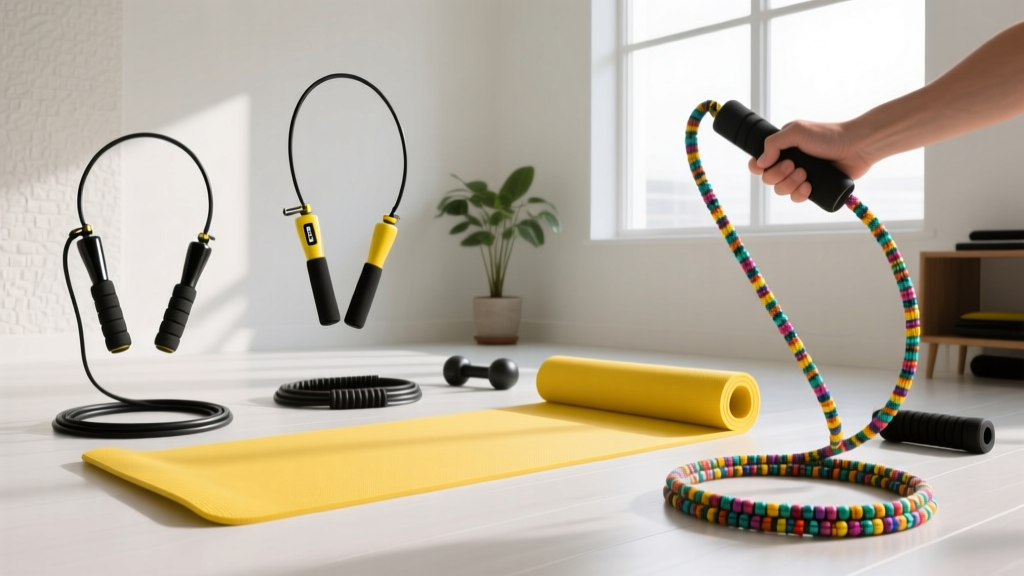
Jump Rope Types: Speed, Weighted, Beaded & Your Yellow Yoga Mat
Master jump rope types—speed, weighted, and beaded—with our beginner step-by-step guide, plus how to pair them with a yellow yoga mat for recovery.

The Ultimate Beginner's Guide to Jump Rope Types and Recovery
Building a highly effective, space-efficient home gym in 2026 does not require a $3,000 smart treadmill or a garage full of bulky machines. The most transformative cardiovascular tool you can buy costs less than a takeout dinner: the jump rope. However, walking into the fitness aisle or browsing online can be overwhelming. Do you need a lightning-fast steel cable, a heavy weighted rope, or a classic beaded design?
This step-by-step guide will decode the three primary jump rope types—speed, weighted, and beaded—helping you choose the exact tool for your beginner goals. Furthermore, we will cover the crucial second half of any home workout: recovery. Transitioning from high-impact cardio to deep stretching on a high-density yellow yoga mat provides both the joint protection and the psychological cue your body needs to down-regulate after an intense session.
Step 1: Decode the Big Three Jump Rope Types
Before you start swinging, you must understand the mechanics of the equipment. Each rope type manipulates weight, aerodynamics, and tactile feedback differently.
| Rope Type | Material & Thickness | Best For | Learning Curve | Avg. Price Range |
|---|---|---|---|---|
| Beaded | 9mm Polyurethane beads on nylon cord | Beginners, rhythm, tricks | Low (High tactile feedback) | $25 - $45 |
| Speed | 1.5mm - 2.5mm PVC or bare steel cable | Double-unders, high RPM cardio | High (Requires precise timing) | $20 - $40 |
| Weighted | Thick PVC or leather (1/4 lb to 2 lb total) | Shoulder endurance, muscle toning | Medium (Slower rotation) | $80 - $140 |
Why Beaded Ropes Win for Absolute Beginners
If you have never jumped rope since elementary school, start with a 9mm beaded rope. The polyurethane beads create a slight aerodynamic drag and produce a distinct "click" when they hit the floor. This auditory and tactile feedback tells your brain exactly where the rope is in its rotation, drastically reducing the frustration of tripping. Furthermore, beaded ropes do not tangle or hold memory kinks like thin PVC ropes do.
Step 2: Size Your Rope Perfectly (The Armpit Rule)
The most common failure mode for beginners is using an incorrectly sized rope. A rope that is too long will bounce off the floor unpredictably; a rope that is too short will whip your toes and force you to jump excessively high, ruining your joints.
- The Stance: Stand on the exact center of the rope with one foot.
- The Pull: Pull the handles straight up along your body, keeping the cable taut.
- The Sweet Spot: The base of the handles (where the cable meets the handle) should rest right at your armpit or mid-chest level.
- 5'0" to 5'4" → 8'6" rope length
- 5'5" to 5'9" → 9'0" rope length
- 5'10" to 6'2" → 9'6" rope length
- 6'3" and taller → 10'0" rope length
Step 3: Match the Rope to Your Beginner Goal
Your choice of rope should align with your primary fitness objective and the CDC's aerobic activity guidelines, which recommend at least 150 minutes of moderate-intensity cardio per week.
Goal: Fat Loss and High-Calorie Burn
If your goal is pure cardiovascular conditioning and maximizing calorie expenditure (up to 15-20 calories per minute), a speed rope is your ultimate weapon. The lightweight 1.5mm steel cable allows for rapid rotations and advanced moves like double-unders. Warning: Speed ropes offer zero tactile feedback. If your timing is off by a fraction of a second, the steel wire will leave a welt on your shins. Master the basic bounce on a beaded rope before graduating to speed.
Goal: Upper Body Toning and Rhythm
If you want to build shoulder endurance and grip strength while jumping, opt for a weighted rope (typically 1/2 lb to 1 lb for beginners). The added resistance forces your forearms, deltoids, and core to work harder to stabilize the rope's momentum. Because weighted ropes swing slower, they are actually quite forgiving for beginners learning their timing, though they are not suitable for high-RPM double-unders.
Step 4: Transition to Your Yellow Yoga Mat for Recovery
Jumping rope is a high-impact, plyometric exercise. Even with perfect form (jumping only 1 to 2 inches off the ground), your calves, Achilles tendons, and plantar fascia absorb significant repetitive stress. This is where your recovery protocol becomes non-negotiable.
When you finish your high-intensity rope session, unrolling your yellow yoga mat signals to your brain that it's time to shift from sympathetic (fight-or-flight) to parasympathetic (rest-and-digest) dominance. Why a yellow yoga mat specifically? Beyond the aesthetic appeal and color psychology—yellow promotes energy, optimism, and mental clarity during grueling routines—a high-quality mat provides the necessary 5mm to 6mm high-density cushioning your joints need for post-jump stretching.
The 5-Minute Post-Jump Mat Routine
According to experts at Yoga Journal, targeted static stretching after plyometrics prevents fascial adhesions and maintains ankle mobility. Perform these three poses on your mat immediately after jumping:
- Downward-Facing Dog (2 minutes): Pedal your heels into the mat to deeply stretch the gastrocnemius and soleus muscles, which tighten severely during jumping.
- Pigeon Pose (90 seconds per side): Jumping rope requires intense hip stabilization. Pigeon pose opens the piriformis and glutes, preventing lower back compensation.
- Hero’s Pose with Toe Tuck (1 minute): Sit on your heels with your toes tucked under to stretch the plantar fascia and prevent shin splints.
2026 Starter Gear Matrix: What to Buy
Do not waste money on $10 department store ropes that will tangle and break within a month. Invest in purpose-built gear that will last for years.
| Category | Recommended Model | Key Specs & Price |
|---|---|---|
| Beaded Rope | Rx Smart Gear Beaded | 9mm beads, adjustable, ergonomic handles. ~$42 |
| Speed Rope | EliteSrs Bullet Rope SPEED | 2.5mm PVC, 90-degree ball bearings. ~$28 |
| Weighted Rope | CrossRope Get Lean Set | 1/4 lb & 1/2 lb interchangeable clips. ~$139 |
| Recovery Mat | Manduka PRO (Lemon/Yellow) | 6mm dense cushion, lifetime guarantee, 71" long. ~$144 |
Troubleshooting Common Beginner Failure Modes
Even with the right gear, poor biomechanics will halt your progress. Watch out for these edge cases:
- The "Arm Flap" (Using Shoulders Instead of Wrists): Beginners often rotate the entire rope using their shoulder joints. This causes rapid fatigue and erratic rope paths. Fix: Pin your elbows to your ribcage. The rotation should come entirely from flicking your wrists, like you are turning a doorknob.
- The "Pogo Stick" (Jumping Too High): Leaping 4+ inches into the air wastes energy and multiplies the impact force on your knees. Fix: Keep your jumps to a mere 1 to 2 inches. The rope is only a few millimeters thick; you only need to clear it by a hair.
- The "Hardwood Destroyer": Jumping rope directly on concrete, tile, or bare hardwood will degrade your rope rapidly and shock your shins. Fix: Always jump on a rubber gym mat, a thin carpet, or a dedicated jump rope mat. Save your premium 6mm yellow yoga mat strictly for the cool-down and stretching phases, as the abrasive friction of a spinning rope will tear the mat's polyurethane surface.
Frequently Asked Questions
Can I jump rope on my yellow yoga mat?
It is not recommended. While a 5mm or 6mm yoga mat provides excellent joint support for bodyweight exercises and stretching, the repetitive friction and impact of a spinning jump rope will scuff, tear, and degrade the mat's surface. Use a dedicated 1/4-inch rubber horse stall mat or a specific jump rope mat for the cardio portion, then transition to your yellow yoga mat for the cool-down.
How long should a beginner jump rope per session?
Beginners should utilize an interval approach. Start with 20 seconds of jumping followed by 40 seconds of active rest (marching in place). Repeat this for 10 to 15 minutes. As your calf tendons adapt over 3-4 weeks, gradually increase the work intervals to 45 seconds.
Which rope type is best for small indoor spaces?
A beaded rope or a slightly heavier weighted rope is best for indoors with low ceilings. Because they swing slower and offer more tactile feedback, you are less likely to accidentally whip your ceiling fan or drywall compared to a hyper-fast, unpredictable speed rope.
More gear to consider
All reviews
Medicine Ball Weight Selection Mistakes & Yoga Mat Hanging Rack Tips

Beyond Nike SKIMS Yoga Mat Hype: 2026 Exercise Ball Size Guide

Pull-Up Assist Band Sizing & Cork Yoga Mat Troubleshooting

Subway and Yoga Mats vs Foam Rollers: Density & Size Guide
Alo Yoga Mat Warrior: Thickness, Material & Grip Troubleshooting
