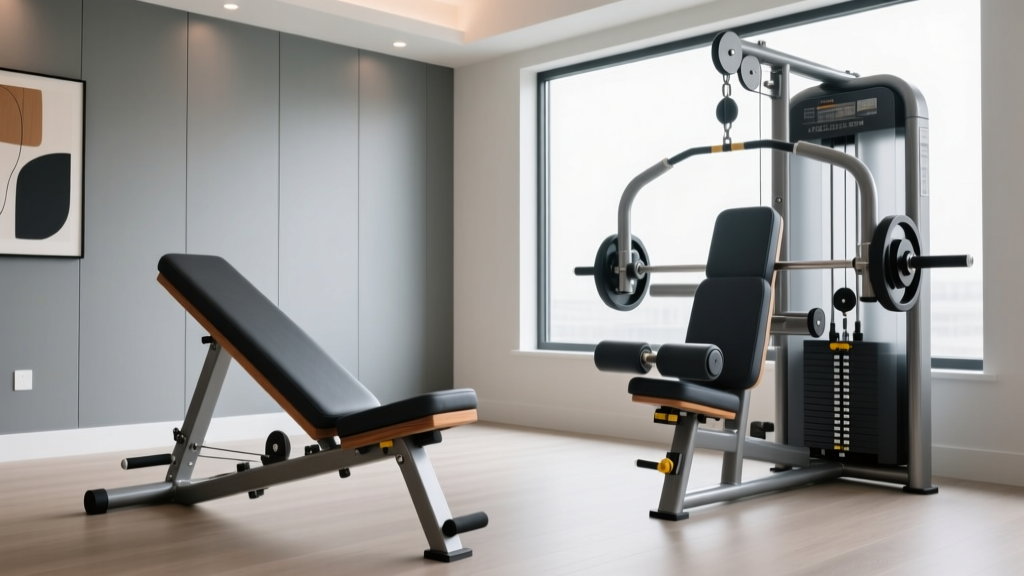
Is a Chest Press Machine Good? Setup, Types & Comparison
Wondering if a chest press machine is good for your gym? Compare plate-loaded vs. selectorized types, plus a complete setup and installation walkthrough.

Is a Chest Press Machine Good for Hypertrophy and Joint Health?
When outfitting a commercial facility or a high-end home gym in 2026, one of the most frequent questions we encounter from buyers is: is a chest press machine good compared to traditional barbell bench pressing? From a biomechanical and hypertrophic standpoint, the answer is a definitive yes. While free weights require significant stabilizer muscle recruitment, modern chest press machines utilize cam systems and converging-axis pivot points to isolate the pectoralis major, reducing shear force on the rotator cuff and anterior deltoids.
According to a comprehensive study published in the Journal of Sports Science & Medicine, training with machines yields comparable muscle hypertrophy to free weights, but with a significantly lower risk of injury and reduced central nervous system (CNS) fatigue. Furthermore, the Mayo Clinic highlights that guided resistance machines are exceptional for maintaining joint integrity and allowing safe training to absolute muscular failure without a spotter.
However, answering whether a machine is 'good' also depends heavily on how well it is selected for your space and, crucially, how accurately it is installed. A poorly calibrated selectorized stack or a misaligned plate-loaded pivot arm will ruin the biomechanical advantages. Below, we break down the primary chest press machine types, compare their installation requirements, and provide a master walkthrough for setting them up correctly.
Chest Press Machine Types: Space, Cost, and Setup Comparison
Before unboxing any equipment, you must understand the structural and spatial demands of the three main chest press categories. The installation footprint and floor-loading requirements vary drastically between plate-loaded, selectorized, and functional cable units.
| Machine Type | 2026 Market Example | Avg. Price Range | Footprint (L x W) | Assembly Time | Max Dynamic Floor Load |
|---|---|---|---|---|---|
| Plate-Loaded (Iso-Lateral) | Hammer Strength Iso-Lateral | $3,200 - $4,100 | 52' x 45' | 2.5 - 3 Hours | ~1,400 lbs |
| Selectorized (Pin-Loaded) | Life Fitness Signature Series | $4,500 - $5,800 | 58' x 38' | 4 - 5 Hours | ~1,100 lbs |
| Cable / Functional Trainer | PrimaForce Functional Trainer | $1,800 - $2,500 | 65' x 34' | 3 - 4 Hours | ~950 lbs |
Plate-Loaded Chest Press: Installation and Pivot Calibration
Plate-loaded machines, particularly those with an iso-lateral or converging-axis design, are favored by bodybuilders for their natural range of motion. Because the user loads the weight directly onto the moving arms, the pivot joints endure massive lateral and vertical shear forces. Setup precision is non-negotiable.
Step-by-Step Pivot Assembly
- Base Frame Leveling: Before attaching the vertical uprights, place the base frame on 3/4-inch vulcanized rubber matting. Use a 48-inch magnetic spirit level across the main crossbars. Adjust the M12 threaded leveling feet until the bubble is dead center. If the base is twisted, the pivot arms will bind.
- Bearing vs. Bushing Installation: High-end 2026 models use sealed needle bearings rather than bronze bushings. When sliding the pivot arm onto the main axle, apply a thin layer of white lithium grease to the inner sleeve. Do not use WD-40, which strips factory lubricants.
- Torque Specifications: This is where most home-gym builders fail. The main axle flange nuts (usually M16 or 5/8-inch) must be tightened with a digital torque wrench. Set the wrench to 45 Nm (approx. 33 ft-lbs). Overtightening will crush the bearing housing and lock the arm; undertightening will cause lateral wobble and premature metal fatigue.
- Converging Axis Alignment: Sit in the machine without weight. Press the empty arms forward. They should meet at a point roughly 12 to 18 inches in front of the user's sternum. If they cross over each other or remain parallel, the limit-stop bolts on the rear cam need micro-adjustments.
Selectorized Chest Press: Weight Stack Tuning and Cable Routing
Selectorized machines offer unparalleled convenience but introduce complex mechanical variables: guide rods, selector pins, and multi-pulley cable routing. A Life Fitness or Body-Solid Pro Club Line unit requires meticulous attention to cable tension.
Guide Rod Plumb and Weight Stack Binding
The weight stack travels on two vertical chrome guide rods. If the main upright is off by even a half-degree from true vertical, the weight plates will drag against the rods, creating a 'sticky' feeling on the eccentric (lowering) phase.
- Use a digital angle finder on the guide rods. They must read exactly 90.0 degrees relative to the floor.
- Once the stack is assembled, wipe the guide rods with a microfiber cloth and apply a Teflon-based dry lubricant. Avoid silicone sprays, which attract gym chalk and dust, eventually turning into a grinding paste.
Cable Routing and Tensioning
The chest press utilizes a floating cam system. When the weight stack is at rest (pin in the lightest weight), the cable must have zero slack, but should not be under high tension.
The 'Ping' Test: Pluck the exposed main drive cable like a guitar string. It should produce a low, dull thud. If it produces a high-pitched 'ping', the tension is too high and will prematurely wear the nylon pulley wheels. If it sags, the cable will slip off the cam track during fast eccentric movements.Critical Facility Requirements: Flooring and Clearance
Regardless of the machine type, your facility must meet specific structural prerequisites to safely house a chest press machine.
Subfloor and Matting
Commercial selectorized machines often weigh over 700 lbs out of the crate. Concentrated point-loads from the machine's four feet can dent standard hardwood or crack inexpensive laminate. You must install high-density rubber flooring (minimum 8mm thickness, 40-90 durometer hardness) directly over a concrete subfloor to distribute the kinetic energy of dropped plates and heavy stack drops.
Ceiling and Wall Clearance
When mapping out your floor plan, account for the 'operational envelope'. A standard plate-loaded chest press requires at least 24 inches of clearance behind the seat for the user to load and unload bumper plates or iron grip plates. Furthermore, ensure an 84-inch ceiling clearance; while the machine itself may only be 60 inches tall, users frequently stand and stretch overhead between sets, and tall plate-loaded weight horns can reach up to 72 inches when fully loaded with 45-lb plates.
Common Assembly Failure Modes to Avoid
Through our extensive teardowns and installations at FitGearPulse, we have cataloged the most frequent errors that compromise the safety and longevity of chest press machines:
- Cross-Threading Flange Bolts: Starting bolts by hand is mandatory. Using an impact driver from the first thread will easily cross-thread soft steel nuts, compromising the structural integrity of the main upright.
- Pulley Misalignment: If the cable does not run perfectly straight through the center groove of the nylon pulley, it will shave off plastic shavings with every rep. Check alignment from both the top-down and side-profile views.
- Ignoring the Break-In Period: New selectorized cables stretch during the first 5,000 reps. You must re-tension the turnbuckle at the base of the weight stack after the first month of heavy use.
The Final Verdict: So, is a chest press machine good for your training arsenal? Absolutely. It provides unmatched isolation, joint safety, and failure-point training. However, its value is entirely dependent on selecting the right type for your spatial constraints and executing a precision installation. A perfectly calibrated plate-loaded press will outlast a poorly assembled selectorized unit every time.
More gear to consider
All reviews
Budget Breakdown: How to Use Chest Press Machine & Pec Deck

Space Homegym Compare Essentials: Real-World Metrics, Brand Benchmarks, and Smart Layout Decisions

Cable Crossover vs Chest Press Bench Machine: 2026 Guide

Space Optimization: Bench Rack & Iso Lateral Chest Press Machine

Converging Chest Press Machine vs. Incline & Flat Benches: 2026 Data