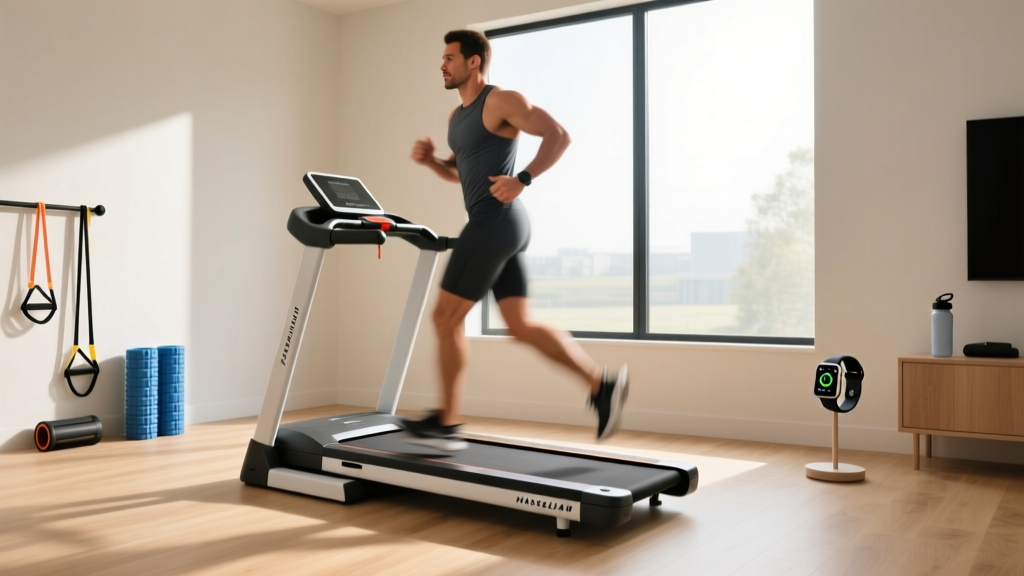
NordicTrack Commercial 1750 Treadmill Reviews: Belt Care & Layout
Read our NordicTrack Commercial 1750 treadmill reviews focusing on belt maintenance, lubrication schedules, and optimizing your home gym layout.

When scanning through NordicTrack Commercial 1750 treadmill reviews, the conversation almost exclusively revolves around the 14-inch pivoting HD touchscreen, the -3% to 15% incline/decline capabilities, and the iFIT integration. Rarely do reviewers discuss the spatial geometry required to actually maintain the machine. As of 2026, the Commercial 1750 remains a heavyweight champion in the home cardio space, weighing in at approximately 340 pounds with a massive 22-inch by 60-inch commercial-grade belt. However, placing this machine in a poorly optimized layout doesn't just ruin the aesthetics of your room—it actively accelerates belt degradation, motor strain, and deck friction.
From a space optimization and layout design perspective, treadmill belt maintenance and lubrication are deeply tied to your room's physical clearances. If you shove a 340-pound treadmill into a tight alcove, you eliminate the physical access required to perform routine deck lubrication, rear-roller alignment, and motor shroud vacuuming. This guide bridges the gap between interior spatial planning and the mechanical longevity of your NordicTrack Commercial 1750.
The Hidden Cost of Poor Gym Layouts on Treadmill Belts
The primary enemy of any treadmill belt is excessive friction, which generates heat. When a treadmill is placed in a cramped, unventilated corner, the ambient temperature around the motor and deck rises. According to equipment longevity data cited by Consumer Reports, poor airflow and accumulated dust are leading causes of premature belt drying and motor board failure. In a tightly optimized multi-use room, the belt sucks in ambient dust, pet dander, and carpet fibers from the sides, creating an abrasive paste between the belt and the wooden deck. Over time, this paste strips away the factory-applied silicone lubricant, causing the belt to stutter, drift, and eventually tear.
Spatial Clearances: The 'Maintenance Gap' Framework
To properly maintain the Commercial 1750, your layout must account for what we call the 'Maintenance Gap.' This is the minimum negative space required around the machine to perform physical adjustments without having to disconnect the power, drain the water reservoir (if applicable), and deadlift a 340-pound frame away from the wall.
| Spatial Zone | Minimum Dimension | Maintenance Purpose |
|---|---|---|
| Rear Clearance | 36 inches | Access to motor hood, vacuuming, and rear roller hex-bolt alignment. |
| Side Clearance (Both) | 18 inches | Lifting the belt edge for silicone wand insertion and side-rail cleaning. |
| Top/Vertical Clearance | 72 inches | Safe operation of the EasyLift folding mechanism without striking bulkheads or ceiling fans. |
| Front Clearance | 24 inches | Power cord management and emergency front-access to the main breaker switch. |
Many space-saving layouts ignore the 36-inch rear clearance rule. The American College of Sports Medicine (ACSM) facility guidelines recommend strict safety clearances behind cardio equipment, but from a purely mechanical standpoint, this space is mandatory for adjusting the belt tension. If your layout places the rear of the 1750 flush against a drywall partition, you cannot use the provided 3/16-inch hex key to adjust the rear roller bolts when the belt inevitably drifts to the left or right.
Step-by-Step Belt Lubrication in Restricted Layouts
NordicTrack pre-lubricates the Commercial 1750 deck at the factory. However, depending on your usage and environmental dust levels, you must reapply 100% pure silicone lubricant every 150 miles or roughly every three months. If your space optimization strategy limits your side clearance to the bare minimum (18 inches), here is how you execute the lubrication process without moving the machine.
- Power Down and Unplug: Always disconnect the 120V power source. In tight spaces, ensure the cord isn't pinched behind the frame.
- Locate the Application Zone: You need to apply the silicone in the center third of the deck. Stand on the left side of the treadmill.
- Lift the Belt Edge: Reach under the 22-inch belt near the middle of the deck. Pull the belt upward just enough to create a 1-inch gap between the belt and the phenolic deck.
- Insert the Extension Wand: Use a 100% silicone spray bottle equipped with a 6-inch rigid extension wand. Never use WD-40 or petroleum-based solvents, as these will dissolve the deck coating and void your warranty.
- Apply in a Zig-Zag Pattern: Spray the silicone deep toward the center of the deck, moving the wand in a wide zig-zag pattern to ensure even distribution.
- Repeat and Distribute: Repeat on the right side. Plug the machine in, stand on the side rails, start the belt at 2 MPH, and let it run for 3 minutes to distribute the silicone evenly.
Dust Mitigation and Airflow in Enclosed Layouts
When designing a compact home gym, the Commercial 1750 is frequently placed on plush bedroom carpets or in enclosed basement rooms. This is a catastrophic layout choice for belt longevity. Carpet fibers act like tiny saws against the underside of the belt, while the machine's internal cooling fan pulls that dust directly into the motor shroud.
The Layout Solution: You must incorporate a high-density EVA foam equipment mat (minimum 3/8-inch thick) into your floor plan. The mat should extend at least 12 inches beyond the perimeter of the treadmill on all sides. This not only dampens acoustic vibration for multi-story homes but creates a sealed, wipeable barrier that prevents carpet fibers from being ingested by the belt mechanism. Furthermore, ensure your room's HVAC return vent is not located directly behind the treadmill's motor hood; negative air pressure will pull heavy dust directly into the machine's electronics.
Troubleshooting Belt Drift in Corner Placements
A common issue noted in long-term NordicTrack Commercial 1750 treadmill reviews is belt drift—the belt slowly sliding to the left or right during heavy incline runs. While often blamed on manufacturing defects, in a space-optimized home gym, belt drift is almost always caused by uneven flooring in corners or alcoves.
The Corner Floor Slope Problem
Modern homes often feature slight floor sloping near exterior walls and corners to accommodate foundation settling and water drainage. If the left side of your treadmill is 2 degrees lower than the right side, gravity will pull the user's footstrike laterally, forcing the belt to track off-center. Over time, this creates immense friction on one side of the deck, drying out the silicone and burning the belt edges.
How to Adjust the Layout and Hardware
- Level the Frame: Before adjusting the belt, use a 24-inch torpedo level across the side rails. Adjust the four leveling feet at the base of the 1750 until the frame is perfectly horizontal, regardless of the floor's slope.
- Adjust the Rear Roller: If the belt drifts to the left, insert the 3/16-inch hex key into the left rear roller bolt and turn it clockwise exactly one-quarter (1/4) turn. Do the same to the right side to maintain overall tension.
- Test Under Load: Belt alignment must be tested with weight on the deck. Walk at 3 MPH for two minutes. If it still drifts, repeat the quarter-turn adjustment. Never turn the bolts more than a half-turn in total, or you risk over-tensioning and snapping the belt seam.
'Proper spatial planning isn't just about fitting the machine into the room; it's about fitting the room around the machine's mechanical needs. A treadmill without maintenance clearance is a disposable asset.' — FitGearPulse Layout Engineering Team, 2026
Folding Mechanism Clearance and Under-Deck Access
The Commercial 1750 features NordicTrack's EasyLift folding technology, allowing the deck to pivot upward to save floor space. However, folding the machine changes your maintenance access profile. When folded, the machine measures roughly 81.2 inches long and stands nearly 69.5 inches high. If your layout places the treadmill under a low ceiling, a bulkhead, or a mounted TV, you may not have the vertical clearance to fully engage the folding latch.
More importantly, folding the treadmill is the only way to access the underside of the deck to clean out accumulated debris. If your layout utilizes a wall-mounted desk or a Murphy bed directly in front of the treadmill's folded footprint, you block access to the deck's undercarriage. Always ensure the 'folded footprint' (roughly 40 inches by 82 inches) remains entirely clear of secondary furniture to allow for bi-annual under-deck vacuuming and motor shroud dusting.
Final Thoughts on Spatial Maintenance
Investing in a premium machine like the NordicTrack Commercial 1750 requires a paradigm shift in how you view home gym layouts. By respecting the Maintenance Gap, utilizing high-density matting, and ensuring physical access to the rear roller and side rails, you transform a tight spatial constraint into a highly functional, long-lasting fitness environment. For ongoing care instructions and warranty-specific maintenance logs, always refer to the official NordicTrack Support Portal to ensure your specific model year's requirements are met.
More gear to consider
All reviews
Elliptical vs Treadmill: Testing the TX 4.9 Sportcraft Treadmill
Under Desk Treadmill Review: Care and NordicTrack Comparison Chart

Training for Half Marathon on Treadmill? Under-Desk Reviews
Pro Form Crosswalk Treadmill Belt Maintenance & Care Guide

Elliptical vs Treadmill: Walking on Treadmill for 30 Minutes Daily