How Many Dumbbell Curls Should I Do? & Olympic Barbell Buying Guide
Learn how many dumbbell curls you should do for arm growth, plus a beginner-friendly step-by-step guide to choosing Olympic barbell weight and knurling.

When building a home gym in 2026, beginners often start their journey with adjustable dumbbells to build a baseline mind-muscle connection. Naturally, one of the most common questions we receive at FitGearPulse is about arm isolation: how many dumbbell curls should i do to see real growth? While mastering isolation movements is a great starting point, the true cornerstone of any serious strength training setup is the Olympic barbell.
In this comprehensive, beginner-friendly guide, we will first answer your pressing questions about dumbbell curl programming. Then, we will transition into a step-by-step Olympic barbell buying guide, focusing heavily on the two most critical factors for new lifters: weight specifications and knurling patterns.
Quick Answer: Dumbbell Curl Rep Ranges
For muscular hypertrophy (growth), aim for 3 to 4 sets of 8 to 12 repetitions, leaving 1-2 reps in reserve (RIR). For muscular endurance, push into the 15 to 20 rep range with lighter weight and shorter rest periods (30-45 seconds).
Part 1: How Many Dumbbell Curls Should I Do for Arm Growth?
The biceps brachii is a relatively small muscle group that responds best to a mix of mechanical tension and metabolic stress. According to guidelines established by the National Strength and Conditioning Association (NSCA), the optimal rep range for hypertrophy is 67-85% of your 1-Rep Max, which typically translates to 6-12 reps per set.
Structuring Your Arm Day
- Beginners (0-6 months): 2-3 sets of 10-12 reps, twice a week. Focus strictly on the eccentric (lowering) phase for 2 seconds per rep.
- Intermediates (6+ months): 3-4 sets of 8-10 reps, utilizing drop sets or supersets to increase metabolic stress.
- Frequency: Train biceps 2 times per week. Hitting them once a week on a 'bro-split' leaves muscle protein synthesis on the table.
Once you have mastered dumbbell isolation and built foundational tendon strength, it is time to invest in the ultimate mass-builder: the Olympic barbell. Compound movements like barbell rows, deadlifts, and overhead presses will drive systemic growth that dumbbell curls simply cannot achieve on their own.
Part 2: Step-by-Step Olympic Barbell Buying Guide
Walking into the world of barbells can be overwhelming. Prices range from $150 budget Amazon specials to $1,200+ competition bars. For a beginner or intermediate home gym owner in 2026, the sweet spot is between $240 and $320. Here is how to evaluate the two most important specs: weight and knurling.
Step 1: Understanding Barbell Weight and Tensile Strength
A standard men's Olympic barbell weighs exactly 20 kilograms (44.09 lbs) and measures 2.2 meters (7.2 feet) in length. The shaft diameter is typically 28mm to 29mm. However, the raw weight is less important than the tensile strength—measured in Pounds per Square Inch (PSI)—which dictates how much load the bar can take before it permanently bends.
- Under 180,000 PSI: Avoid. These budget bars will develop a permanent 'whip' or bend when loaded past 250 lbs.
- 190,000 PSI: The gold standard for beginner to intermediate home gyms. It offers enough 'whip' for dynamic movements but remains rigid enough for heavy squats.
- 215,000+ PSI: Found in premium powerlifting and weightlifting bars. Extremely rigid and virtually unbendable.
Step 2: Decoding the Knurl (The Grip Factor)
The knurl is the machined, cross-hatched pattern on the steel shaft designed to increase friction between your hands and the bar. Choosing the wrong knurl is the #1 mistake beginners make. Knurling generally falls into three geometric categories:
| Knurl Type | Geometry & Feel | Best Used For | Example Model |
|---|---|---|---|
| Hill | Shallow peaks, smooth feel. Least aggressive. | Olympic lifting, high-rep WODs, beginners with sensitive hands. | Rogue Echo Bar |
| Volcano | Rimmed edges with a crater in the middle. Excellent grip without tearing skin. | Multipurpose training, hypertrophy, general home gym use. | Rogue Ohio Bar |
| Mountain | Sharp, pointed peaks. Highly aggressive, bites into the skin. | Heavy powerlifting (deadlifts, low-bar squats). | Rep Fitness Deep Knurl |
Pro Tip: If you are buying your only barbell for a home gym, choose a Volcano knurl. It provides the necessary grip for heavy deadlifts but won't shred your hands during high-volume dumbbell-style barbell rows or bench presses.
Step 3: Bushings vs. Bearings
Inside the sleeves of the barbell are the mechanisms that allow the sleeves to spin independently of the shaft.
- Bronze/BComposite Bushings: Slower, more controlled spin. Ideal for powerlifting and general strength training where you want the bar to feel stable in your hands.
- Needle Bearings: Fast, frictionless spin. Mandatory for Olympic weightlifting (snatches, cleans) where the bar must rotate rapidly as you transition under the weight.
Top 2026 Barbell Recommendations for Beginners
Based on current market pricing, durability testing, and knurl quality, here are the top two entry-to-mid-level Olympic barbells for your home gym.
1. The Undisputed All-Rounder: Rogue Ohio Bar
Priced at $295, the Rogue Ohio Bar remains the benchmark for multipurpose home gym barbells. It features a 190,000 PSI steel shaft, dual knurl marks (for both powerlifting and weightlifting hand placements), and Rogue's signature volcano knurl. It utilizes composite bronze bushings, making it incredibly stable for bench pressing while still offering a smooth enough spin for beginner cleans.
2. The Budget-Friendly Workhorse: Rep Fitness Excalibur Bar
Coming in around $249, the Rep Fitness Excalibur offers a slightly more aggressive knurl pattern that borders on a sharp volcano/mountain hybrid. It features a 190,000 PSI shaft and a hard chrome finish that resists rust and oxidation far better than standard black oxide bars found in big-box sporting goods stores.
Frequently Asked Questions
Should I do dumbbell curls before or after barbell compound lifts?
Always perform heavy barbell compound lifts (like barbell rows or deadlifts) before isolation movements like dumbbell curls. Pre-fatiguing your biceps with curls will compromise your grip and pulling strength on heavy compound lifts, increasing the risk of injury and limiting overall back development.
Do I need a center knurl on my first barbell?
A center knurl is a small strip of knurling in the exact middle of the bar. It is designed to grip the back of your shirt during heavy back squats. For beginners focusing on general fitness, hypertrophy, and anterior-loaded movements (like front squats or goblet squats), a center knurl can actually irritate the collarbone. If you plan on heavy low-bar back squatting eventually, look for a bar with a 'passive' or mild center knurl.
How often should I clean my barbell knurling?
Chalk, dead skin, and sweat will pack into the knurl grooves, turning a premium volcano knurl into a smooth, slippery mess. Use a stiff nylon brush (never a wire brush, which will strip the finish) and a light coat of 3-in-One oil or mineral oil once a month to keep the knurl biting and the steel protected from rust.
More gear to consider
All reviews
Barbell Collar and Clamp Types Comparison: Securing Heavy Shrugs Without a Dumbbell Shrug Machine
Grow Your Bicep With Dumbbells: Rubber Hex vs Urethane Value Guide
Power Rack vs Squat Stand: Setup for the Dumbbell Lateral Lunge
Maintaining Loadable Home Workout Dumbbells (No Bench Setup)
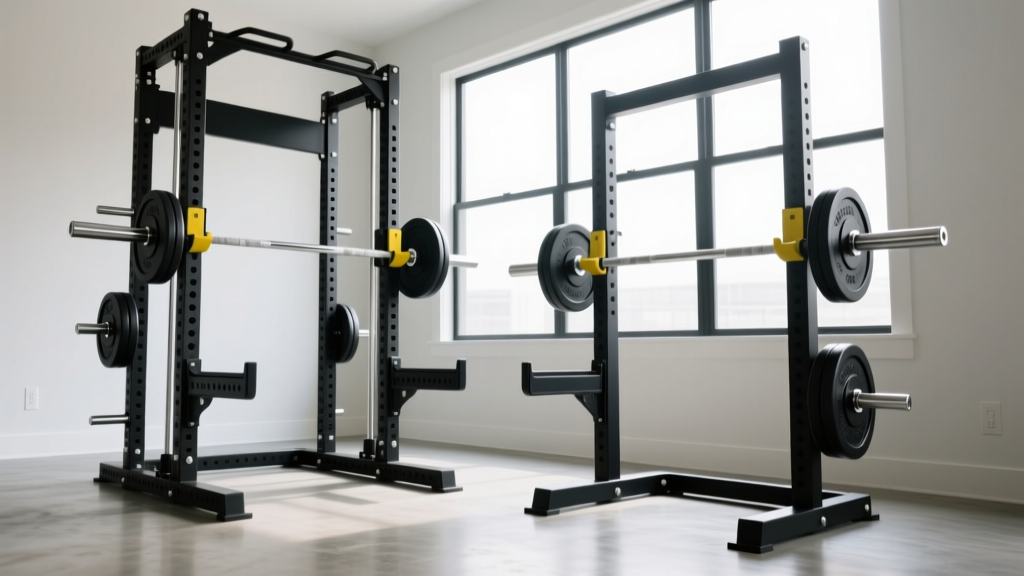
Power Rack vs Squat Stand: Setup for Single Dumbbell Deadlifts