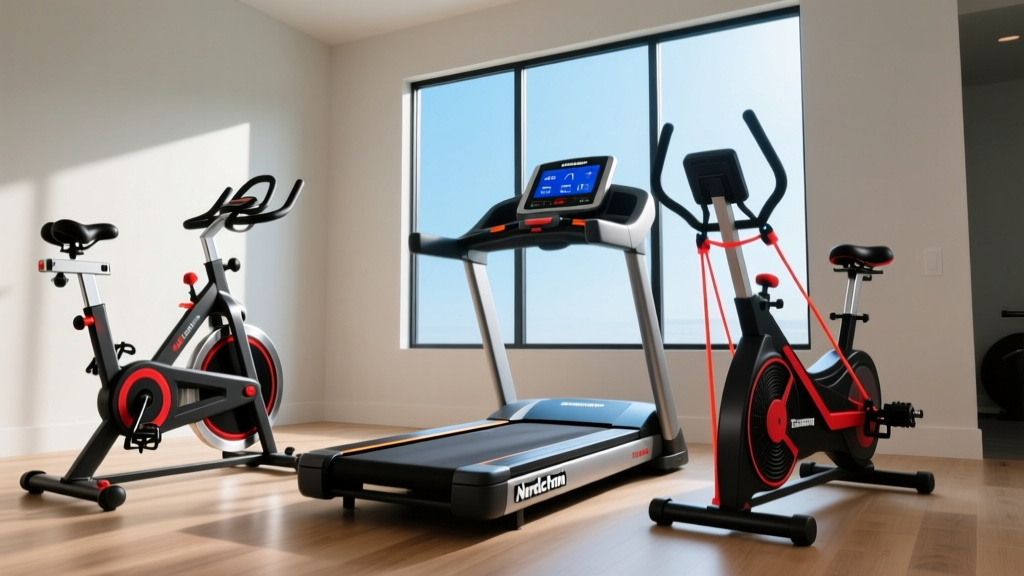
Air Bike vs Assault Bike: Treadmill Speeds to Mile Pace
Compare top air bikes with our hands-on review. Learn how to map air bike RPMs to treadmill speeds to mile pace for injury-proof cardio training.

For dedicated runners and triathletes, an injury that sidelines them from the pavement is a nightmare scenario. When plantar fasciitis, shin splints, or IT band syndrome strike, maintaining cardiovascular fitness without impact loading becomes the primary goal. This is where the air bike enters the chat. However, a common frustration among athletes is translating their running metrics to the bike. Specifically, figuring out how to convert treadmill speeds to mile pace equivalents on an air bike is crucial for prescribing accurate cross-training workouts.
In this 2026 hands-on review and comparison guide, we break down the biomechanics of air resistance cycling, review the top models on the market (including the Assault AirBike Pro and Rogue Echo Gen 2), and provide a definitive conversion matrix so you can simulate your track workouts from the saddle.
The Biomechanics: Why Air Bikes Mimic Running Best
Unlike magnetic resistance stationary bikes, air bikes utilize a massive front fan that creates exponential wind resistance. The harder you push and pull, the greater the resistance. This full-body engagement—requiring simultaneous concentric and eccentric contractions of the quads, hamstrings, lats, and chest—closely mirrors the systemic oxygen demand of running.
According to Mayo Clinic's guidelines on aerobic cross-training, matching the cardiovascular demand of your primary sport is essential for maintaining VO2 max during injury rehabilitation. Because air bikes require upper body pulling and pushing, they elevate the heart rate much faster than traditional recumbent or upright bikes, making them the premier tool for runners needing to simulate high-intensity interval training (HIIT) without the ground reaction forces that exceed 2.5 times body weight during running.
Hands-On Review: The Heavyweight Air Bikes of 2026
We tested the three most prominent air bikes in commercial and home gyms to determine which offers the best console metrics, durability, and feel for pace simulation.
1. Assault AirBike Pro (The Gold Standard)
Price: $999 | Drive: Belt | Weight Capacity: 350 lbs
The Assault AirBike Pro remains the benchmark for CrossFit boxes and elite endurance facilities. Upgrading from the older chain-driven Classic model, the Pro utilizes a belt drive that is 25% quieter and requires virtually zero maintenance. The console is where the Pro shines for runners: it allows you to toggle between Watts, RPM, and Heart Rate seamlessly. The seat is notably wide and plush, which is a blessing for long 45-minute tempo simulations, though some aggressive cyclists find it too bulky for out-of-the-saddle sprints.
2. Rogue Echo Bike Gen 2 (The Smooth Operator)
Price: $795 | Drive: Belt | Weight Capacity: 350 lbs
Rogue’s Echo Bike Gen 2 features a slightly heavier flywheel and a beefier steel frame, making it feel incredibly planted during max-effort sprints. The belt drive is whisper-quiet. However, the saddle is narrow and firm—more akin to a road bike seat. For runners translating treadmill speeds to mile pace over longer durations, you may need to swap the seat for a gel-padded alternative. The Rogue console is highly responsive but leans heavily on RPM and Wattage rather than distance metrics, which requires a mental shift for runners used to thinking in splits.
3. Titan Fitness Air Bike (The Budget Contender)
Price: $599 | Drive: Chain | Weight Capacity: 300 lbs
If you are outfitting a garage gym on a budget, Titan offers a capable clone of the original Assault Classic. It uses a chain drive, which means you will need to lubricate it monthly and adjust the chain tensioner to prevent skipping during high-wattage sprints. The console is basic, and the RPM sensor can lag slightly during rapid accelerations, making it less ideal for precise interval pacing, but it delivers the requisite metabolic stimulus for a fraction of the cost.
The Conversion Matrix: Treadmill Speeds to Mile Pace
The most critical hurdle for runners is the translation of metrics. You cannot directly map miles per hour (mph) on a treadmill to miles per hour on an air bike due to the lack of a fixed gear ratio and the exponential nature of wind resistance. Instead, sports scientists and endurance coaches map treadmill speeds to mile pace using RPM and Wattage targets based on Rate of Perceived Exertion (RPE) and heart rate zones.
Expert Tip: Air bike RPMs do not scale lineararily with energy output. Pushing from 70 RPM to 80 RPM requires significantly more wattage than pushing from 50 RPM to 60 RPM. Always use Watts or RPE to gauge effort, using RPM only as a secondary cadence guide.| Target Running Pace | Treadmill Speed (mph) | Air Bike RPM Target | Air Bike Wattage Target | RPE (1-10) |
|---|---|---|---|---|
| Recovery / Zone 1 | 5.5 - 6.0 mph | 45 - 52 RPM | 80 - 120 Watts | 3 - 4 |
| Easy / Zone 2 | 6.5 - 7.5 mph | 55 - 62 RPM | 130 - 180 Watts | 5 - 6 |
| Tempo / Zone 3 | 8.0 - 8.5 mph | 65 - 72 RPM | 190 - 240 Watts | 7 |
| Threshold / Zone 4 | 9.0 - 10.0 mph | 75 - 85 RPM | 250 - 320 Watts | 8 - 9 |
| VO2 Max / Zone 5 | 10.5+ mph | 90+ RPM | 350+ Watts | 10 |
Note: Wattage outputs vary based on athlete size and biomechanical efficiency. A 190 lb male triathlete will produce higher absolute wattages at the same RPM compared to a 130 lb female marathoner. Use the ExRx.net aerobic endurance testing protocols to establish your personal baseline wattage thresholds.
Programming: Simulating Track Workouts on the Bike
Once you understand how to map treadmill speeds to mile pace metrics onto the air bike console, you can replicate your favorite track sessions. Here is how to translate three staple running workouts:
- The 400m Repeat (Speedwork): On a track, this might take you 90 seconds at a 6:00/mi pace. On the air bike, perform 90 seconds at 85+ RPM (Zone 4/5), followed by 90 seconds of active recovery at 45 RPM. Repeat 8 times.
- The 20-Minute Tempo Run: Instead of focusing on distance, lock into a Wattage target that keeps your heart rate in Zone 3 (approx. 70-75 RPM). The goal is unbroken, steady-state output. Do not use the arms as heavily here; rely 70% on the legs to mimic running mechanics.
- The Long Sunday Run: For a 60-minute Zone 2 simulation, cap your RPM at 60. Use a heart rate monitor to ensure you do not drift into Zone 3, as the upper body engagement on an air bike can artificially inflate heart rate compared to outdoor running.
"The air bike is unmatched for preserving central cardiovascular adaptations during lower-extremity injuries. The key is coaching the athlete to chase heart rate and wattage zones, rather than obsessing over the arbitrary 'miles' displayed on the bike's console." — Endurance Coaching Consensus, NSCA
Maintenance and Real-World Failure Modes
As reviewers who have maintained fleets of cardio equipment, we must address the mechanical realities of air bikes. They are brutal machines that endure high torque and sweat corrosion.
- Chain Stretch (Budget/Classic Models): If you buy a chain-driven bike, expect to adjust the tensioner every 3 months. Failure to do so results in the chain skipping teeth on the sprocket during high-wattage sprints, which can cause severe pedal strike injuries.
- Pedal Spindle Bending: The crank arms on budget models (under $600) are often cast aluminum rather than forged steel. If you frequently stand up and sprint at 400+ watts, the pedal spindles can bend or strip the threads. We recommend upgrading to steel BMX-style pedals immediately.
- Sweat Corrosion on Consoles: The fan pushes air back onto the rider, but sweat still drips. Always use a towel over the console. We have seen multiple Assault Classic consoles short-circuit because sweat bypassed the membrane keypad.
Expert Verdict: Which Bike Wins for Runners?
If your primary goal is accurately simulating treadmill speeds to mile pace through precise wattage tracking and you want a maintenance-free experience, the Assault AirBike Pro ($999) is our top pick for 2026. Its console logic is intuitive, and the belt drive ensures that your wattage readings remain accurate over years of use without chain-slack interference.
However, if you prefer a road-bike saddle feel and want a slightly heavier, more stable footprint for aggressive sprint intervals, the Rogue Echo Gen 2 ($795) is an exceptional value that dominates the home-gym market.
Frequently Asked Questions
Can I use an air bike to improve my actual running speed?
Yes, but indirectly. Air bikes are phenomenal for building VO2 max and lactate clearance (central adaptations). However, they do not build the specific tendon stiffness and eccentric muscle damage resistance required for running (peripheral adaptations). Use the bike to maintain the engine, but you must return to running to condition the chassis.
Why does my heart rate spike higher on the air bike than on the treadmill?
Running primarily utilizes the lower body. The air bike demands continuous concentric and eccentric work from the lats, pecs, and shoulders. This increased muscle mass recruitment requires more cardiac output, resulting in a higher heart rate at lower perceived leg fatigue.
How do I clean the fan blades on my air bike?
Over time, dust and pet hair accumulate on the fan blades, reducing aerodynamic efficiency and altering the resistance curve. Unplug the console (if applicable), remove the front plastic shroud (usually 4-6 Phillips head screws), and use a vacuum with a brush attachment followed by compressed air to clear the fin grilles.
More gear to consider
All reviews
Treadmill Climbing Wall Setup: Noise Level Comparison & Install

METs on Treadmill Stress Test: Walking Pad vs Standard Treadmill

Under Desk Treadmill Review vs Assault Fitness Air Runner Treadmill
Beyond the ProForm Treadmill User Manual: 2026 Compact Cardio Trends

Under-Desk Treadmill Review: Why Are Curved Treadmills So Expensive?