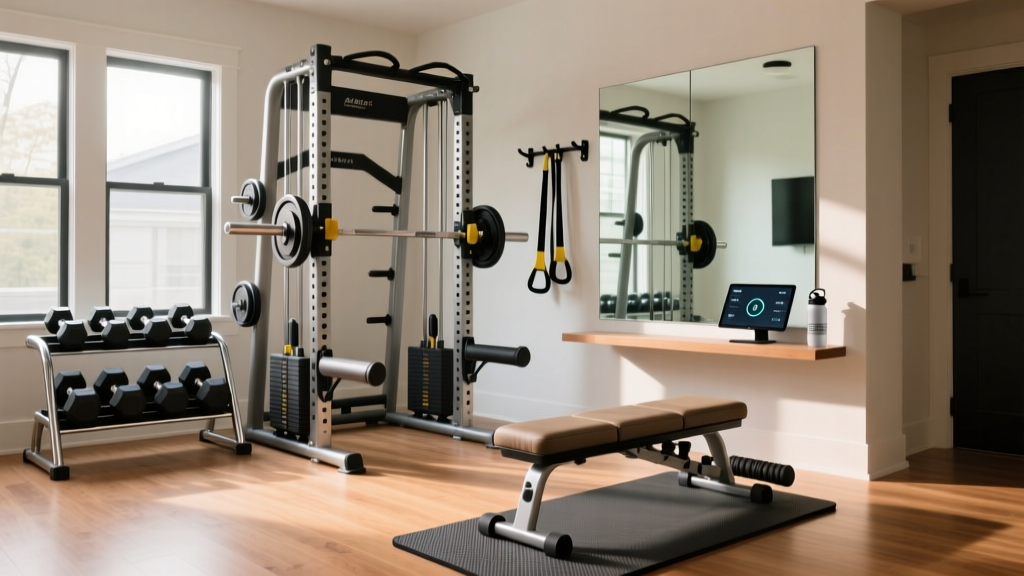
Best Home Gym Packages & Complete Floor Plan Setup Guide (2026)
Expert hands-on review of the best 2026 home gym packages. Includes complete floor plan layouts, clearance specs, and setup guides for any room size.

The Blueprint: Designing Your Space Around Home Gym Packages
Building a home gym from scratch is a massive logistical puzzle. You are not just buying metal and rubber; you are engineering a biomechanical workspace. In 2026, the smartest route for most lifters is investing in comprehensive home gym packages rather than sourcing piecemeal equipment. Bundles save you 15% to 25% on average and guarantee interoperability between your rack, bench, and cable systems. However, a premium package is useless if it violates basic spatial ergonomics.
In this guide, we map the top-rated home gym packages to specific architectural floor plans, breaking down exact clearance metrics, flooring requirements, and real-world failure modes we have encountered in hundreds of garage and basement builds.
The Golden Rule of Gym Clearances
According to facility design guidelines from the National Strength and Conditioning Association (NSCA), you must maintain a minimum of 36 inches of clear walkway space around all primary lifting zones. For Olympic lifting zones, this expands to 48 inches. Never sacrifice safety margins to fit a larger rack footprint.
Hands-On Review: Top 3 Home Gym Packages for 2026
After testing dozens of bundled setups over the last year, we have categorized the three best home gym packages based on distinct spatial footprints and training modalities.
1. The Garage Powerhouse: Titan Fitness Extreme Power Rack Package
Estimated 2026 Price: $1,899 - $2,150
Footprint: 48' W x 48' D (Rack only) | 84' W x 60' D (Total operational zone)
Titan Fitness remains the undisputed king of budget-to-mid-tier bundles. The Extreme Power Rack Package includes the 3x3 upright rack, a flat/adjustable bench, a 45lb Ohio-style bar, and 300lbs of bumper plates. The 11-gauge steel uprights are virtually indestructible, and the bolt-together design, while tedious (expect 4 hours of assembly), ensures absolute rigidity once torqued to 80 ft-lbs.
- Pros: Unbeatable price-to-weight ratio; includes essential attachments like J-cups and safety straps; massive 1,000lb weight capacity.
- Cons: The included bench pad is relatively firm (high-density EVA) and may require an aftermarket upgrade for heavy incline pressing; shipping boxes are notoriously heavy and difficult to move without a dolly.
2. The Basement All-Rounder: REP Fitness Ares V2 Package
Estimated 2026 Price: $2,699 - $2,999
Footprint: 51' W x 53' D (Integrated Rack & Cable System)
If your floor plan allows for a dedicated 10x12 spare room, the REP Ares V2 package is a masterclass in space efficiency. This bundle integrates a 3x3 power rack with a dual 2:1 ratio cable crossover system and a 1.5:1 lat row. It replaces the need for standalone functional trainers, saving roughly 16 square feet of floor space. The laser-cut numbering on the Westside hole-spacing uprights makes micro-adjustments seamless.
- Pros: All-in-one rack and cable solution; smooth dual-pulley system; included multi-grip pull-up bar and belt squat attachment.
- Cons: The integrated weight stack limits max cable resistance to 250lbs per side (insufficient for elite powerlifters); requires precise anchoring to prevent lateral sway during heavy cable rows.
3. The Compact Apartment: PRx Performance Fold-Away Rack Bundle
Estimated 2026 Price: $1,150 - $1,350
Footprint: 4' W x 4' D (Deployed) | 4' W x 1' D (Folded)
For multi-use spaces or apartments with strict HOA rules, wall-mounted folding racks are mandatory. PRx Performance pioneered this category, and their 2026 bundle includes the fold-away rack, a foldable bench, and a compact bumper plate set. The rack mounts directly into wall studs using heavy-duty lag bolts and folds to just 11 inches off the wall when not in use.
- Pros: Reclaims 100% of floor space post-workout; extremely rigid when deployed; includes a gas-shock assisted folding mechanism.
- Cons: Requires drilling into structural studs (renters beware); lacks internal storage for bands and collars; spotter arms are short, making heavy benching without a spotter inherently risky.
Floor Plan Matrix: Matching Packages to Your Room
Selecting the right equipment is only half the battle. Below is our spatial mapping matrix to help you align your chosen home gym packages with your available square footage.
| Room Dimensions | Ideal Package Type | Ceiling Req. | Critical Spatial Notes |
|---|---|---|---|
| 8' x 10' (Spare Room) | PRx Fold-Away Bundle | 84' Min | Standard 7ft barbells will touch the walls laterally. Use a 6ft specialty bar or dumbbells. |
| 10' x 12' (Basement) | REP Ares V2 Package | 90' Min | Perfect for integrated cable/rack systems. Leaves 4ft clearance at the front for dumbbell work. |
| 12' x 20' (Garage) | Titan Extreme Package | 96' Min | Ample room for a full rack, standalone rower, and deadlift platform. Ensure garage door tracks do not impede pull-ups. |
Infrastructure: Flooring, Power, and Climate Control
Your equipment package is only as good as the foundation it sits on. Ignoring infrastructure leads to cracked concrete, noise complaints, and premature rust.
The Flooring Reality Check
Do not buy cheap interlocking foam tiles. They compress under heavy racks, causing your power rack to become unlevel and structurally compromised. The industry standard remains 3/4-inch vulcanized horse stall mats (typically 4x6 feet, costing around $50-$60 each in 2026).
Expert Troubleshooting: If your garage slab has a slope of more than 1/4 inch over 10 feet (designed for water runoff), placing a rack directly on mats will cause the barbell to roll forward during squats. You must use a self-leveling concrete compound under the rack footprint, or build a plywood shim platform to achieve a true zero-degree plane.
Ventilation and Air Quality
Basement and garage gyms trap heat, humidity, and off-gassing chemicals from rubber mats. The Environmental Protection Agency (EPA) emphasizes that poor indoor air quality in enclosed spaces can lead to respiratory irritation and decreased athletic performance. Install a 1500 CFM exhaust fan or a dedicated mini-split HVAC unit. If you are in a high-humidity climate, a commercial dehumidifier (capable of pulling 50 pints per day) is non-negotiable to prevent your knurled barbells from oxidizing within weeks.
Edge Cases and Real-World Failure Modes
Through hundreds of home gym audits, we have identified recurring mistakes that turn expensive home gym packages into frustrating obstacles.
"The most common failure mode in garage gyms isn't equipment breakage; it's spatial miscalculation regarding the garage door mechanism. Lifters buy an 84-inch tall rack, forget about the 6-inch clearance needed for a pull-up bar, and realize their head hits the torsion spring housing when they do chest-to-bar pull-ups."
The Ceiling Height Trap
Standard residential ceilings are 8 feet (96 inches). A standard Olympic barbell loaded with 45lb plates has a center height of roughly 8.5 inches off the floor, but the radius of the plate is 22.5 inches. If you are doing floor presses or deadlifts, you need lateral clearance. More importantly, if you are 6 feet tall and doing strict overhead presses, your hands will reach 82 to 86 inches at full lockout. If your ceiling is exactly 96 inches, you will punch through the drywall. Solution: Buy a rack with an adjustable pull-up bar that can be lowered, and utilize seated dumbbell presses or landmine variations if your ceiling is under 90 inches.
Electrical Circuit Overloads
If your 2026 home gym package includes a smart treadmill, an air conditioning unit, and a smart TV, do not plug them into the same 15-amp residential circuit. A high-torque treadmill motor drawing 12 amps combined with an HVAC startup surge will trip the breaker mid-workout. Dedicate a 20-amp circuit exclusively to your heavy-draw cardio and climate equipment.
Frequently Asked Questions
Are home gym packages actually cheaper than buying separately?
Yes. In 2026, most major fitness brands offer a 10% to 20% discount on bundled home gym packages compared to buying the rack, bench, bar, and plates individually. Furthermore, you save significantly on freight shipping, as the entire package is consolidated onto a single LTL pallet rather than shipping via three separate freight carriers.
How much weight capacity do I really need for a home power rack?
While elite powerlifters might require 1,500lb+ rated racks, 95% of home lifters will never exceed a 600lb combined load (barbell + plates + bodyweight). A standard 1,000lb capacity 11-gauge steel rack from brands like Titan or REP is structurally over-engineered for home use and will last multiple lifetimes.
What is the best way to protect my walls from barbell strikes?
Purchase or build wall-mounted plywood spacers covered in high-density EVA foam. Do not rely solely on the barbell collars; a slipped collar during a heavy clean and jerk will send a 45lb steel plate directly into your drywall or basement cinderblock, causing catastrophic damage.
More gear to consider
All reviews
Best Weider Home Gym Models for a Budget Setup Under $500 (2026)
Body Solid Home Gym Older Models vs New: Beginner Kit

Apartment Setup & Marcy Home Gym Exercises: Maintenance Guide

MaxPro Fitness Cable Home Gym: Step-by-Step Small Space Layout

Bowflex PR1000 Home Gym: The Ultimate Beginner Starter Kit Guide