
Hoist Chest Press Machine & Pec Deck Maintenance Guide
Master the upkeep of your Hoist chest press machine and pec deck. Learn pivot bearing care, cable tensioning, and lubrication for maximum longevity.

The Biomechanics of Wear: Linear Press vs. Rotational Pec Deck
When managing a commercial or high-end home gym, understanding the mechanical distinctions between your equipment is the first step toward effective longevity planning. A standard linear hoist chest press machine (such as the popular ROC-IT series) relies heavily on UHMW polyethylene guide rods and linear bearings to manage vertical or slightly angled weight stack movement. In contrast, a Hoist pec deck and butterfly machine (like the PF-5022 or the CL-2500 cable crossover/pec deck combo) introduces complex rotational forces. The butterfly arms pivot on sealed radial ball bearings or heavy-duty bronze bushings, enduring immense lateral torque during peak concentric contractions.
Because the rotational mechanics of a pec deck place asymmetric stress on pivot points and cable routing pulleys, maintenance protocols must diverge from standard linear press care. Neglecting the pivot bearings on a butterfly machine leads to the dreaded 'clunk' at the apex of the movement, uneven pad wear, and eventual cable derailment. This guide provides an expert-level maintenance framework specifically tailored to the intersection of Hoist chest press mechanics and pec deck rotational systems.
Essential Tools and Lubricants for Hoist Equipment
Using the wrong lubricant is the fastest way to degrade the UHMW plastics and polyurethane pulleys found in modern Hoist equipment. Petroleum-based solvents will cause UHMW guide rod liners to swell and seize, while overly viscous greases will attract abrasive gym dust, turning your pivot points into grinding paste.
| Component | Recommended Lubricant/Cleaner | Application Frequency | Estimated Cost (2026) |
|---|---|---|---|
| Weight Stack Guide Rods | 100% Silicone Spray or PTFE Dry Lube | Monthly | $12 - $18 |
| Pec Deck Pivot Bearings | White Lithium Grease (for open bushings) / Sealed bearings require no lube | Bi-Annually | $10 - $15 |
| Aircraft Cables & Pulleys | PTFE Dry Cable Lube | Quarterly | $14 - $22 |
| Upholstery & Pad Seams | 303 Multi-Surface Cleaner (Non-acidic) | Weekly | $16 - $25 |
Critical Warning: The WD-40 Myth
Never use standard WD-40 on any Hoist chest press machine or pec deck guide rod. Standard WD-40 is a solvent and water displacer, not a long-term lubricant. It will strip existing factory lubricants, degrade UHMW plastic liners, and leave a sticky residue that attracts iron dust from the weight stacks, leading to catastrophic guide rod scoring.
Step-by-Step Pec Deck and Butterfly Pivot Maintenance
The butterfly mechanism on a Hoist pec deck relies on a central pivot shaft or dual independent pivot arms. Over time, the constant inward squeezing motion creates lateral play. If left unchecked, this play causes the cable to track improperly over the internal pulleys, leading to fraying.
- Inspect for Lateral Play: Grasp the center of the pec deck pad and push/pull laterally. Acceptable tolerance is less than 1/16th of an inch. If you feel a distinct 'clack' or excessive wobble, the internal sealed radial bearings or bronze bushings are compromised.
- Check Fastener Torque: Using a calibrated torque wrench, verify the main pivot bolts. Hoist typically specifies 45 to 55 ft-lbs for these high-stress structural bolts. If a bolt is loose, clean the threads, apply a fresh drop of Loctite 243 (medium-strength, oil-tolerant threadlocker), and re-torque to spec.
- Bearing Replacement Protocol: If the bearings are shot, you must order OEM Hoist replacement sealed bearings (usually 1-inch or 1.25-inch inner diameter, depending on the exact PF-series model). Use a blind bearing puller to extract the old bearing without damaging the aluminum or steel housing. Press the new bearing in using a hydraulic arbor press; never hammer a sealed bearing into place, as this will dent the internal race and cause immediate failure.
- Pad Alignment Verification: Once the pivot is secured, cycle the machine through its full range of motion. The pads should meet perfectly in the center without overlapping or leaving a gap greater than 1 inch. Misalignment indicates a bent pivot arm, usually caused by users dropping the weight stack abruptly at the end of a set.
Cable Routing and Swage Inspection
While a standard hoist chest press machine utilizes a relatively straight vertical cable path, the pec deck routes 3/16-inch diameter, 7x19 strand aircraft cable through multiple 90-degree and 180-degree pulley redirects to translate the rotational arm movement into linear weight stack lifting. This creates high friction points.
Identifying Cable Fatigue
Inspect the cable at every pulley redirect point. Look for 'bird-caging' (where the outer wire strands separate from the core) or broken individual filaments. According to the National Strength and Conditioning Association (NSCA) facility maintenance guidelines, any cable exhibiting more than three broken wires in a single lay length, or any signs of core extrusion, must be replaced immediately. A snapped pec deck cable under heavy load can whip outward, posing a severe laceration hazard.
Turnbuckle Tensioning
Hoist machines utilize factory-installed turnbuckles for cable tensioning. If the pec deck arms feel 'loose' at the start of the movement before the weight stack engages, the cable has stretched. Unload the weight stack, loosen the turnbuckle jam nuts, and twist the turnbuckle body to shorten the cable path until there is roughly 1/4 inch of slack when the arms are fully open. Retighten the jam nuts securely. Never over-tension, as this places constant pre-load on the weight stack guide rods and top pulley bearings.
Troubleshooting Common Hoist Pec Deck Failure Modes
Use this diagnostic matrix to quickly identify and resolve the most common issues encountered with Hoist butterfly and chest training equipment.
| Symptom | Probable Cause | Corrective Action |
|---|---|---|
| Grinding noise during arm rotation | Debris in pivot bushing or failed sealed bearing | Disassemble pivot arm, flush with brake cleaner, inspect race, replace bearing if pitted. |
| Cable slipping off internal pulley | Improper cable tension or worn pulley flange | Adjust turnbuckle tension; inspect nylon pulley flanges for deep grooves and replace if worn. |
| Weight stack rubbing the shroud | Worn UHMW guide rod liners or bent guide rod | Check rod plumb with a level; replace UHMW top-hat liners (approx. $20/pair). |
| Asymmetrical resistance (one arm harder) | Cable routing friction or seized redirect pulley | Trace cable path, spin all pulleys by hand, replace any pulley that does not spin freely. |
Upholstery and Pad Adjustment Longevity
The pads on a pec deck endure a unique sliding and shearing force as users press their forearms or hands into them while bringing the arms together. This shearing force puts immense stress on the perimeter stitching. To maximize the life of Hoist's commercial-grade vinyl upholstery, avoid bleach-based or highly acidic gym wipes. The acidity breaks down the nylon stitching threads over time, leading to seam blowouts. Instead, use a pH-neutral cleaner like 303 Multi-Surface Cleaner. Furthermore, ensure the pad adjustment pop-pins are fully seated. A partially engaged pop-pin will cause the pad bracket to wobble, eventually wallowing out the aluminum adjustment holes and requiring a complete bracket replacement.
Sourcing OEM Parts and Professional Servicing
While routine lubrication and tensioning can be handled by in-house gym staff, structural repairs and cable replacements should adhere to strict manufacturer guidelines. The International Health, Racquet & Sportsclub Association (IHRSA) strongly recommends utilizing certified technicians for any maintenance that involves load-bearing cable swaging or structural pivot realignment to mitigate liability risks.
For genuine replacement parts, always route your requests through the official Hoist Fitness Systems Support portal. Using third-party, non-OEM cables or undersized pivot bolts compromises the engineered safety margins of the equipment. By implementing this rigorous, biomechanically-informed maintenance schedule, facility owners can easily extend the operational lifespan of their Hoist chest press and pec deck units well past the 10-year mark, ensuring a smooth, safe, and highly effective training experience for every user.
More gear to consider
All reviews
Chest Press Machine Gym ROI: Dumbbell Fly vs Cable Fly Comparison
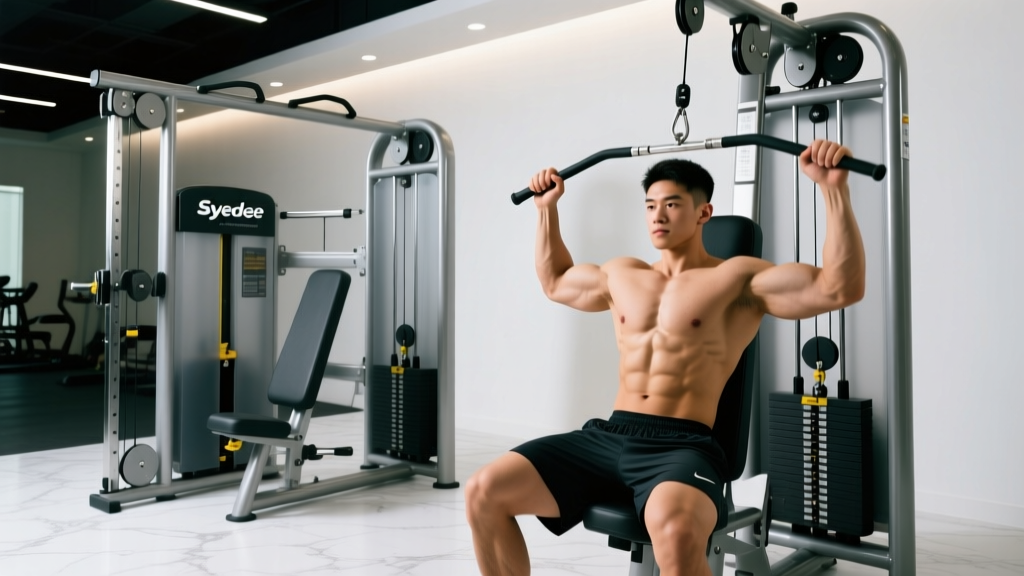
Syedee Chest Press Machine vs Cable Crossover: Chest Training Guide

Best Sports-Specific Hyperice Devices: Evidence-Based Recommendations by Body Region and Athletic Demand

Chest Press Machine Types Compared: 2026 In-Depth Buyer Guide
Incline, Decline, Flat Bench vs Chest Press Machine Maintenance
