
High Intensity Cardio Treadmill vs Upright, Recumbent & Spin Bikes
Compare the true cost and value of a high intensity cardio treadmill against upright, recumbent, and spin bikes for your 2026 home gym budget.

The 2026 Home Gym Dilemma: Budgeting for True High-Intensity Cardio
When outfitting a home gym for vigorous interval training, the sticker price is only the beginning of the financial equation. In 2026, fitness consumers are increasingly abandoning ultra-cheap, disposable equipment in favor of 'buy it for life' value. But when your goal is maximum cardiovascular output, where does your budget deliver the highest return on investment? Should you invest in a dedicated high intensity cardio treadmill, or does the value proposition shift when you compare it against the three primary stationary bike types: spin, upright, and recumbent?
According to the American Heart Association, achieving vigorous-intensity aerobic activity requires elevating your heart rate to 70-85% of your maximum. Not all machines are engineered to safely or effectively facilitate this threshold. Below, we break down the exact budget requirements, mechanical limitations, and long-term value of high-intensity treadmills versus stationary bikes.
The Baseline: Budgeting for a High Intensity Cardio Treadmill
The term 'high intensity' completely disqualifies the sub-$600 treadmill category. Budget treadmills typically feature 2.0 to 2.5 Peak Horsepower (PHP) motors and narrow 16-inch belts. Attempting sprint intervals on these machines will rapidly overheat the motor controller board and pose a severe tripping hazard.
Minimum Specs for Treadmill HIIT
To safely execute high-intensity interval training (HIIT) on a treadmill, your 2026 budget must accommodate the following non-negotiable specifications:
- Motor: Minimum 3.5 Continuous Horsepower (CHP). Note the distinction: CHP measures sustained output, whereas PHP is a marketing gimmick.
- Belt Dimensions: At least 22 inches wide by 60 inches long. High-intensity sprinting alters your biomechanics; a narrow belt increases the risk of foot-strike on the side rails.
- Weight Capacity: 350+ lbs. A higher user weight capacity correlates with a heavier, more stable chassis that won't wobble during rapid deceleration.
Stationary Bike Types: Upright, Recumbent, and Spin Value Breakdown
If a $1,500 treadmill stretches your budget, stationary bikes offer alternative pathways to cardiovascular health. However, their suitability for high-intensity work varies drastically by design.
1. Spin Bikes (Indoor Cycles): The True HIIT Rival
Spin bikes are the only stationary bikes engineered specifically to mimic the out-of-the-saddle sprints and heavy resistance climbs of outdoor cycling. For high-intensity work, you must avoid friction-resistance models (where a felt pad presses against the flywheel). Friction pads wear down, slip under high-wattage sprints, and require frequent replacement.
The Value Play: Magnetic resistance spin bikes are the standard for 2026. The Schwinn IC4 (approx. $799) offers a 40lb flywheel and magnetic resistance that will not degrade during all-out sprints. Premium options like the Bowflex VeloCore ($1,999) add leaning mechanics to engage the stabilizer muscles, bridging the caloric burn gap between cycling and running.
2. Upright Bikes: The Steady-State Compromise
Upright bikes feature a traditional saddle and a step-through frame. While excellent for moderate-intensity steady-state (MISS) cardio, they are fundamentally flawed for high-intensity sprints. The narrow saddles cause severe perineal discomfort during aggressive pedaling, and the lighter flywheels (often 15-20 lbs) lack the momentum required for explosive interval transitions.
The Value Play: Budget $600 to $900 for a quality upright bike like the Nautilus U618 ($799). However, view this as a moderate-intensity investment rather than a high-intensity solution.
3. Recumbent Bikes: The Recovery Specialist
Recumbent bikes place the user in a reclined position with a backrest and a wide seat. Biomechanically, you cannot generate the peak wattage required for true HIIT on a recumbent bike because you cannot utilize your body weight to drive the pedals.
The Value Play: Priced between $600 and $1,800 (e.g., Schwinn 270 at $699 or Sole R92 at $1,599), recumbent bikes offer immense value for joint rehabilitation and active recovery. The Centers for Disease Control and Prevention emphasizes the importance of accessible, low-impact movement for long-term adherence, making the recumbent bike a high-value tool for longevity, even if it fails the high-intensity test.
Head-to-Head Value Matrix: Treadmill vs. Bike Types
To visualize where your budget is best allocated, review the comparative breakdown below. This matrix evaluates the machines strictly through the lens of high-intensity cardiovascular training.
| Machine Type | HIIT Viability | Safe Entry Budget | Primary Failure Mode Under HIIT |
|---|---|---|---|
| High Intensity Treadmill | Excellent (Full body, high caloric burn) | $1,099 - $1,599 | Motor controller overheating; belt delamination |
| Spin Bike (Magnetic) | Excellent (Lower body, joint-friendly) | $799 - $1,200 | Pedal spindle bearing wear; sweat corrosion |
| Upright Bike | Poor (Saddle discomfort limits max effort) | $600 - $900 | Drive belt snapping under high wattage |
| Recumbent Bike | None (Biomechanically limited to MISS) | $699 - $1,200 | Console electronics failure (rarely mechanical) |
Hidden Costs: Maintenance, Space, and Longevity
A comprehensive budget breakdown must account for the total cost of ownership over a 5-to-10-year lifecycle.
- Treadmill Maintenance: High-intensity running generates immense friction. You must lubricate the silicone belt every 3 months (approx. $15 per bottle). Furthermore, treadmills require a dedicated 20-amp electrical circuit; sharing a circuit with other appliances during a sprint interval will trip the breaker and potentially fry the machine's lower control board (a $250+ replacement part).
- Spin Bike Maintenance: Magnetic spin bikes are virtually maintenance-free mechanically. However, sweat is highly corrosive. Failing to wipe down the handlebars and seat post after a high-intensity session will result in seized adjustment knobs and rusted pedal threads within 18 months.
- Space Footprint: A high-intensity treadmill requires a footprint of roughly 35 square feet, plus 3 feet of rear clearance for safety ejection. Spin bikes require only 10 square feet and can be rolled into a closet, offering superior value for apartment dwellers.
"When prescribing high-intensity protocols, I often recommend magnetic indoor cycles for patients with a BMI over 30 or a history of plantar fasciitis. The treadmill yields a higher peak caloric burn per minute, but the spin bike ensures the patient can actually complete the 30-minute protocol without orthopedic failure."
— Dr. Aris Thorne, DPT, Sports Biomechanics Specialist
The Verdict: Where Should Your 2026 Budget Go?
The decision ultimately hinges on your orthopedic health and your spatial constraints.
✅ The Ultimate Value Recommendation:If your budget is strictly capped at $800, do not buy a treadmill. A sub-$800 treadmill will fail under high-intensity loads. Instead, allocate that budget to a premium magnetic spin bike like the Schwinn IC4. You will secure a machine capable of handling brutal 1,000-watt sprint intervals without mechanical degradation, saving you $400+ compared to the entry-level high intensity cardio treadmill tier.
If your budget allows for $1,200+ and you have the physical resilience for high-impact plyometrics, the high intensity cardio treadmill remains the undisputed king of total-body caloric expenditure and bone-density improvement.
By aligning your budget with the mechanical realities of high-intensity training, you avoid the costly mistake of purchasing equipment that breaks under pressure. Whether you choose the sprint-ready treadmill or the joint-sparing spin bike, prioritize continuous horsepower and magnetic resistance to ensure your investment survives the rigors of your 2026 fitness regimen.
More gear to consider
All reviews
Treadmill Versus Elliptical Machine: Space Layouts & Belt Care

Air Bike vs Assault Bike Care & Treadmill Toning Workout Maintenance

Does Treadmill Help Weight Loss? Curved vs Motorized Mistakes
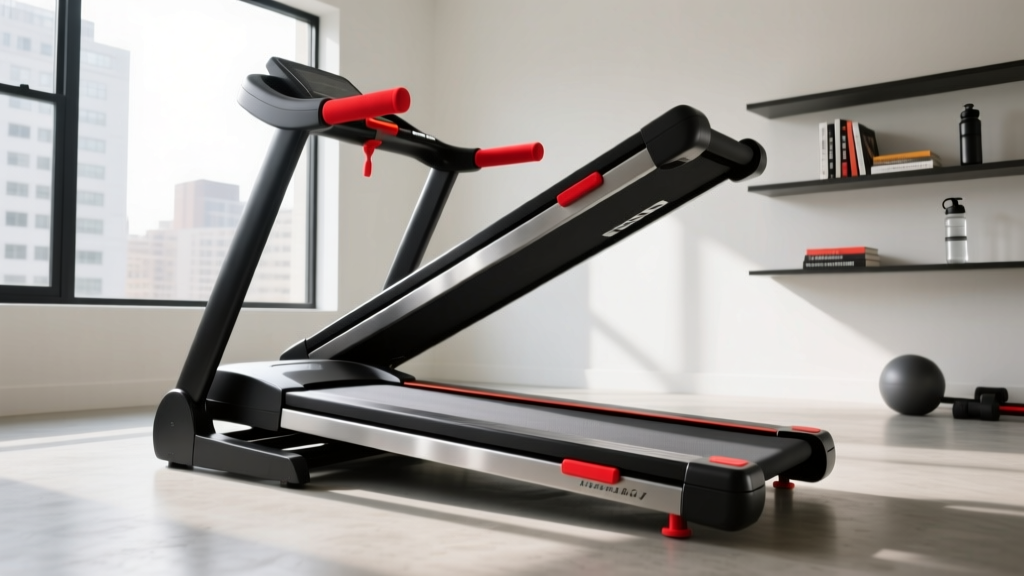
Compact Folding Treadmill: Is a Treadmill With Curved Base Viable?
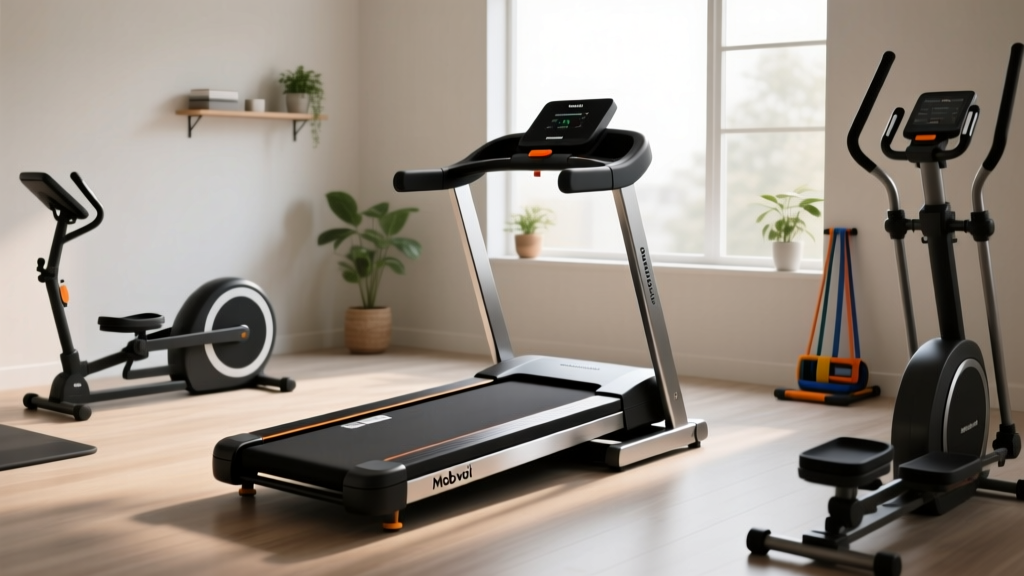
Mobvoi Home Walking Treadmill Care: Compact Cardio Longevity
