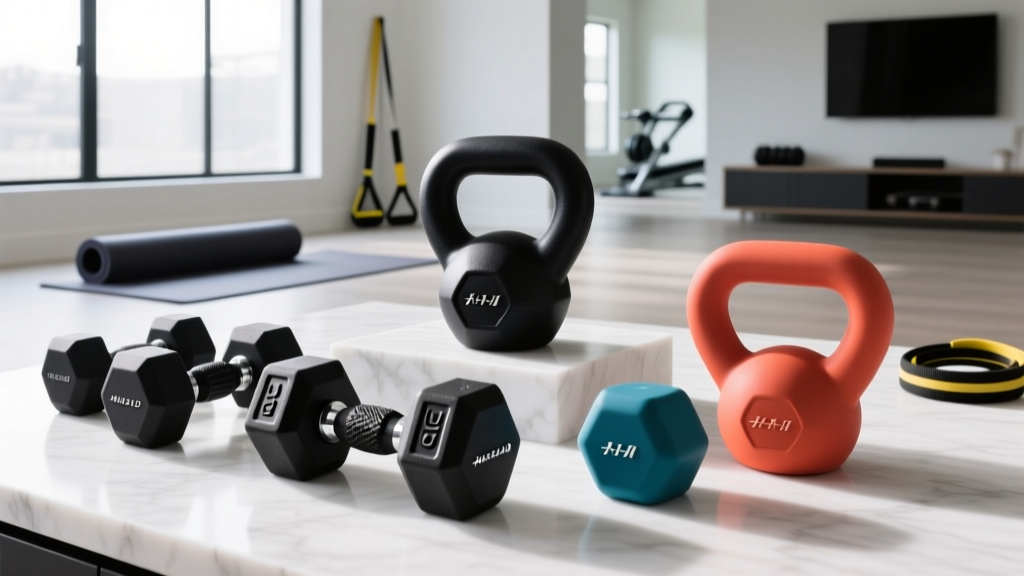
Rubber Hex vs Urethane: Best Around the World Workout Dumbbell
Compare rubber hex vs urethane dumbbells for space optimization. Find the best around the world workout dumbbell for your home gym layout and rack design.

The Spatial Reality of Home Gym Design
As home gym real estate premiums peak in 2026, lifters are no longer just buying equipment; they are managing spatial footprints. When selecting the ideal around the world workout dumbbell, most athletes focus solely on grip texture or knurling, entirely overlooking how the equipment's physical profile dictates the entire room's layout. The 'Around the World' exercise—a sweeping, wide-arc chest and shoulder flye performed supine on a bench—demands significant lateral clearance. If your dumbbells are overly bulky, or if your storage rack intrudes into your movement zone, the exercise becomes a hazardous game of bumper cars with your own gear.
This brings us to a critical crossroads in free weight procurement: Rubber Hex Dumbbells vs. Urethane Dumbbells. While both serve the fundamental purpose of progressive overload, their material density, geometric profiles, and long-term degradation rates profoundly impact your gym's floor plan, rack compatibility, and usable square footage. Let us break down the spatial and structural data to determine which option truly optimizes your training environment.
Biomechanics and the 'Around the World' Clearance Zone
To understand why dumbbell geometry matters, we must first map the biomechanical footprint of the around the world workout dumbbell movement. When lying on a flat or incline bench, a lifter with a 6-foot wingspan holding standard 50lb dumbbells requires a lateral clearance zone of approximately 92 inches (72 inches of wingspan + 10 inches per dumbbell head width).
If your dumbbell rack is positioned laterally to your bench, the protruding edges of traditional rubber hex dumbbells can easily encroach on this 92-inch zone. Urethane dumbbells, particularly those with compact, multi-sided, or rounded profiles, reduce the rack's overall depth and width, allowing you to push your storage further into the room's perimeter and preserve your lateral swing path.
Dimensional Analysis: Hex vs. Urethane Profiles
The core difference in spatial optimization lies in material density. Urethane is significantly denser than standard vulcanized rubber. This allows manufacturers to cast the same weight into a physically smaller mold. Below is a comparative analysis based on industry-standard 50lb models from leading 2026 manufacturers.
| Specification | Rogue Rubber Hex (50lb) | Rep Fitness Urethane (50lb) | Spatial Impact |
|---|---|---|---|
| Head Width | ~6.5 inches | ~5.8 inches | Urethane saves 0.7" per head, reducing linear rack footprint. |
| Overall Length | ~14.0 inches | ~13.2 inches | Shorter urethane handles reduce lateral clearance intrusion. |
| Shelf Depth Required | 10 - 12 inches | 8 - 10 inches | Hex corners overhang on shallow shelves; urethane sits flush. |
| Edge Profile | Sharp 90-degree corners | Rounded / 12-sided bevel | Hex edges snag on rack uprights during re-racking. |
While a 0.7-inch difference per head seems negligible, it compounds across a full 5-50lb set. On a standard 3-tier rack, a set of Rogue Rubber Hex dumbbells requires a minimum of 48 inches of linear width. Conversely, a compact Rep Fitness Urethane set can often be condensed onto a 34-inch to 36-inch rack, freeing up over a foot of valuable wall space for cable attachments or mirror installations.
Rack Compatibility and the 'Dead Space' Dilemma
Space optimization is not just about the floor; it is about volumetric efficiency on your storage racks. Rubber hex dumbbells feature flat sides designed to prevent rolling. However, this geometry creates a 'dead space' dilemma on tiered racks. If your rack features slightly angled or rounded cradles (common in budget-friendly 2026 rack models), the sharp 90-degree corners of hex dumbbells will not sit flush. They tilt, creating unstable stacking hazards and forcing you to leave empty gaps between pairs to prevent them from knocking each other off the shelf.
Urethane dumbbells, often cast in 12-sided polygonal shapes or smooth rounds with flat inner hubs, adapt seamlessly to both flat and angled rack shelves. Their beveled edges slide into tight cradles without snagging, allowing for high-density storage configurations that maximize vertical space rather than sprawling horizontally.
Material Degradation and Spatial Reorganization
A frequently ignored aspect of gym layout design is how equipment degradation forces spatial reorganization over time.
Warning: The Off-Gassing Footprint
Cheap rubber hex dumbbells are notorious for off-gassing volatile organic compounds (VOCs). In a tightly sealed, space-optimized garage gym, this odor becomes unbearable, forcing lifters to install active ventilation systems or leave doors open—effectively compromising the room's climate control and usable boundary. Urethane is an inert, odorless polymer that requires zero spatial compromise for ventilation.
Furthermore, rubber hex edges are prone to micro-chipping when dropped on hard flooring. Over a few years, this creates a debris field that requires constant sweeping and eventually alters the flat footprint of the dumbbell, causing it to wobble on flat benches during movements like the Around the World. Urethane absorbs kinetic shock and rebounds without structural tearing, maintaining its precise geometric footprint for decades.
Cost-Per-Square-Foot ROI Analysis
When evaluating free weights through a spatial lens, we must calculate the Cost-Per-Square-Foot (CPSF) of your gym layout.
- Rubber Hex Pricing: Typically ranges from $1.50 to $1.89 per pound. A 500lb set costs ~$850.
- Urethane Pricing: Typically ranges from $2.50 to $3.20 per pound. A 500lb set costs ~$1,350.
While the upfront cost of urethane is roughly 58% higher, the spatial savings are immense. By condensing your dumbbell rack from a 5-foot wide behemoth to a compact 3-foot tower, you reclaim 4 to 6 square feet of prime floor space. In urban environments or converted spare rooms where square footage is at a premium, paying an extra $500 to permanently reclaim enough space for a dedicated stretching zone or an additional piece of cardio equipment yields a massive functional ROI.
The 2026 Space-First Layout Protocol
To properly integrate your chosen dumbbells into a space-optimized layout, follow this step-by-step protocol endorsed by facility design principles:
- Map the Primary Movement Zone: Lay out your bench. Measure 48 inches outward from both sides to establish your 'Around the World' lateral clearance zone. Mark this with gym floor tape.
- Position the Rack Outside the Arc: Never place your dumbbell rack laterally within the 92-inch wingspan zone. Position it at the head or foot of the bench, or entirely outside the taped perimeter.
- Calculate Shelf Depth: If using Rubber Hex, ensure your rack shelves are a minimum of 12 inches deep to accommodate the corner overhang. If using Urethane, you can safely utilize 8-inch deep shelving, allowing the rack to sit flush against drywall.
- Implement Vertical Tiering: Utilize a 5-tier vertical rack rather than a 3-tier horizontal rack. Urethane's dense profile allows 5-tier racks to remain structurally stable without exceeding a 30-inch width, keeping your central floor plan completely open.
'Effective facility design requires mapping the kinetic envelope of the athlete before placing static storage. Equipment should never infringe upon the maximum anatomical extension of the intended exercises.' — National Strength and Conditioning Association (NSCA) Facility Guidelines
Final Verdict for the Space-Conscious Lifter
If your home gym boasts a sprawling 1,000-square-foot footprint and budget is your primary constraint, Rubber Hex Dumbbells remain a utilitarian workhorse. Their flat sides allow for basic floor storage, and their lower price point leaves room in the budget for other machines.
However, if you are engineering a highly optimized, high-density training space where every inch matters, Urethane Dumbbells are the undisputed champion. Their superior density shrinks the rack footprint, their beveled edges eliminate shelf dead-space, and their compact overall length ensures that your around the world workout dumbbell movements are never compromised by encroaching metal uprights. Invest in the spatial efficiency of urethane, and your home gym will feel twice as large without adding a single square foot of real estate.
More gear to consider
All reviews
Cast Iron vs Competition Kettlebells: Leg Workout Gym with Dumbbells

Olympic vs Standard Plates Setup & Alt Dumbbell Curl Guide

EZ Curl Bar vs Straight Bar & Dumbbell Step Up Muscles Worked

Beyond the Two Dumbbell Workout: Barbell Collar Troubleshooting

EZ Curl Bar vs Straight Bar Storage & One Arm Dumbbell Row Exercise
