Heavy-Duty Treadmill 600 lb Capacity vs Bikes: 2026 Budget Guide
Compare the cost of a heavy-duty treadmill 600 lb capacity vs upright, recumbent, and spin bikes. Find the best 2026 cardio value for heavy users.

The Plus-Size Cardio Dilemma: Treadmill vs. Bike Investments
When plus-size athletes, bariatric patients, or heavy-duty home gym builders begin their fitness journey, the immediate search often defaults to finding a heavy-duty treadmill 600 lb capacity. It makes logical sense: walking and running are foundational human movements. However, the financial, spatial, and biomechanical realities of bariatric treadmills force a necessary pivot for many buyers in 2026.
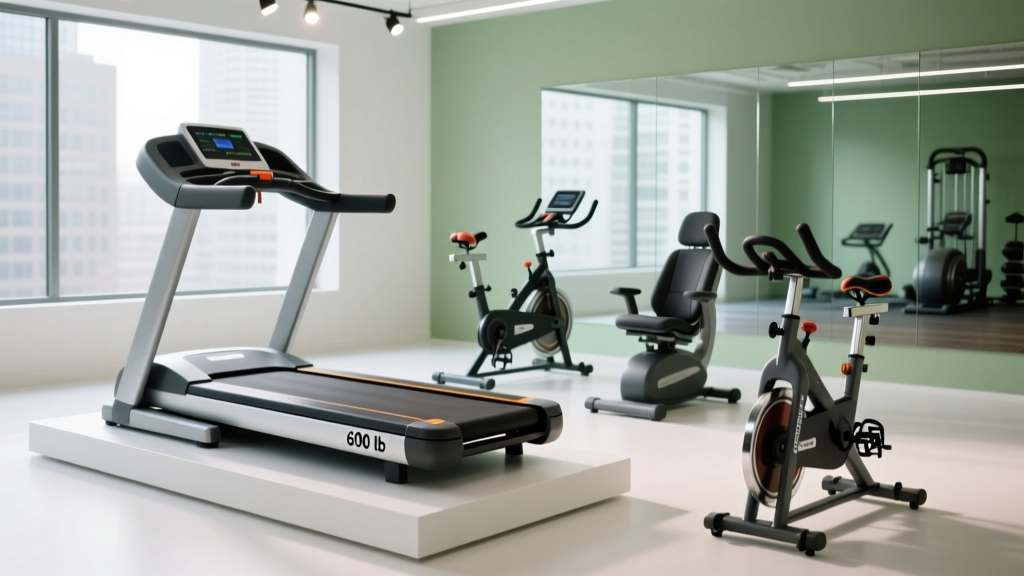
A true 600-pound capacity treadmill—such as specialized models from Life Fitness, Matrix, or TuffStuff—requires a massive 5.0+ HP continuous-duty motor, a heavily reinforced steel deck, and often a dedicated 20-amp electrical circuit. The price tag for these commercial-grade behemoths routinely ranges from $6,500 to over $9,500. Furthermore, the high-impact nature of running or even brisk walking on a treadmill can exacerbate joint issues common in heavier individuals.
This brings us to the ultimate value alternative: stationary bikes. By breaking down the three primary stationary bike types—upright, recumbent, and spin (indoor cycles)—we can determine if reallocating your budget away from a heavy-duty treadmill yields a better return on investment, superior joint health, and long-term adherence.
Expert Insight: According to the American Heart Association, low-impact modalities like cycling are highly recommended for individuals with joint comorbidities or those carrying excess weight, as they significantly reduce ground reaction forces compared to treadmill walking or running.Upright Stationary Bikes: The Space-Saving Budget Champion
Upright bikes mimic the geometry of a traditional outdoor bicycle. They engage the core and upper body slightly more than recumbent models due to the lack of a backrest, making them a solid middle-ground for cardiovascular conditioning.
Budget & Value Breakdown
- Average Price Range: $800 – $1,500
- Typical Weight Capacity: 300 lbs – 330 lbs
- Top 2026 Models: Sole SB700 ($1,199), Schwinn IC8 ($999)
From a pure budget perspective, upright bikes are the most accessible. You can secure a high-quality, magnetic-resistance upright bike with a 330 lb weight limit for under $1,000. This is roughly 15% of the cost of a 600 lb capacity treadmill. However, the value proposition drops if the user exceeds 330 lbs or suffers from lower back pain, as the forward-leaning posture and small saddle can cause discomfort during sessions longer than 30 minutes.
Failure Modes & Edge Cases
Cheaper upright bikes (under $500) often use friction resistance and chain drives. For heavier users generating high wattage, friction pads wear out rapidly, and chains stretch, leading to a jerky pedal stroke and expensive maintenance. Always insist on a belt drive and eddy-current magnetic resistance for a heavy-duty home setup.
Recumbent Bikes: Maximum Support and True Heavy-Duty Value
If you are abandoning the heavy-duty treadmill 600 lb capacity search due to budget or joint concerns, the recumbent bike is your ultimate fallback. Featuring a bucket-style seat with a full backrest and a step-through frame, recumbents eliminate the need to mount a high saddle and completely remove axial loading from the lumbar spine.
Budget & Value Breakdown
- Average Price Range: $1,400 – $2,800
- Typical Weight Capacity: 350 lbs – 400 lbs
- Top 2026 Models: Spirit Fitness CR800 ($2,299), Sole R92 ($1,999)
While a 400 lb capacity does not quite reach the 600 lb threshold of a bariatric treadmill, it accommodates the vast majority of plus-size users safely. The ROI on a $2,000 recumbent bike is phenomenal when you factor in adherence rates; users are far more likely to complete a 45-minute session in a supportive recumbent seat than hunched over an upright saddle or pounding a treadmill deck.
'The step-through design of a recumbent bike, which typically sits just 4 to 6 inches off the ground, drastically reduces the risk of mounting and dismounting falls, a critical factor for older adults or those with severe mobility restrictions.' — National Institute on Aging
Biomechanical Considerations
Recumbent bikes feature a wider Q-factor (the horizontal distance between the pedals). For heavier users with wider stances, this feels natural. However, if a user has narrow hips but carries weight in their midsection, the wide Q-factor can cause medial knee stress. Always test the pedal alignment before committing to a $2,000+ purchase.
Spin Bikes (Indoor Cycles): High-Intensity, Lower Weight Ceilings
Spin bikes are designed for performance, high cadence, and out-of-the-saddle climbing. They feature aggressive geometry, heavy flywheels (or advanced electromagnetic resistance systems), and minimal padding.
Budget & Value Breakdown
- Average Price Range: $1,400 – $2,500
- Typical Weight Capacity: 300 lbs – 350 lbs
- Top 2026 Models: Keiser M3i ($2,395), Peloton Bike+ ($2,495)
Spin bikes offer incredible value for athletic heavy users who want to perform High-Intensity Interval Training (HIIT). The Keiser M3i, for instance, uses an aerospace-grade aluminum frame that flexes under load, absorbing shock while maintaining a strict 300 lb safety limit. However, for users strictly seeking a heavy-duty, low-impact rehabilitation tool, spin bikes offer poor value due to their aggressive posture and lower weight ceilings.
Cost-Per-Pound Capacity Matrix (2026 Data)
To truly understand the value analysis, we must look at the cost per pound of supported weight capacity across these cardio machines.
| Machine Category | Est. 2026 Price | Max Weight Limit | Cost Per lb of Capacity | Joint Impact |
|---|---|---|---|---|
| Heavy-Duty Treadmill (600 lb) | $7,500 | 600 lbs | $12.50 / lb | High (Running) / Mod (Walking) |
| Recumbent Bike (High-Capacity) | $2,100 | 400 lbs | $5.25 / lb | Very Low |
| Upright Bike (Mid-Tier) | $1,000 | 330 lbs | $3.03 / lb | Low |
| Spin Bike (Performance) | $2,400 | 300 lbs | $8.00 / lb | Low (Seated) / Mod (Standing) |
Analysis: The recumbent bike offers the most balanced 'Cost Per Pound' ratio while simultaneously providing the lowest joint impact, making it the undisputed value champion for plus-size home gyms.
Hidden Costs: Maintenance, Subscriptions, and Infrastructure
When conducting a budget breakdown, the initial purchase price is only half the equation. The long-term operational costs of these machines vary wildly.
Treadmill Infrastructure
A heavy-duty treadmill 600 lb capacity requires significant home infrastructure. You will likely need an electrician to install a dedicated 20-amp circuit ($250–$400). Furthermore, treadmill decks require silicone lubrication every 3-6 months, and the continuous impact of heavy footfalls accelerates the degradation of the deck's phenolic coating, leading to a $400+ deck replacement every few years.
Bike Maintenance & Ecosystems
Stationary bikes are remarkably low maintenance. Magnetic resistance systems have zero physical contact points, meaning there is no friction dust to clean and no belts to tighten. The primary hidden cost in the bike category is software subscriptions. If you opt for a connected bike like the Peloton or NordicTrack, expect to pay $44/month ($528/year) for interactive programming. Standalone bikes like the Sole or Spirit models have zero mandatory subscription fees, preserving your long-term budget.
2026 Buyer's Decision Framework
- Choose the 600 lb Treadmill IF: You have a budget exceeding $7,000, possess a dedicated 20-amp circuit, require weight-bearing bone-density exercises, and your primary users are between 350-550 lbs.
- Choose the Recumbent Bike IF: You want the safest, most comfortable, and most cost-effective heavy-duty solution ($1,500-$2,500) for users up to 400 lbs, especially those with back pain or balance issues.
- Choose the Upright Bike IF: Space is severely limited, budget is strictly under $1,200, and the primary user is under 330 lbs.
- Choose the Spin Bike IF: The user is an athletic individual under 300 lbs seeking high-intensity interval training and performance metrics.
Final Verdict: Where Should Your Fitness Budget Go?
The allure of a heavy-duty treadmill 600 lb capacity is undeniable for those seeking commercial-gym authenticity at home. However, the CDC Physical Activity Guidelines remind us that consistency and adherence are the true drivers of cardiovascular health, not the sheer size of the motor.
For the vast majority of heavy users in 2026, reallocating that $7,500 treadmill budget into a premium $2,200 recumbent bike (like the Spirit CR800), a set of adjustable dumbbells, and a high-quality heart rate monitor yields a vastly superior home gym ecosystem. You eliminate the joint-pounding impact, bypass the need for electrical rewiring, and secure a machine with a 400 lb capacity that will reliably serve your cardiovascular needs for a decade or more.
More gear to consider
All reviews
The Eschelon Treadmill Motor Size & Horsepower Guide

Air Bike vs Assault Bike vs ProForm 625 Treadmill
Spirit Fitness XT685 Treadmill Noise & Cardio Machine Sound Guide

Is Running on a Treadmill Better Than Running Outside? Folding Reviews

Merach T12 Treadmill vs. Top Compact Runners: 2026 Buying Guide