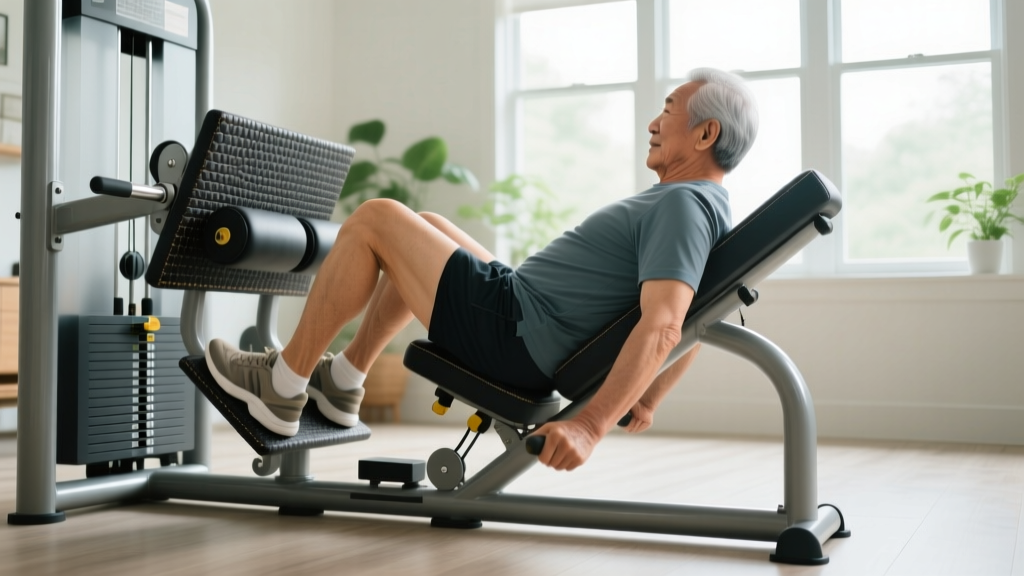
Hack Squat vs Leg Press: Installation & Leg Press Machine Placement
Compare hack squat and leg press installation requirements. Learn optimal leg press machine placement, floor loading, and spatial clearances for your gym.

The Spatial Reality: Hack Squat vs. Leg Press Footprints
When outfitting a commercial facility or a high-end home gym in 2026, the debate between a hack squat and a 45-degree leg press often centers on biomechanics and quad isolation. However, as facility designers and the National Strength and Conditioning Association (NSCA) frequently note, the true bottleneck is physical infrastructure. Both machines are massive, heavy, and require precise spatial geometry to operate safely. Before purchasing, you must evaluate your ceiling height, floor load-bearing capacity, and operational clearance.
| Specification | 45° Leg Press (e.g., Body-Solid SLP500G) | Hack Squat (e.g., Prime Fitness Elite) |
|---|---|---|
| Machine Footprint (L x W) | 83" x 34" | 86" x 40" |
| Machine Height | 63" | 84" |
| Minimum Ceiling Requirement | 72" (6 ft) | 96" (8 ft) + 6" clearance |
| Operational Clearance Zone | 120" x 96" | 108" x 108" |
| Average 2026 Price Range | $2,800 - $4,500 | $3,500 - $6,200 |
Mastering Leg Press Machine Placement
Proper leg press machine placement is arguably more complex than positioning a hack squat due to the 45-degree sled trajectory and the requirement for plate loading on both sides. If you place the machine too close to a wall, you will not have the physical clearance to slide 45lb bumper plates or standard iron plates onto the horns.
Wall Clearance and Plate Loading Geometry
A standard Olympic plate has a diameter of 17.7 inches. When loaded on a leg press, the sleeves extend outward. For optimal leg press machine placement, you must maintain a minimum of 24 inches of lateral clearance on both the left and right sides of the sled. This allows the user or a spotter to comfortably grip the plates and slide them off without scraping the drywall or adjacent equipment racks.
Subfloor Deflection and Point Loads
A fully loaded commercial leg press can exceed 1,500 lbs. Unlike a squat rack where the load is distributed across four wide feet, a leg press concentrates massive downward and forward shear force onto its front base rails. According to structural guidelines referenced by flooring experts at Rubber Flooring Inc, installing heavy sled equipment on second-story residential floors or engineered wood joists without reinforcement risks catastrophic deflection.
⚠️ Structural Warning: Never install a 45-degree leg press on a raised wooden subfloor without consulting a structural engineer. For concrete slab installations, use a minimum of 3/4-inch vulcanized rubber flooring to absorb acoustic shock and distribute the point load across a wider surface area.Hack Squat Installation Realities
While leg press machine placement is constrained by width and floor loading, the hack squat is constrained by verticality and user clearance. The Prime Fitness Elite Hack Squat stands at 84 inches tall. If your gym is located in a basement with a standard 8-foot (96-inch) ceiling, you have only 12 inches of overhead clearance.
The Overhead Plate Problem
Users loading plates onto the top horns of a hack squat need to lift the plates above the machine's frame. If the ceiling is too low, users will strike the ceiling tiles, HVAC ducts, or exposed joists when loading 45lb plates. For a hack squat, your ceiling must be at least 108 inches (9 feet) to allow for safe plate loading and unloading.
Track Alignment and Leveling
Hack squats rely on linear bearings or heavy-duty wheels gliding along steel rails. If your concrete floor has even a 1-degree slope, the sled will bind, causing uneven wear on the bearings and a jerky, unsafe descent. During installation, you must use a 4-foot laser level across the base rails. If the floor is uneven, use steel machinist shims under the base pads before torquing the anchor bolts to 90 ft-lbs.
Step-by-Step Installation Walkthrough
Whether you are setting up a leg press or a hack squat, the assembly process requires precision to ensure longevity and user safety. Follow this workflow to avoid the most common 2026 installation failure modes.
- Subfloor Preparation: Clean the concrete slab. Lay down your 3/4" rubber flooring, ensuring seams are tightly butted. Do not anchor the machine through the rubber; instead, cut out the rubber where the base pads will sit so the machine rests directly on the concrete, preventing the rubber from compressing and shifting over time.
- Base Rail Positioning: Move the main frame into your pre-measured operational clearance zone. Use a laser level to verify that the base rails are perfectly horizontal on both the X and Y axes.
- Drilling and Anchoring: Using a rotary hammer drill with a 1/2" masonry bit, drill 4-inch deep holes through the pre-drilled anchor holes in the base pads. Blow out the concrete dust with compressed air.
- Setting the Wedge Anchors: Insert 1/2" x 3-3/4" zinc-plated wedge anchors. Tighten the nuts with a torque wrench to the manufacturer's specification (usually 75-90 ft-lbs). This prevents the machine from 'walking' forward during heavy eccentric leg press repetitions.
- Sled and Track Lubrication: Before attaching the weight horns, wipe down the linear guide rails with a degreaser to remove factory shipping cosmoline. Apply a thin layer of PTFE (Teflon) dry lubricant or white lithium grease to the tracks to ensure frictionless sled travel.
Biomechanical & Maintenance Considerations
Beyond the physical installation, understanding how these machines interact with the human body dictates their long-term utility in your gym. As detailed in the exercise biomechanics databases maintained by ExRx, the hack squat forces the user into a fixed, rigid spinal position, which heavily targets the vastus lateralis and rectus femoris but places higher shear stress on the lumbar spine and knees if foot placement is too low on the platform.
Conversely, the 45-degree leg press allows for varied foot stances (high and wide for glute/hamstring bias; low and narrow for quad sweep) without compressing the spine. From a maintenance perspective, leg presses require more frequent track cleaning because the 45-degree angle encourages chalk, dust, and skin cells to fall directly onto the lower guide rails. Hack squats, being vertical, tend to shed debris away from the primary bearing paths.
Final Verdict on Facility Planning
If your facility has low ceilings (under 9 feet) and narrow corridors, the 45-degree leg press is the superior choice, provided your floor can handle the concentrated shear load. If you have high ceilings, ample square footage, and want to minimize the footprint while maximizing quad isolation, the hack squat is the definitive winner. Always prioritize exact measurements and structural integrity over aesthetic layout preferences when finalizing your equipment roster.
More gear to consider
All reviews
Syedee Leg Press Machine vs 45° Sleds: 2026 Buying Guide

Cable Leg Attachment Maintenance vs Leg Press Machine Exercise Gear
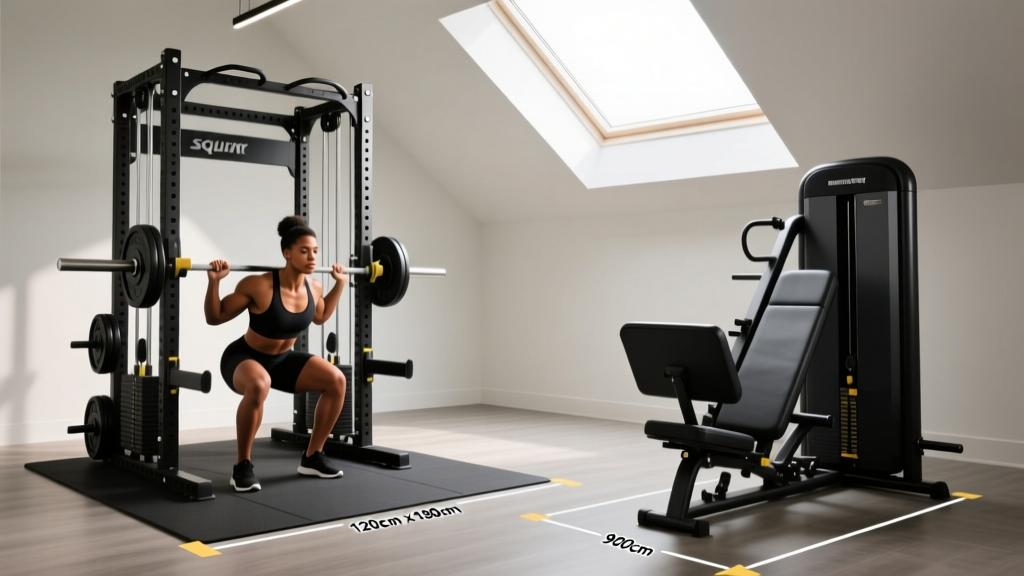
Optimizing Gym Layouts: Squat Racks & Leg Press Workout Machines

Best Equip Recovery for Guns: Tactical Recoil Management Systems Tested and Rated

Hip Thrust Pads vs Precor Leg Press Machine: 2026 Budget