
Gold's Gym Trainer 720 Treadmill: Small Space Review & Maintenance
Reviewing the Gold's Gym Trainer 720 treadmill for small spaces. Learn essential maintenance, belt lubrication, and longevity tips for this folding model.

Gold's Gym Trainer 720 Treadmill: Small Space Review & Maintenance Guide
When outfitting a compact apartment or a tight home gym corner, the Gold's Gym Trainer 720 treadmill frequently emerges as a go-to budget option. Typically priced between $298 and $349, this folding machine promises an accessible entry point into indoor cardio. However, budget-friendly treadmills operating in confined spaces face unique environmental and mechanical stresses. Without a rigorous maintenance care routine, the lifespan of a compact treadmill can plummet from a potential seven years down to just eighteen months.
In this comprehensive review and maintenance guide, we evaluate the Gold's Gym Trainer 720 specifically through the lens of small-space living. We will break down its spatial footprint, identify the most common failure modes associated with tight-room environments, and provide exact, actionable maintenance protocols to maximize the longevity of your investment.
The Spatial Reality: Reviewing the Trainer 720 Footprint
Before diving into maintenance, it is crucial to understand how the Trainer 720 interacts with a small room. The machine features an 18-inch by 50-inch running belt, which is adequate for walking and light jogging but restrictive for runners with a long stride. When fully deployed, the frame measures approximately 63 inches long and 28 inches wide.
Small Space Clearance Warning
According to safety guidelines highlighted by Consumer Reports, you must maintain a minimum of 24 inches of clearance behind any treadmill. In small apartments, users often push the rear of the Trainer 720 flush against a wall. This is a critical error. Not only does it create a severe fall hazard, but it also starves the motor hood of proper airflow and creates a vacuum effect that pulls wall dust directly into the machine's lower electronics.
When folded, the Trainer 720 reduces its footprint to roughly 28 x 28 inches, with a height of 58 inches. The manual folding mechanism relies on a pull-pin latch rather than a hydraulic soft-drop system found on premium models. This mechanical simplicity is actually a benefit for longevity, provided the hinge points are properly maintained.
Motor Thermals and Dust Mitigation in Tight Quarters
The Gold's Gym Trainer 720 is equipped with a 2.0 Peak HP motor (which translates to roughly 1.25 to 1.5 Continuous HP). In a spacious, climate-controlled room, this motor handles daily walking with ease. However, small spaces often suffer from poor air circulation and higher ambient temperatures.
When the ambient room temperature exceeds 75°F (24°C), the motor's internal thermal sensor works overtime. If the motor overheats, the lower control board will trigger a thermal shutdown to prevent a fire, resulting in a sudden stop. To prevent this and extend the motor's lifespan, you must manage the dust and debris that naturally accumulate in small, multi-use rooms.
Step-by-Step Motor Hood Cleaning
- Frequency: Every 3 months (or monthly if you have shedding pets in the apartment).
- Step 1: Unplug the treadmill from the wall outlet. Never clean internal components while the machine is live.
- Step 2: Remove the three to four Phillips-head screws securing the front plastic motor hood.
- Step 3: Use a vacuum with a soft brush attachment to gently remove dust from the motor casing and the lower control board. Do not use compressed air, as it can force conductive dust deeper into the circuit board soldering.
- Step 4: Wipe the drive belt with a dry microfiber cloth to remove rubber residue.
Belt Lubrication: The Secret to Control Board Survival
The single most common cause of death for budget treadmills like the Trainer 720 is a fried lower control board. This failure is almost always the downstream result of a dry running belt. When the belt lacks lubrication, friction increases. The motor must draw significantly more amperage to pull the belt over the deck. This amp-spike travels back to the control board, eventually blowing the capacitors or the MOSFETs.
Proper lubrication is non-negotiable. According to maintenance experts at WikiHow's Treadmill Maintenance Guide, using the wrong type of lubricant can degrade the belt material and void your warranty.
Critical Warning: Never use WD-40, household silicone sprays, or petroleum-based oils on your Gold's Gym Trainer 720. These contain solvents that will dissolve the adhesive backing of the running belt. You must use 100% pure liquid silicone treadmill lubricant.
The 1-Ounce Lubrication Protocol
- Lift the edge of the running belt on one side until you can reach the center of the deck.
- Apply exactly 0.5 ounces of 100% silicone lubricant in a zig-zag pattern down the center of the deck.
- Repeat on the other side for a total of 1 ounce.
- Turn the treadmill on to 2.0 MPH and let it run unoccupied for 5 minutes to distribute the silicone evenly.
- Timing: Perform this every 130 miles of use, or every 3 months, whichever comes first.
Folding Hinge and Frame Integrity
Because the Trainer 720 is marketed as a folding treadmill for small spaces, the pivot hinge undergoes significant mechanical stress. The machine weighs approximately 130 pounds; every time you fold or unfold it, the pivot bolt bears the brunt of that shifting leverage.
Every six months, inspect the main pivot bolt located where the uprights meet the base deck. Using an adjustable wrench, ensure the nut is snug. Do not overtighten, as this will crush the nylon spacer sleeve and cause the folding mechanism to bind. Additionally, apply a single drop of white lithium grease to the pivot shaft to prevent metal-on-metal wear and eliminate the squeaking noise that frequently develops in budget folding models after year one.
Routine Maintenance Schedule Matrix
To keep your Gold's Gym Trainer 720 running smoothly in a compact environment, adhere to this structured maintenance matrix:
| Cadence | Maintenance Task | Tools Required |
|---|---|---|
| Weekly | Wipe down console and handrails to prevent sweat corrosion. | Microfiber cloth, mild soap |
| Monthly | Check belt alignment and tension; vacuum around the motor hood exterior. | 6mm Allen wrench, vacuum |
| Quarterly | Apply 1 oz of 100% silicone lubricant under the running belt. | Pure silicone lube bottle |
| Bi-Annually | Inspect and tighten the main folding pivot bolt; grease the hinge shaft. | Adjustable wrench, white lithium grease |
| Annually | Remove motor hood and perform deep internal dust extraction. | Phillips screwdriver, soft brush vacuum |
Troubleshooting Common Trainer 720 Failure Modes
Even with meticulous care, budget treadmills can exhibit quirks. Here is how to troubleshoot the most common issues specific to the Gold's Gym Trainer 720 platform (manufactured by Icon Health & Fitness).
Belt Slipping During Use
If the front roller spins but the belt hesitates when you step on it, the belt tension is too loose. Locate the two rear roller adjustment bolts at the very back of the treadmill. Using a 6mm Allen wrench, turn both the left and right bolts clockwise by exactly one-quarter (1/4) turn. Test the machine. Never adjust one side more than the other, or you will derail the belt entirely.
The Dreaded 'E1' Error Code
An E1 error on the Trainer 720 console indicates a speed sensor failure. The machine cannot read the RPMs of the motor. In 90% of small-space cases, this is not a broken sensor, but rather a misaligned magnet. Unplug the machine, remove the motor hood, and locate the small magnet glued to the front roller pulley. Ensure it is sitting flush. Next, check the speed sensor (a small black plastic piece with a wire pointing at the magnet). It should be exactly 1/8th of an inch away from the magnet. Gently bend the sensor bracket to close the gap if it has vibrated out of place.
Final Verdict: Longevity in a Compact Footprint
The Gold's Gym Trainer 720 treadmill remains a highly viable folding treadmill for small spaces, provided the user respects its mechanical limitations. It is not designed for heavy sprinting or marathon training blocks; it is a walking and light-jogging machine. By strictly adhering to a 3-month silicone lubrication schedule, maintaining proper rear-wall clearance for thermal management, and keeping the folding hinge greased, you can easily push this budget machine past the 5-year mark. In the realm of compact home fitness, proactive maintenance is the ultimate currency.
More gear to consider
All reviews
Cardio Noise Comparison & HillRunner Com Treadmill Pace Conversions

Curved Manual vs Motorized: Echelon Stride 6 Treadmill Showdown
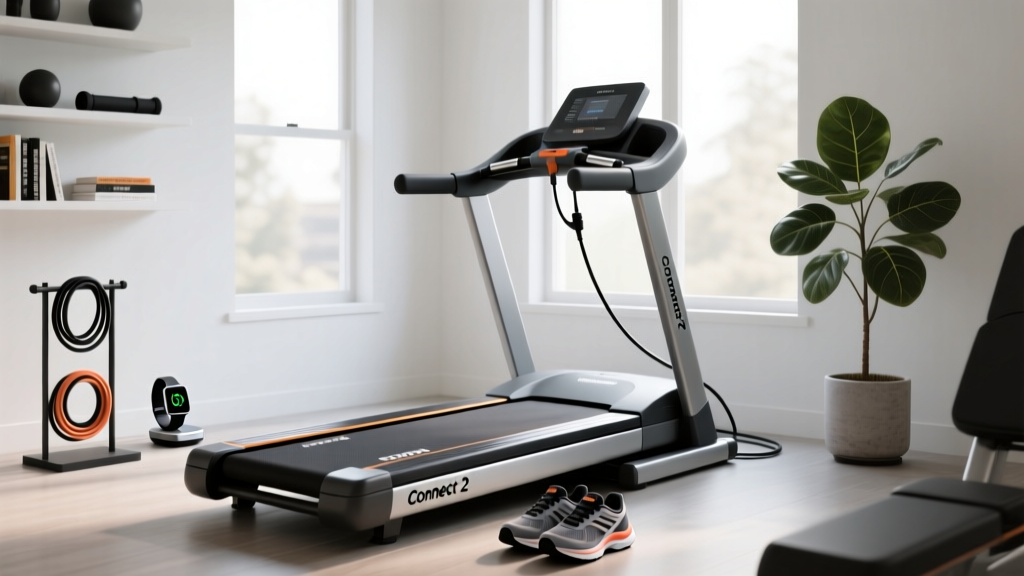
Connect 2 Sport Treadmill Setup & Cardio Machine Noise Comparison

Under Desk Treadmill Review: Office Picks & ProForm Treadmill Fix

Under Desk Treadmill Review: Care and Technogym Myrun Treadmill Tips
