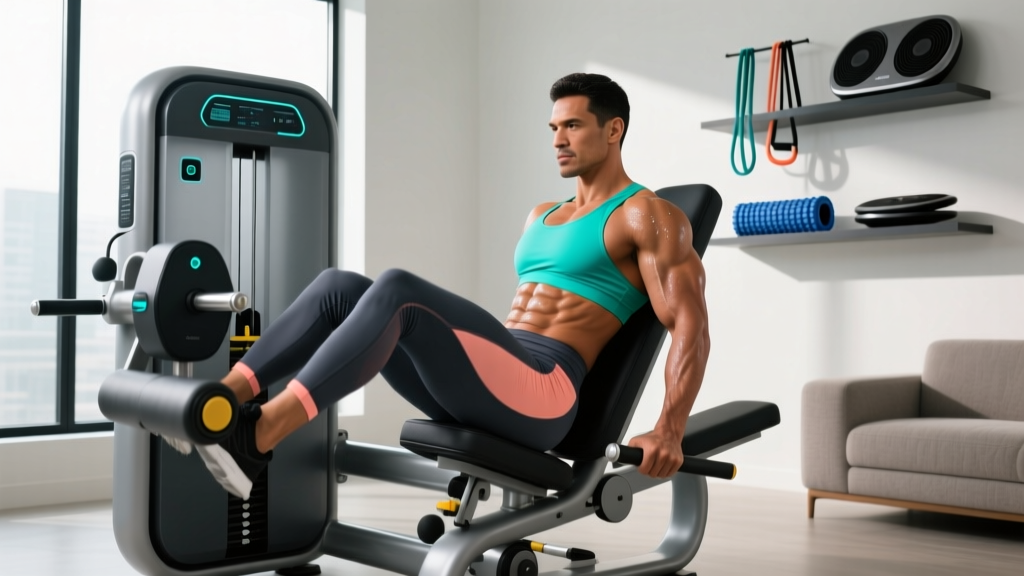
2026 Market Trends: Glute Gear & Leg Press Machine Muscles
Explore 2026 glute equipment trends, market data, and how specialized gear redefines traditional leg press machine muscles for maximum lower-body hypertrophy.

The Biomechanical Pivot: Beyond Standard Leg Press Machine Muscles
Historically, commercial gyms relied heavily on the 45-degree linear sled to develop the lower body. However, when exercise scientists analyze the standard leg press machine muscles engaged during this movement, the quadriceps femoris (specifically the vastus lateralis and rectus femoris) undeniably takes the primary load. While the gluteus maximus acts as a synergist, its activation is severely limited by the lack of deep hip flexion and the fixed torso angle. According to kinesiology data published by the National Strength and Conditioning Association (NSCA), maximizing gluteal hypertrophy requires exercises that place the hip in deep flexion under load, a biomechanical demand that traditional leg presses simply cannot fulfill.
This biomechanical reality has triggered a massive shift in the 2026 fitness equipment market. Facility owners and home gym builders are no longer satisfied with the secondary glute engagement provided by legacy equipment. Instead, they are investing in specialized glute training machines designed to isolate the posterior chain, effectively redefining how we approach lower-body programming and moving past the limitations of standard leg press machine muscles targeting.
2026 Glute Equipment Market Data & Adoption Rates
The transition from generic lower-body machines to targeted glute equipment is reflected in recent procurement data. Club Industry's 2026 equipment reports indicate that specialized hip-dominant machines have seen a 42% year-over-year growth in commercial facility placements, outpacing traditional leg extension and curl machines.
| Equipment Category | Avg. Commercial Cost (2026) | Glute Activation (% MVC) | Market Share Growth (2024-2026) |
|---|---|---|---|
| Traditional 45-Degree Leg Press | $3,200 - $4,500 | 35% - 45% | -12% (Declining) |
| Plate-Loaded Hip Thrust Machines | $3,800 - $5,500 | 85% - 95% | +68% (Surging) |
| Angled Cable Kickback Systems | $2,900 - $4,200 | 70% - 80% | +45% (Growing) |
| Glute-Ham Developers (GHD) | $1,100 - $1,800 | 50% - 60% | +22% (Steady) |
Category Breakdown: The Premier Glute Machines of 2026
To understand where the market is heading, we must examine the specific engineering innovations driving this trend. The following equipment categories represent the pinnacle of 2026 glute-focused design.
1. Plate-Loaded Hip Thrust Machines
The hip thrust has cemented itself as the gold standard for glute isolation, and manufacturers have responded with highly engineered, plate-loaded solutions. The Nautilus Glute Drive and the Prime Fitness Hip Thrust remain the dominant forces in commercial spaces. Unlike improvised barbell setups, these machines feature a pivoting axis aligned precisely with the user's hip joint, eliminating the sheer force on the lumbar spine.
- Pad Engineering: Top-tier 2026 models utilize a 65A durometer high-density foam pad wrapped in marine-grade vinyl, preventing the pelvic bruising common with standard barbells.
- Lockout Mechanisms: Magnetic safety catches and ratcheting belt systems allow users to safely fail a rep without requiring a spotter, a critical feature for heavy 1RM testing.
- Footprint & Pricing: Expect to pay between $4,200 and $5,500 for commercial variants. They require a minimum 8x10 foot operational footprint to accommodate plate loading and user entry.
2. Angled Cable Kickback Systems
While hip thrusts build raw mass, cable kickbacks target the gluteus maximus in its fully shortened position. The Arsenal Strength Glute Kickback has revolutionized this movement by incorporating a 15-degree decline chest pad. This specific angle prevents lumbar hyperextension—a common failure mode in traditional standing cable kickbacks—by forcing the user into a locked, neutral spine position.
"The integration of selectorized weight stacks with a 2:1 resistance ratio in modern kickback machines allows for micro-loading in 2.5-pound increments, which is essential for progressive overload in isolation movements without compromising form."
3. Glute-Ham Developers (GHD) & Belt Squats
For posterior chain synergy, the GHD remains irreplaceable. The Rogue Fitness Westside GHD 2.0 ($1,295) features an infinitely adjustable footplate and a split-pad design that accommodates varying femur lengths. When paired with a belt squat machine (which loads the hips vertically without spinal compression), facilities can offer a comprehensive glute and hamstring stimulus that entirely bypasses the limitations of standard leg presses.
Facility Procurement Framework: Budgeting for Glute Gear
2026 Lower-Body Budget Allocation Strategy
For facility owners allocating a $50,000 lower-body equipment budget in 2026, the traditional 70/30 split (quad-dominant vs. posterior chain) is obsolete. We recommend the following optimized framework based on current member usage analytics:
- 40% Dedicated Glute Isolation ($20,000): Invest in one premium plate-loaded hip thrust machine and one selectorized angled kickback system.
- 30% Hybrid Posterior Chain ($15,000): Procure two GHDs and one belt squat attachment for functional hamstring and glute-medius work.
- 30% Traditional Compound ($15,000): Maintain one high-quality 45-degree leg press and one hack squat for quad-dominant overload and athletic conditioning.
Installation Edge Cases and Facility Requirements
Procuring specialized glute equipment introduces unique logistical challenges that buyers must anticipate. First, floor load capacity is a major concern. A fully loaded commercial hip thrust machine can exert over 1,200 pounds of localized downward force during a heavy eccentric drop. Facilities operating on upper floors or suspended slabs must verify a minimum live load capacity of 100 PSF (pounds per square foot) and utilize 3/4-inch horse stall mats to disperse the impact.
Second, shipping and rigging require precise planning. Machines like the Prime Fitness Hip Thrust ship in custom wooden crates weighing upwards of 850 pounds. Standard LTL (Less Than Truckload) carriers will only deliver to the loading dock. Buyers must budget an additional $400 to $800 for inside delivery and rigging services to move the equipment onto the gym floor safely.
Future Outlook: What Lies Beyond 2026
As we look toward the latter half of the decade, the integration of smart resistance technology into glute-specific machines is the next frontier. Prototype models currently in beta testing feature electromagnetic resistance curves that automatically adjust to match the user's strength profile—providing accommodating resistance that is heaviest at peak glute contraction and lighter in the stretched position. Until these digital systems become commercially viable at scale, the heavy iron and precision-engineered pivots of today's mechanical glute machines remain the undisputed kings of lower-body hypertrophy.
More gear to consider
All reviews
Hip Thrust Pads and the Leg Press Machine for Seniors: Budget Guide

Hack Squat vs Leg Press Install & Leg Press Machine Feet Placement

Leg Extension & Curl Machine Guide: Adding a Sitting Leg Press Machine

Standing vs Seated Calf Raises: Linear Leg Press Machine Mistakes
Framework Homegym Compare Essentials Build a Leg-Strong Training Space
