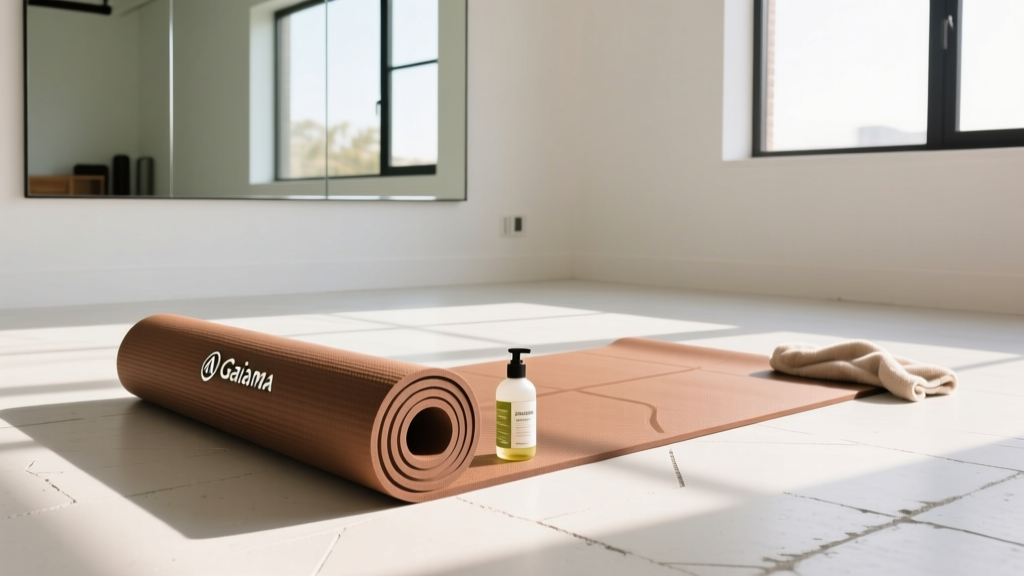
The Ultimate Gaiam Yoga Mat Cleaning & Thickness Setup Guide
Master your Gaiam yoga mat cleaning and initial setup. Compare thickness, materials, and grip to optimize your practice and extend mat lifespan.

Phase 1: Unboxing and the Initial 'Installation' Setup
Treating a new yoga mat like a piece of fitness equipment that requires proper 'installation' is the secret to long-term durability and optimal grip. When you unbox a new Gaiam yoga mat, you are not just unrolling foam; you are dealing with manufactured polymers that require an initial curing and break-in process before they are ready for rigorous use.
Most closed-cell PVC and TPE mats straight from the factory are coated with a microscopic lipid layer. This is a release agent used during the steel-mold manufacturing process to prevent the mat from sticking to the machinery. If you skip the setup phase and jump straight into a sweaty Vinyasa flow, you will experience dangerous slipping.
The Sea-Salt Break-In Protocol
To properly 'install' your new closed-cell Gaiam mat (such as the Gaiam Essentials or Premium lines), follow this 48-hour setup walkthrough to strip the factory film and open the micro-texture of the surface:
- The Salt Scrub: Sprinkle a generous, even layer of coarse sea salt across the entire top surface of the unrolled mat.
- Moisture Activation: Lightly mist the salt with warm water using a spray bottle. Do not soak the mat; you only want the salt to become slightly damp and abrasive.
- Manual Exfoliation: Using a clean, damp microfiber cloth, scrub the mat in tight circular motions for 3 to 5 minutes. The salt acts as a gentle abrasive to lift the lipid release agent without damaging the polymer structure.
- The Cure: Wipe the mat down with a fresh, damp cloth to remove all salt residue. Leave the mat unrolled in a well-ventilated, shaded room for 24 to 48 hours to allow the polymer to off-gas and fully cure.
Decoding Gaiam Materials: PVC vs. TPE vs. Polyurethane
Understanding the material science of your mat is critical for both performance and maintenance. Gaiam produces mats across three primary polymer categories, each with distinct grip mechanics, environmental footprints, and lifespans. According to Gaiam's official equipment specifications, selecting the right material dictates how the mat will handle sweat, friction, and compression over time.
| Gaiam Model Line | Material | Thickness | Estimated Price (2026) | Best Use Case |
|---|---|---|---|---|
| Gaiam Essentials | PVC (Closed-Cell) | 5mm | $22 - $28 | Beginners, gentle Hatha, budget setups |
| Gaiam Premium Print | PVC (Closed-Cell) | 6mm | $35 - $48 | Restorative yoga, joint support, carpeted floors |
| Gaiam Eco-Friendly | TPE (Thermoplastic Elastomer) | 4mm - 5mm | $30 - $42 | Travel, latex allergies, moderate sweating |
| Gaiam Performance Dry-Grip | Polyurethane / Natural Rubber | 5mm | $78 - $95 | Hot yoga, Bikram, heavy perspiration |
Material Grip Mechanics
PVC (Polyvinyl Chloride): Offers a 'tacky' grip that relies on surface friction. It is highly durable and resistant to tearing, but it traps sweat on the surface, making it slippery during hot yoga unless you use a microfiber towel overlay.
TPE (Thermoplastic Elastomer): A lighter, more eco-friendly alternative to PVC. TPE provides a softer, more cushioned feel but lacks the sheer tensile strength of PVC. It is prone to flaking if exposed to direct UV light or harsh chemical cleaners.
Polyurethane/Rubber (Open-Cell): The gold standard for grip. The polyurethane top layer acts like a sponge, absorbing sweat to create a vacuum-like grip against your skin. The natural rubber base provides heavy, floor-anchoring traction.
Thickness & Stability Matrix: Finding Your Match
Thickness is not just about comfort; it fundamentally alters your biomechanical stability in standing and balancing postures.
- 3mm to 4mm (Travel & Stability): Ideal for Ashtanga and advanced Vinyasa. The thinner profile ensures your wrists and ankles remain close to the floor, maximizing proprioception and preventing ankle rolling during Warrior III or Half-Moon poses.
- 5mm (The Versatile Standard): The industry sweet spot. It provides enough high-density foam to protect the patella during kneeling lunges, while maintaining a firm enough base for Tree Pose.
- 6mm to 8mm (Restorative & Therapeutic): Best for Yin yoga, Pilates floor work, or practitioners with sensitive knees and wrists. However, the extra foam compression can make rapid transitions and single-leg balances feel 'wobbly' due to the unstable surface.
The Definitive Gaiam Yoga Mat Cleaning Walkthrough
Establishing a proper gaiam yoga mat cleaning routine is non-negotiable for hygiene and material preservation. A study on fitness equipment hygiene highlights that yoga mats can harbor significant bacterial loads if not sanitized correctly, especially in shared studio environments. For detailed hygiene protocols, refer to Healthline's comprehensive guide on yoga mat sanitation.
Your cleaning methodology must adapt to the specific material of your Gaiam mat.
Daily Post-Practice Wipe Down (All Materials)
After every session, you must neutralize the acidic pH of your sweat, which breaks down polymer chains over time.
- The Solution: Mix 1 part distilled white vinegar with 4 parts filtered water in a spray bottle. Add exactly 2 drops of tea tree oil for its natural antimicrobial properties.
- The Application: Mist the mat lightly (6 to 8 sprays). Do not drench the mat.
- The Wipe: Use a dedicated, lint-free microfiber cloth to wipe the surface in long, unidirectional strokes.
- Drying: Hang the mat over a shower rod or drying rack. Never roll a damp mat, as this creates a breeding ground for mildew in the core.
Monthly Deep Clean Protocol (Closed-Cell PVC & TPE Only)
Once a month, your mat requires a deeper extraction of body oils and dead skin cells.
- Lay the mat flat in a bathtub or large shower stall.
- Mix 1 tablespoon of mild, fragrance-free dish soap (like Dawn Free & Clear) into a gallon of warm water.
- Submerge a soft sponge into the solution and gently massage the surface of the mat in circular motions.
- Rinse thoroughly with a detachable showerhead until the water runs completely clear and no soap bubbles remain.
- Press a dry, absorbent bath towel into the mat to extract excess water. Never wring or twist the mat, as this will cause internal tearing.
Troubleshooting Common Setup & Grip Failures
Problem: My PVC mat is still slippery after the salt scrub.
Solution: You likely have a buildup of body lotions or residual factory wax. Create a paste using baking soda and warm water. Apply it to the slippery zones, let it sit for 10 minutes to break down the lipids, and wipe clean with a damp cloth. Ensure you are washing your hands and feet before practice to prevent transferring sebum to the mat.
Problem: My TPE mat is flaking and peeling at the edges.
Solution: TPE is highly sensitive to UV degradation and extreme temperature fluctuations. If you leave your mat in the trunk of your car during summer or dry it in direct sunlight, the elastomers will become brittle and micro-fracture. Unfortunately, once TPE flakes, the structural integrity is compromised, and the mat must be replaced. Always store TPE mats in a cool, dark, climate-controlled environment.
Problem: My natural rubber mat smells intensely like tires.
Solution: This is the natural off-gassing of isoprene compounds. To accelerate the off-gassing process without damaging the rubber, wipe the mat with a 50/50 solution of water and lemon juice, then leave it in a well-ventilated garage or shaded porch for 72 hours. Avoid using harsh chemical deodorizers like Febreze, which will clog the open-cell pores and destroy the mat's sweat-absorbing grip capabilities.
'The longevity of a yoga mat is dictated not by its initial price point, but by the rigor of its maintenance. A $90 polyurethane mat ruined by essential oils will fail faster than a $25 PVC mat that is properly salt-scrubbed and vinegar-wiped.' — Fitness Equipment Maintenance Standards, 2025
By treating your Gaiam yoga mat setup as a deliberate installation process and adhering to material-specific cleaning protocols, you ensure maximum grip, joint protection, and equipment longevity for years of dedicated practice.
More gear to consider
All reviews
Exercise Ball Size Guide & Can You Put a Yoga Mat in the Washing Machine?

Battle Rope Length & Thickness Guide: Don't Waste Your Yoga Mat Bread
Sheepskin Yoga Mat Setup & Foam Roller Selection Walkthrough

Manduka Yogitoes Skidless Yoga Mat Towel: Mat Thickness & Grip Mistakes

Foam Roller Density Guide: Plus, Are Yoga Mats FSA Eligible?
