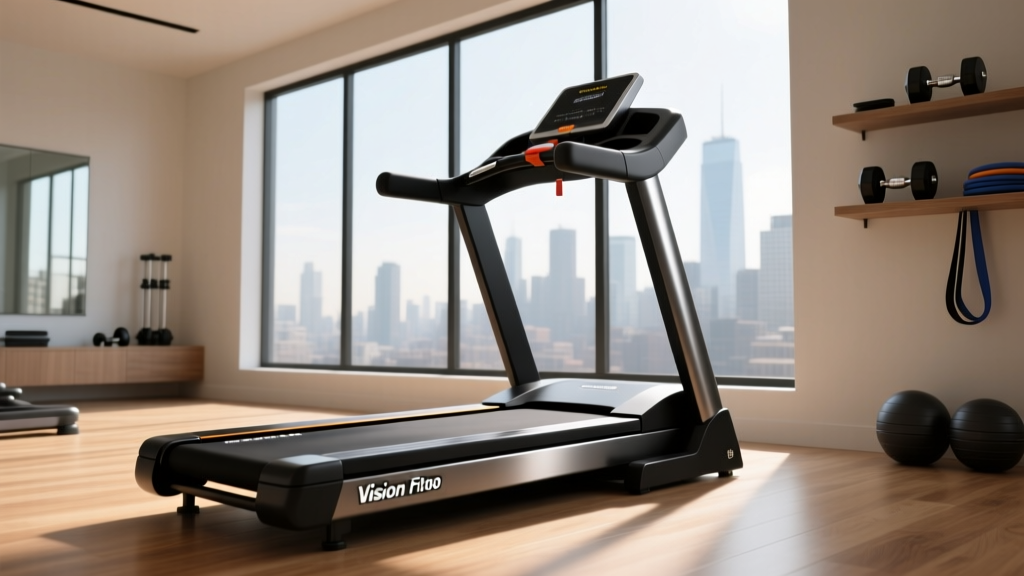
FreeMotion T11.3 Reflex Treadmill vs Compact Portable Cardio
Compare the FreeMotion T11.3 Reflex Treadmill footprint against compact portable cardio options. Master home gym space optimization and layout design.

The Spatial Dilemma: Commercial Anchors vs. Portable Fleets
Designing a home gym in 2026 requires a ruthless approach to spatial economics. When optimizing a layout, you generally face a binary choice: dedicate a massive, permanent footprint to a commercial-grade anchor piece, or deploy a fleet of compact portable cardio equipment that adapts to your living space. The FreeMotion T11.3 Reflex Treadmill represents the pinnacle of the 'anchor' philosophy, while ultra-compact foldables represent the 'portable fleet' approach. Understanding the exact dimensional trade-offs, safety clearances, and cost-per-square-foot metrics of these two paradigms is critical for avoiding costly layout failures.
Footprint Analysis: FreeMotion T11.3 Reflex Treadmill
The FreeMotion T11.3 Reflex is a light-commercial beast engineered for biomechanical perfection, but it demands serious spatial commitment. The unit itself measures approximately 83.5 inches long, 35.5 inches wide, and 64 inches high, weighing in at a staggering 340 pounds. However, the physical dimensions of the machine are only half the equation.
According to safety guidelines published by the U.S. Consumer Product Safety Commission (CPSC), treadmills require a minimum of 24 inches of clearance on each side and a critical 72 inches of unobstructed egress space behind the belt to prevent severe friction-burn injuries in the event of a fall. When you factor in this mandatory safety envelope, the FreeMotion T11.3 Reflex requires an operational footprint of roughly 42 square feet. Furthermore, its 4.0 HP motor and heavy steel frame mean it is a permanent installation; moving it for daily cleaning or room reconfiguration is a two-person job.
The Compact Portable Cardio Roster (2026 Space-Savers)
If 42 square feet is a luxury your floor plan cannot afford, the modern portable cardio market offers sophisticated alternatives that sacrifice zero digital connectivity for a fraction of the spatial cost. Here is how the top compact contenders stack up against the FreeMotion anchor.
1. KingSmith WalkingPad R2
The WalkingPad R2 revolutionized under-desk and micro-space cardio. When unfolded, it offers a 44-inch by 17-inch running surface. Its true genius lies in its 180-degree folding hinge, collapsing the unit down to 51.2 x 22 x 6 inches. Weighing just 62 pounds, it can be rolled on its integrated transport wheels and slid under a standard bed frame or stood vertically in a closet corner, reducing its storage footprint to less than 2 square feet.
2. CityRow Go Max
Rowing engages 86% of the body's musculature, making it a highly efficient cardio modality. The CityRow Go Max utilizes water resistance and a foldable aluminum rail. Operationally, it requires an 82-inch length, but it folds vertically to stand on a 22-inch by 22-inch base. Unlike the FreeMotion, which dominates a room visually, the vertical CityRow acts as a subtle architectural element when stored.
3. Schwinn IC4 / Bowflex C6 Indoor Cycles
While not 'foldable' in the traditional sense, high-end indoor cycles like the Schwinn IC4 offer a remarkably dense cardiovascular ROI per square foot. With a footprint of just 3.5 square feet (48 x 21 inches), they can be tucked into the corner of a home office or bedroom without requiring the massive rear-egress safety zones mandated for motorized treadmills.
Spatial & Financial Matrix
| Equipment Model | Operational Footprint | Storage Footprint | Unit Weight | Approx. 2026 Price |
|---|---|---|---|---|
| FreeMotion T11.3 Reflex | 42 sq ft (w/ clearance) | 20.6 sq ft (machine only) | 340 lbs | $5,499 |
| WalkingPad R2 | 7.5 sq ft | 1.8 sq ft (vertical) | 62 lbs | $499 |
| CityRow Go Max | 12.5 sq ft | 3.3 sq ft (vertical) | 105 lbs | $1,699 |
| Schwinn IC4 | 3.5 sq ft | 3.5 sq ft (static) | 112 lbs | $899 |
Layout Design Frameworks for Micro-Gyms
When integrating cardio into multi-use living spaces, interior design principles must merge with exercise science. The American Heart Association emphasizes that environmental friction—how hard it is to start a workout—dictates long-term adherence. A massive treadmill can act as a visual deterrent if it makes a small room feel claustrophobic, whereas portable equipment can be hidden away, reducing visual clutter.
The 'Clearance Zone' Rule
Never place a motorized treadmill facing a wall or a window with heavy drapery. If you commit to the FreeMotion T11.3 Reflex, position it diagonally in a corner or facing the center of the room to maintain the 72-inch rear safety egress. For portable rowers and bikes, ensure you have at least 18 inches of lateral clearance to allow for natural elbow flare during high-intensity intervals.
Cost Per Square Foot (CPSF) Analysis
To truly evaluate space optimization, we must calculate the Cost Per Square Foot (CPSF) of the equipment's required operational envelope. This metric reveals the hidden financial cost of spatial dominance.
- FreeMotion T11.3 Reflex: At $5,499 and requiring 42 sq ft of dedicated operational space, the CPSF is $130.92.
- WalkingPad R2: At $499 and requiring 7.5 sq ft, the CPSF is $66.53.
- Schwinn IC4: At $899 and requiring 3.5 sq ft, the CPSF is $256.85.
While the indoor cycle has the highest CPSF due to its tiny footprint, it represents the most efficient use of premium real estate. The FreeMotion's CPSF highlights the premium you pay for commercial-grade belt running in a residential environment.
Edge Cases & Failure Modes in Space Optimization
Space planning is riddled with non-obvious failure modes that generic buying guides ignore:
- The Ceiling Height Trap: The FreeMotion T11.3 features a deck height of roughly 8 inches. When you add a 6-foot-tall user, the total vertical clearance required is over 78 inches. If your room has standard 8-foot (96-inch) ceilings, you have only 18 inches of headroom. During high-incline sprints (up to 15%), the user's vertical bounce can easily result in head strikes on ceiling fans or recessed lighting.
- Vibration Transfer: A 340-pound treadmill with a 4.0 HP motor generates significant low-frequency kinetic energy. If placed on a second-floor suspended floor system, the FreeMotion will cause severe structural resonance, shaking drywall and disturbing occupants below. Portable options like the magnetic-resistance Schwinn IC4 or the fluid-resistance CityRow generate near-zero floor-borne vibration.
- Hinge Degradation in Portables: The primary failure mode of folding cardio equipment (like the WalkingPad or foldable rowers) is lateral wobble. After 400+ miles of use, the folding hinges develop micro-play. Pro-Tip: Apply blue Loctite (threadlocker) to all hinge bolts upon assembly and re-torque them every 90 days to maintain structural rigidity in small spaces where the machine is frequently folded and unfolded.
Frequently Asked Questions
Can I put the FreeMotion T11.3 Reflex on a carpeted floor?
Yes, but it requires a high-density PVC equipment mat (at least 3/16-inch thick). The 340-pound weight of the FreeMotion will permanently compress plush carpet padding, and the carpet fibers can be drawn into the motor housing by the cooling fan, leading to premature thermal shutdowns.
Are walking pads a viable replacement for a commercial treadmill?
For Zone 2 steady-state cardio and daily step goals, absolutely. However, the WalkingPad R2 maxes out at 7.5 MPH and lacks incline capabilities. If your training requires 10+ MPH sprint intervals or 15% gradient hill climbs, the FreeMotion T11.3 Reflex remains biomechanically necessary.
More gear to consider
All reviews
WalkingPad P1 Folding Treadmill: 2026 Budget Analysis

Elliptical vs Treadmill for Home Cardio: Dog Treadmill Harness Safety

XTERRA TRX1000 Treadmill Troubleshooting & Walking Pad Review
Stair Climber Setup: Fix iFIT Treadmill Stuck on Retry Errors

Air Bike vs Assault Bike: Better Than an Aerobic Treadmill Workout?