
NordicTrack C700 Treadmill Care vs Compact Portable Cardio Options
Compare NordicTrack C700 treadmill maintenance with compact portable cardio equipment options. Learn longevity tips, lubrication, and motor care.

The 'Portable' Myth: Folding Treadmills vs. True Compact Cardio
When outfitting a home gym in 2026, space is almost always the primary constraint. Many consumers searching for compact portable cardio equipment options mistakenly assume that 'folding' equates to 'portable.' The NordicTrack C700 treadmill is a prime example. While its deck folds up to save vertical space, the unit weighs approximately 165 pounds and requires a dedicated 7-foot by 3-foot footprint for safe operation. In contrast, true compact portable cardio equipment options—like walking pads, under-desk ellipticals, and mini-steppers—weigh under 50 pounds and can be stowed under a bed or sofa.
This distinction is not just about spatial awareness; it fundamentally dictates your maintenance care and longevity strategy. According to the Consumer Reports Treadmill Buying Guide, failure to align your maintenance routine with the specific mechanical profile of your machine is the leading cause of premature motor burnout and deck warping. Below, we break down the rigorous upkeep required for the NordicTrack C700 and compare it against the maintenance realities of genuinely compact portable alternatives.
NordicTrack C700 Treadmill: Maintenance Realities of a Folding Giant
The NordicTrack C700 is built around a 2.6 Continuous Horsepower (CHP) motor and an 18-inch by 55-inch tread belt. While it is a reliable mid-tier machine, its traditional treadmill architecture demands a strict, scheduled maintenance protocol to achieve its expected 7-to-10-year lifespan.
⚠️ Expert Warning: The Dust Ingestion ProblemThe C700's motor hood sits just inches off the ground. The internal cooling fan acts as a vacuum, pulling in dust, pet hair, and carpet fibers. By 2026, we are seeing a spike in E1 (overcurrent) and E2 (overvoltage) error codes on the C700 directly linked to clogged motor housings. You must vacuum the motor hood interior every 90 days. This requires removing four Phillips-head screws on the plastic shroud.
Belt Tension and Deck Lubrication
The C700 utilizes a standard paraffin-infused walking belt that requires periodic 100% silicone lubrication. If the belt begins to slip when you strike it at speeds above 6.0 mph, or if the edges feel frayed, immediate intervention is required.
- Lubrication Interval: Every 150 miles or every 6 months (whichever comes first).
- Lubricant Type: 100% silicone liquid (never use WD-40 or petroleum-based sprays, which will dissolve the deck's factory wax coating).
- Tension Adjustment: Use an 8mm Allen wrench on the rear roller bolts. Turn both the left and right bolts clockwise by exactly one-quarter (1/4) turn. Overtightening will cause excessive amp draw on the 2.6 CHP motor, leading to premature control board failure.
True Compact Portable Cardio Equipment Options & Their Upkeep
If your goal is zero-fuss maintenance and true portability, you must look beyond folding treadmills. Here is how the upkeep of genuine compact portable cardio equipment options compares to the C700.
1. Foldable Walking Pads (e.g., King Smith WalkingPad X21)
Walking pads feature a 180-degree folding hinge and brushless motors (typically 2.0 to 2.5 HP peak). Because they lack an incline motor and heavy steel uprights, mechanical failure points are reduced by roughly 40% compared to the C700.
'Walking pads eliminate the need for incline gear calibration and console pivot-point lubrication. However, their ultra-low 2-inch ground clearance makes the motor compartment highly susceptible to pet hair ingestion, requiring monthly compressed-air blowouts.' — Home Gym Equipment Technician Notes, 2025
2. Under-Desk Ellipticals (e.g., Cubii JR2)
These units rely on magnetic resistance rather than friction belts. The longevity of a magnetic resistance elliptical is exceptionally high because there is no physical contact between the resistance mechanism and the flywheel. Maintenance is limited to wiping down the track rails and ensuring the pedal bearings are free of debris. The primary failure mode is the digital display or Bluetooth module, not the mechanical drivetrain.
3. Hydraulic Mini-Steppers (e.g., Sunny Health & Fitness SF-S0851)
Mini-steppers are the most portable and affordable option, but they harbor a hidden longevity killer: heat. The hydraulic cylinders generate immense friction. Continuous use beyond 15 to 20 minutes causes the hydraulic fluid to overheat, degrading the internal O-rings. This results in the 'sinking pedal' phenomenon, where the cylinder loses pressure and fails to rebound. To maximize lifespan, users must strictly adhere to interval training (e.g., 10 minutes on, 5 minutes off) to allow the cylinders to cool.
Maintenance Matrix: C700 vs. Compact Alternatives
Use the following data table to evaluate the hidden time and financial costs of your cardio equipment choices. Meeting the CDC's recommendation of 150 minutes of weekly moderate-intensity aerobic activity is much harder when your equipment is sidelined for maintenance.
| Equipment Type | Lubrication Need | Primary Failure Mode | Expected Lifespan | Est. Annual Upkeep Cost |
|---|---|---|---|---|
| NordicTrack C700 | Silicone (Every 6 mos) | Motor overheating / Belt slip | 7 - 10 Years | $35 - $60 |
| Walking Pad (X21) | Silicone (Every 3 mos) | Control board short / Hinge snap | 3 - 5 Years | $20 - $30 |
| Under-Desk Elliptical | None (Magnetic) | Bearing seizure / Sensor fail | 8 - 12 Years | $0 - $15 |
| Hydraulic Mini-Stepper | None (Sealed) | Cylinder O-ring blowout | 1 - 3 Years | $50 (Replacement) |
Step-by-Step Longevity Protocol for the NordicTrack C700
If you already own the C700 or prefer the biomechanics of a full-sized running deck over compact portable cardio equipment options, you must commit to this American Council on Exercise (ACE) aligned maintenance framework to protect your investment.
- Weekly (Post-Workout): Wipe down the handrails and console with a microfiber cloth and a 50/50 water-and-white-vinegar solution. Sweat is highly corrosive and will pit the chrome plating and degrade the plastic console overlays over time.
- Monthly (Belt Alignment Check): Turn the treadmill on to 3.0 mph with no one on it. Observe the belt tracking. If it drifts more than 1/2 inch to the left or right, adjust the rear roller bolts. Turn the bolt on the side the belt is drifting toward clockwise by 1/8th of a turn.
- Quarterly (Motor Hood Purge): Unplug the machine. Remove the motor hood. Use a vacuum with a brush attachment to clear dust from the motor fins, the drive belt, and the lower control board. Inspect the drive belt for micro-cracking.
- Bi-Annually (Deck Reversal & Lube): Apply 0.5 oz of 100% silicone lubricant under the belt. If your C700 model features a reversible deck (check your specific serial number manual), flip the deck to expose a fresh, unworn phenolic surface, effectively doubling the deck's lifespan.
The Final Verdict: Choosing Your Cardio Path
The decision between maintaining a traditional folding machine like the NordicTrack C700 treadmill and investing in compact portable cardio equipment options comes down to your biomechanical needs and your willingness to perform mechanical upkeep.
If you are a runner requiring shock absorption, a 55-inch stride length, and incline training, the C700 is mandatory, and the 90-day motor vacuuming and bi-annual silicone lubrication are simply the cost of admission. However, if your goal is low-impact NEAT (Non-Exercise Activity Thermogenesis) calorie burning while working from home, an under-desk elliptical or a high-quality walking pad will provide 90% of the cardiovascular benefit with less than 10% of the maintenance burden. Assess your space, respect the mechanics, and maintain your gear accordingly to ensure your home gym serves you well through 2026 and beyond.
More gear to consider
All reviews
Sportcraft Treadmill vs Stationary Bikes: Upright, Recumbent & Spin

Stair Climber Home Setup vs FreeMotion Reflex T11.3 Treadmill

Sole ST90 Treadmill vs Walking Pads: Buyer Mistakes
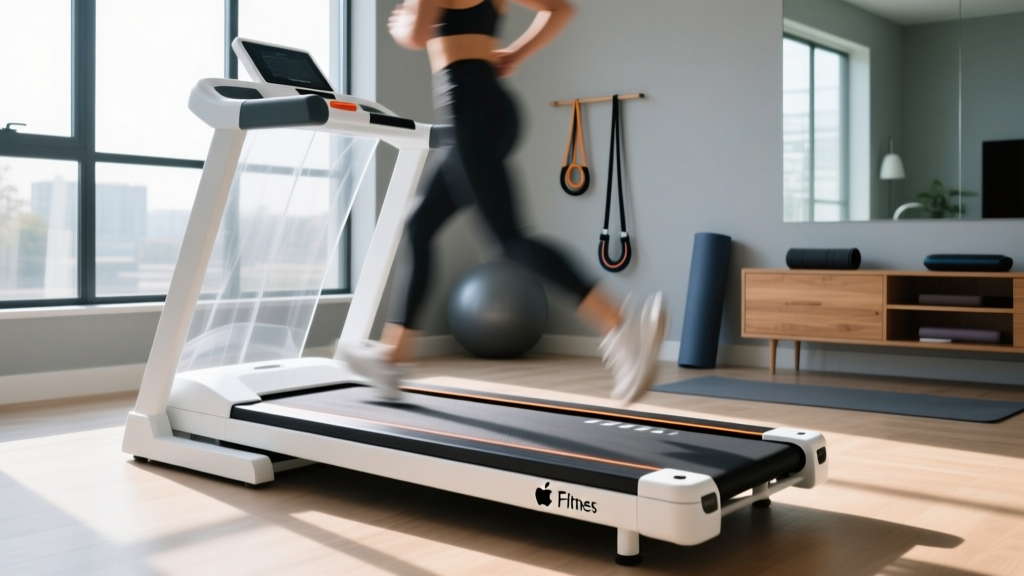
Apple Fitness Treadmill Belt Maintenance: Cost & Value Guide

Curved vs Motorized: Assemble Sole F63 Treadmill & Troubleshoot
