
Folding Treadmill for Small Spaces Review: Skip the Water Treadmill
Discover the best folding treadmills for small spaces in 2026. We compare compact dry layouts against water treadmills to optimize your apartment cardio.

The Spatial Reality: Folding Treadmills vs. Water Treadmills
As urban square footage continues to shrink in 2026, space optimization is the primary constraint for home gym design. Many fitness enthusiasts researching low-impact cardio inevitably encounter the concept of the water treadmill. Brands like Hudson Aquatic Systems and Endless Pools manufacture incredible aquatic treadmills that utilize water buoyancy to eliminate joint impact. However, integrating a water treadmill into a small apartment or condo layout is a structural and financial nightmare.
A true residential water treadmill requires a minimum of 150 square feet of dedicated wet-room space, specialized plumbing, and structural floor reinforcement to support upwards of 2,500 pounds of dynamic water weight. The starting price for these installations easily exceeds $18,000. For the vast majority of renters and small-home owners, this is entirely unfeasible.
The realistic alternative? High-end folding treadmills for small spaces equipped with multi-zone cushioning systems. These dry-land machines absorb up to 30% more impact than concrete, mimicking the joint-sparing benefits of aquatic resistance while folding down to a footprint of less than 12 square feet. According to the Mayo Clinic's guidelines on aerobic exercise, maintaining consistent cardiovascular routines is vastly more important than the specific modality, making spatial convenience the ultimate deciding factor for long-term adherence.
Compact Cardio Comparison Matrix
| Model | Folded Footprint | Belt Dimensions | Weight Capacity | 2026 Price |
|---|---|---|---|---|
| Echelon Run | 10.5" H x 27" W x 63" L | 20" x 55" | 300 lbs | $699 |
| Horizon T101 | 25" H x 29" W x 34" L | 20" x 55" | 300 lbs | $599 |
| ProForm Carbon TL | 26" H x 30" W x 35" L | 18" x 55" | 250 lbs | $499 |
Top 3 Folding Treadmills for Small Spaces (2026 Review)
1. Echelon Run: Best for Under-Bed Storage
The Echelon Run has completely disrupted the micro-apartment fitness market by utilizing a dual-hinge folding mechanism that allows the entire deck to fold completely flat. At just 10.5 inches high when collapsed, it slides effortlessly beneath standard 12-inch bed frames or low-profile sofas.
- Layout Advantage: Zero visual weight when stored. It effectively disappears from the room's aesthetic.
- Biomechanics: Features a 6-point elastomer cushioning system that reduces joint strike force by roughly 20% compared to outdoor asphalt.
- Known Failure Mode: The dual-hinge pivot points are prone to squeaking after 4 to 6 months of heavy use. You must apply white lithium grease to the hinges bi-annually to maintain silent operation.
2. Horizon Fitness T101: Best Traditional Fold-Up
For those who have a dedicated corner or closet but lack the floor space for a permanent commercial deck, the Horizon T101 remains the gold standard for vertical folding. It utilizes a hydraulic 'FeatherLight' drop system, allowing users to safely lower the 130-pound deck with a single foot lever.
- Layout Advantage: Folds into a compact 25" x 29" vertical tower, making it perfect for tucking into a bedroom corner or behind a room divider.
- Biomechanics: The 3-zone cushioning (softer at the strike zone, firmer at push-off) closely mimics the variable resistance found in aquatic environments.
- Known Failure Mode: Leaving the hydraulic cylinder in the compressed (folded) position for more than 6 months without use can cause the internal seals to dry out and leak. Cycle the machine up and down monthly to preserve the hydraulics.
3. ProForm Carbon TL: Best Budget SpaceSaver
ProForm's SpaceSaver design is a staple in the compact cardio category. The Carbon TL folds upward and locks securely against the mast, reducing its length by nearly 50%.
- Layout Advantage: The locked vertical position includes transport wheels, allowing you to roll it into a standard coat closet (requires a minimum closet depth of 38 inches).
- Biomechanics: ProForm's ProShox cushioning is highly effective, but the 18-inch belt width is a strict limitation.
- Known Failure Mode: The 18-inch belt width causes 'stride clipping' for runners over 6'1". If you are tall, your feet will naturally drift off the lateral edges, leading to ankle instability. This machine is strictly for walking, jogging, or users under 5'10".
Layout Design: Integrating Cardio into Micro-Apartments
Simply buying a folding treadmill does not guarantee a safe or optimized layout. When designing your small-space cardio zone, you must account for dynamic movement and safety clearances. The Centers for Disease Control and Prevention (CDC) emphasizes the importance of safe environments for physical activity, which translates directly to home gym spacing.
"The most common cause of severe treadmill injuries in residential settings is not mechanical failure, but inadequate rear clearance resulting in wall impacts or furniture collisions during a stumble." - Home Fitness Safety Report, 2025
The 3 Golden Rules of Treadmill Clearance
- The Rear Fall Zone (78 Inches): You must maintain at least 78 inches (6.5 feet) of completely clear space directly behind the treadmill. Do not place a bed, glass coffee table, or sharp desk in this zone. If a user trips, they will be ejected backward at the speed of the belt.
- Lateral Escape Routes (24 Inches): Leave a minimum of 24 inches on both the left and right sides of the deck. This allows the user to safely straddle the belt and grab the handrails in an emergency without hitting a wall or nightstand.
- Overhead Clearance (12 Inches): Add 12 inches to the user's height to calculate minimum ceiling clearance. A 6-foot runner on a treadmill with a 6-inch deck height requires an 8-foot ceiling to avoid head strikes during high-incline sprints.
Structural Engineering: Floor Joists and Dynamic Loads
One often-overlooked aspect of small-space cardio layout is structural floor loading. Standard residential building codes require floors to support a live load of 40 pounds per square foot (PSF). However, a treadmill introduces concentrated dynamic loading.
A 150-pound treadmill paired with a 200-pound runner generates localized impact forces exceeding 400 pounds during a running stride. In older apartment buildings or second-story condo layouts, this can cause floor deflection, squeaking, or even structural fatigue over time.
Pro Layout Tip: Always position your treadmill perpendicular to the floor joists, ideally directly over a load-bearing wall or structural beam. Use a high-density 3/8-inch rubber equipment mat to distribute the dynamic impact force across a wider surface area, protecting both the floor finish and the subfloor joists.FAQs: Small Space Cardio Constraints
Can I use a walking pad instead of a folding treadmill to save space?
Walking pads (like the WalkingPad R2) offer extreme space savings, folding down to just 5 inches high. However, they lack handrails, incline capabilities, and shock absorption. If your goal is high-intensity interval training (HIIT) or joint-sparing rehabilitation that mimics the benefits of a water treadmill, a traditional folding treadmill with elastomer cushioning is vastly superior.
How do I manage the power cord in a small living room?
Never run a treadmill power cord across a walkway. Use a low-profile, paintable cord cover channel adhered to the baseboard. Ensure the treadmill is plugged directly into a wall outlet on a dedicated 15-amp circuit; using extension cords in small apartments is a leading cause of motor burnout and electrical fires due to voltage drops.
Is a manual curved treadmill a good small-space alternative?
Curved manual treadmills eliminate the need for a motor and power outlet, but they do not fold. A standard curved treadmill maintains a permanent footprint of roughly 70" x 35" and weighs over 250 lbs. For true space optimization, a motorized folding treadmill remains the most practical choice for small layouts.
More gear to consider
All reviews
Minecraft Treadmill Guide: Motor Size & HP Compared

Gold's Gym 720 Treadmill Motor: A Beginner's HP Guide
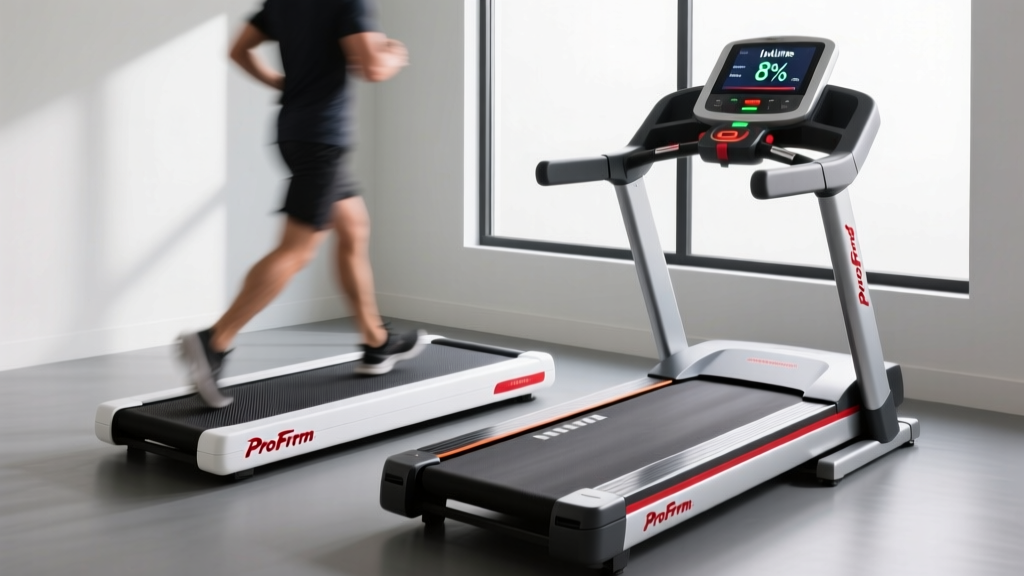
Walking Pad vs. ProForm Treadmill Incline: 2026 Showdown
Stair Climber Installation: Manual Treadmill vs Motorized Treadmill

Which Is Better: Treadmill or Elliptical Machine for Home Maintenance?
